Spider bite pictures
Before the photographs, the thing that matters most: most marks blamed on spiders are not spider bites. A single painful red lump is far more often a skin infection, and the two are hard to tell apart in the first day or two. The photographs below are real spider bites, but they are the severe end of the range — the ordinary case is one small mark that heals in a week and never gets photographed.
What a spider bite looks like
The ordinary case, which is nearly all of them: one red mark a few millimetres across, slightly raised, sore or itchy rather than truly painful, sometimes with two puncture points a short distance apart if the spider was big enough to leave them. It is at its worst within a day or two and fades over the week after that, leaving nothing behind. No rash around it, no fever, and no second mark — spiders bite once, defensively, and then leave.
Where it appears is part of the description. A spider bites when it is trapped against skin, so the marks turn up on a forearm, a hand, a lower leg, or under clothing at the waistband or sock line — where something got pressed rather than where something was hunting. A line or cluster of marks on a covered area is a different story and usually a different animal; bed bug bite pictures show what that pattern looks like.
That description is short because there is not much to it, and the shortness is the useful part. A mark doing more than this — spreading, hardening, breaking down, or still worsening on day three — is doing something an ordinary spider bite does not do, and the question stops being which spider and becomes what else is this.
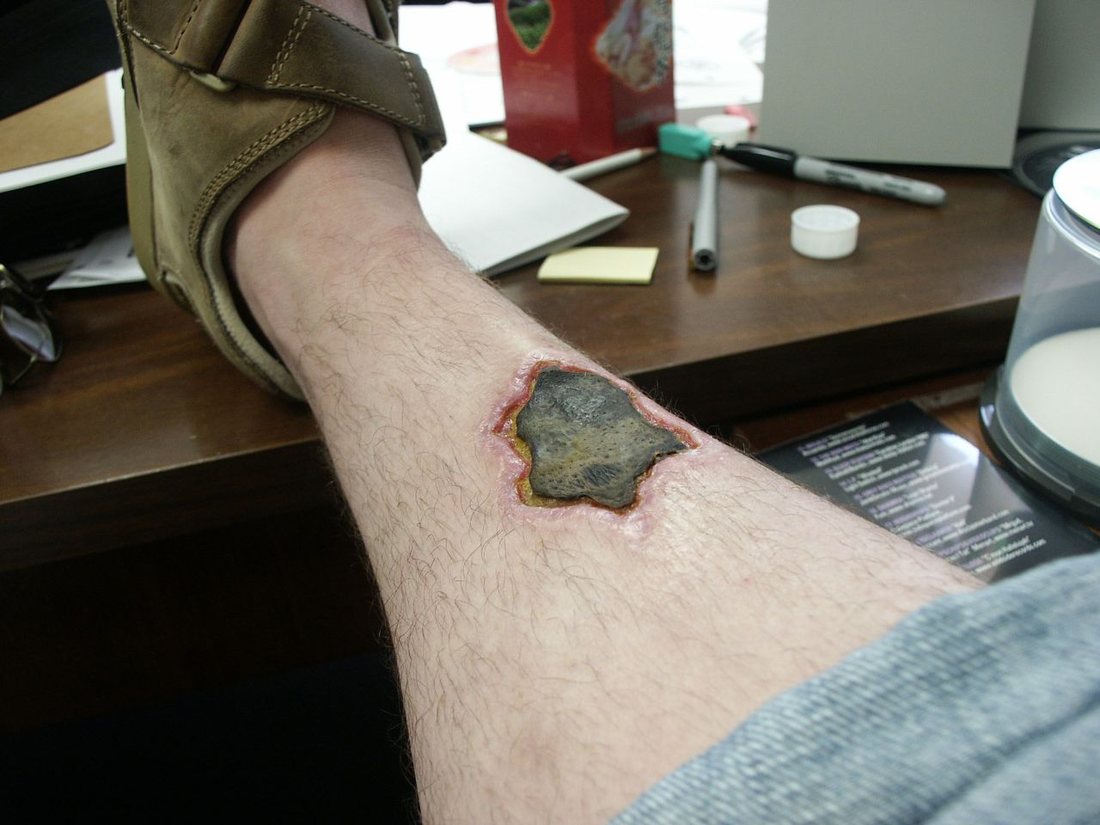
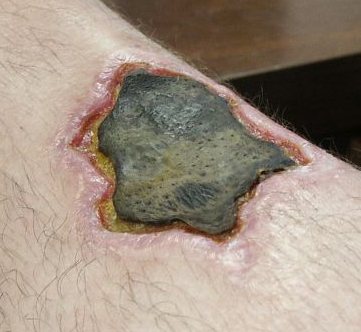
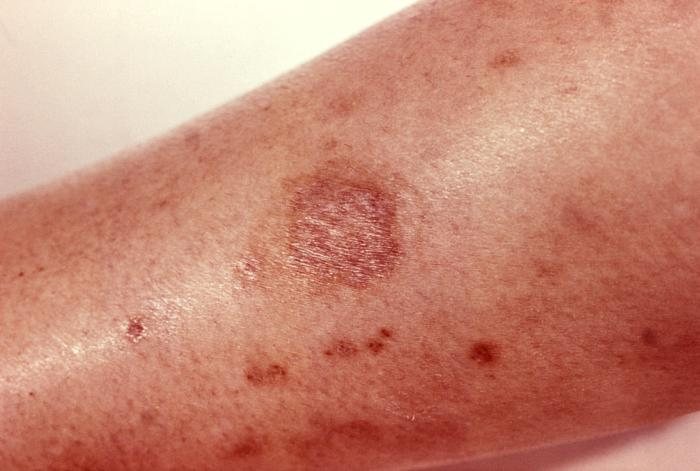
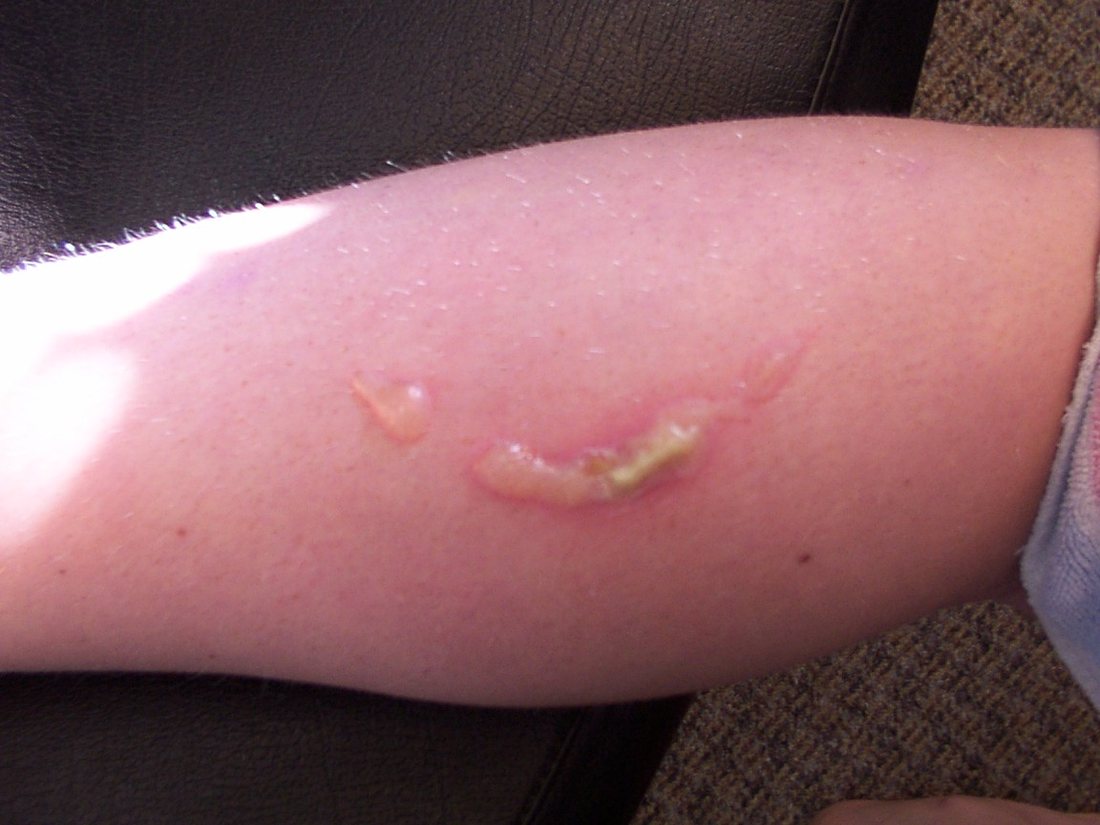
These are photographs of real bites. All four are documented spider bites: three from a brown recluse at two months and at four months, and one white-tailed spider bite from Australia. Published under CC BY or public domain, with the photographer, the licence and the source file named beneath each one. Bites that look like this are uncommon.
Still unsure what left the mark? The app reads a photo of your own bite and names the likeliest cause. Download free iPhone & iPad · no account
What the photographs are not showing
There is no photograph on this page of a typical spider bite, and that is not an oversight. A typical spider bite is a red dot that itches slightly for a few days; nobody photographs it and it would tell you nothing if they did. The wounds above took weeks to develop and required surgical removal of dead tissue in one case. Judging your own mark against them will mislead you in both directions — it will frighten you if the mark is ordinary, and it will reassure you on day one if it is going to become serious, because on day one these looked ordinary too.
| Ordinary bite reaction | One mark, sore or itchy, peaks within 48 hours, then fades. No fever. Heals in under a week. |
|---|---|
| Bacterial infection | Spreads outward day after day, hot, increasingly painful, may develop a soft pointing centre. Fever and a red streak are late signs. Commoner than any spider bite. |
| Recluse bite that progresses | Pain increasing over hours, a pale or blue-grey centre developing over days, then a sunken dark area with a red rim over one to three weeks. Uncommon even among recluse bites. Followed day by day in brown recluse bite pictures. |
| Widow bite | The mark may be almost invisible. Pain, muscle cramping — often abdominal — sweating and restlessness within an hour or two are the presentation. Systemic, not local. |
| Multiple marks | Strong evidence against a spider. Spiders bite once, defensively. |
The stages, day by day
A single photograph is the weakest evidence there is about a bite, because the marks that heal and the marks that do not look the same at the start. What separates them is direction over three days, and that is something you can watch for nothing.
- First hours. Frequently nothing. Most people never feel the bite and only notice the mark later, which is why "when did this happen" is usually unanswerable and not worth agonising over.
- Day one. A red or pink mark, firm to the touch, itchy or sore. Some swelling around it. This is the peak for an ordinary bite reaction, and by the end of the day it should be no worse.
- Day two to three — the turn. The finding that matters. A bite reaction has begun to settle: less red, less sore, edge no further out than yesterday. An infection has gone the other way — wider redness, more heat, more pain, and sometimes a soft centre coming to a point.
- Day four to seven. The ordinary bite is fading to a brown or yellowish mark and then to nothing. A recluse bite that is going to progress has a pale, blue-grey or blistered centre by now, and that is a different page: brown recluse bite pictures follows one day by day.
- Past a week. Anything still present, still sore or still enlarging after a week has stopped being a bite question. Whatever started it, it needs to be looked at.
Photographs taken a day apart from the same distance answer this in a way that no single image can, including any image on this page. A pen line drawn at the edge of the redness makes the comparison exact.
House spider bites
This is the commonest thing people ask this page for, and the honest answer is that there is very little to show. The spiders found indoors across most of the world — the American house spider, the domestic and giant house spiders, cellar spiders — are timid, and a bite from any of them is a red dot that stings briefly and is gone in a day or two. Nobody photographs it, so image searches for it return recluse wounds instead, which is where the fear comes from and why it is misplaced.
Two qualifications, because they are the ones people actually run into. The Australian black house spider does bite, and it is genuinely painful with swelling that can last days and occasionally nausea or sweating — but it does not cause the dead tissue it is widely blamed for. And the hobo spider, for years listed as a cause of necrotic wounds in the northwestern United States, was removed from the CDC's list of venomous spiders in 2017 because the evidence for that never held up.
We have no photograph of a house spider bite on this page. That is not an omission: the mark is a red dot, and a red dot photographed on someone's arm tells you nothing you cannot read in this paragraph.
Geography narrows it more than a photograph does
Recluse and widow spiders each occupy a limited range, and outside it a bite attributed to one is very unlikely to be one. That is checkable rather than a matter of opinion: what bit me, by state ranks the biting species actually recorded where you are, from verified occurrence records, and bites by country does the same internationally.
- Brown recluseCentral and south-central United States. Violin marking on the back, six eyes in three pairs — the marking alone is not enough to identify it.
- Black widowRed hourglass underneath. The bite is a systemic problem rather than a wound.
- Wolf spiderLarge, fast, alarming and frequently blamed. The bite is painful and unremarkable.
- Yellow sac spiderCommonly accused of necrotic bites; the evidence for that is weak.
- Redback spiderAustralia. Pain that builds over an hour rather than striking at once, and sweating at the bite site — two signs no photograph can show.
Get a photo assessment in the app
Everything above is free to read. The app adds what a page cannot: point your camera at the bite and get an assessment of the most likely cause, a severity read, and a day-by-day care plan — including the specific signs that mean you should be seen.
Download on the App Store — free
iPhone and iPad · Free to download · No account needed
What to do with a mark you cannot identify
- Wash it and leave it alone. Soap and water, then a cold compress for the pain. Do not cut it, squeeze it or apply heat.
- Draw the edge. A pen line at the border of the redness turns "is it spreading?" from a memory test into an observation.
- Photograph it daily. Same distance, same light. Two frames a day apart say more than one frame ever will.
- Keep the spider if you have it. Even squashed. It is the only thing that can actually answer the question.
- Judge on day three. Better means it was a bite reaction. Worse means it needs to be seen, whatever caused it.
The comparison that does the most work here is spider bite versus infection, and signs of an infected bite sets out the specific findings to look for.
Seek medical care if
Call emergency services now for difficulty breathing, swelling of the lips, tongue or throat, dizziness or fainting, or hives spreading away from the bite.
- Severe pain, muscle cramping — especially in the abdomen — sweating or restlessness within a few hours of a bite.
- A mark that is worse on day three than on day one: spreading redness, increasing heat, increasing pain.
- A red streak running away from the site, or fever and chills after a bite.
- A centre that turns pale, blue-grey or black, or a blister that breaks down into an open wound.
- Any bite in a young child, or in someone with diabetes or a weakened immune system, that is not clearly improving.
- A bite from a spider you believe to be a widow or a recluse, even if the mark looks minor.
Common questions
What does a spider bite look like?
In the great majority of cases, unremarkable: one small red mark, sometimes with two tiny punctures, mildly sore and gone within a week. Spiders bite once and in self-defence, so multiple marks are strong evidence against a spider. The dramatic wounds that dominate any image search — dark sunken dead tissue with a red rim — come from a small number of recluse bites and are the far end of the range, not the middle of it.
What does a house spider bite look like?
A red dot a few millimetres across that stings for a minute and fades within a day or two, and that is the whole of it. The spiders people find indoors — the American house spider, the domestic and giant house spiders, cellar spiders — are timid and bite only when trapped against skin. Because there is nothing worth photographing, image searches for house spider bites return recluse wounds instead, which is where the alarm comes from. The Australian black house spider is the exception worth naming: its bite is genuinely painful and can swell for days, but it does not cause the dead tissue it is blamed for. The hobo spider was removed from the CDC list of venomous spiders in 2017 for the same reason — the evidence never held up.
What are the stages of a spider bite?
Hours: usually nothing noticed at all. Day one: a firm red mark, itchy or sore, mildly swollen — this is the peak for an ordinary bite. Days two to three: the finding that decides everything. A bite reaction is settling by now; an infection is spreading, hotter and more painful, sometimes with a soft pointing centre. Days four to seven: the ordinary bite fades to a brown mark and then to nothing, while a recluse bite that is going to progress shows a pale, blue-grey or blistered centre. Past a week, anything still enlarging or still sore is no longer a bite question and needs to be seen.
Most marks blamed on spiders are not spider bites — why?
Because a great many things produce a single painful red lump, and only one of them involves a spider. Bacterial skin infections, particularly staphylococcal abscesses, are far commoner and look very similar early on. So do infected hair follicles, insect stings, and reactions to other arthropods. Unless the spider was seen biting, the honest answer to a single lesion is usually "something bit or infected this, and it is not clear which".
How do I tell a spider bite from an infection?
By direction of travel over two to three days. A bite reaction peaks within 48 hours and then settles. An infection worsens: the redness spreads, the area becomes hotter and more painful, a soft or pointing centre develops, and fever or a red streak running away from the site may follow. If it is getting worse on day three rather than better, treat it as an infection and get it seen — that is the case whichever it turns out to be.
Which spiders in the United States cause serious bites?
Two groups, both with a limited range. Widow spiders cause pain, cramping and sweating out of proportion to a mark that may be barely visible — the reaction is systemic rather than local. Recluse spiders can cause the tissue death shown in the photographs here, developing over days to weeks; most recluse bites do not go that way and heal without it. Everything else in the country produces at worst a painful lump.
What should I photograph?
The mark, once a day, from the same distance and in the same light, and the spider if you have it. A dead spider in a jar answers the question that no photograph of skin can. Photographs on consecutive days show whether the area is spreading, and that is the finding that decides what happens next.