Tick bite pictures
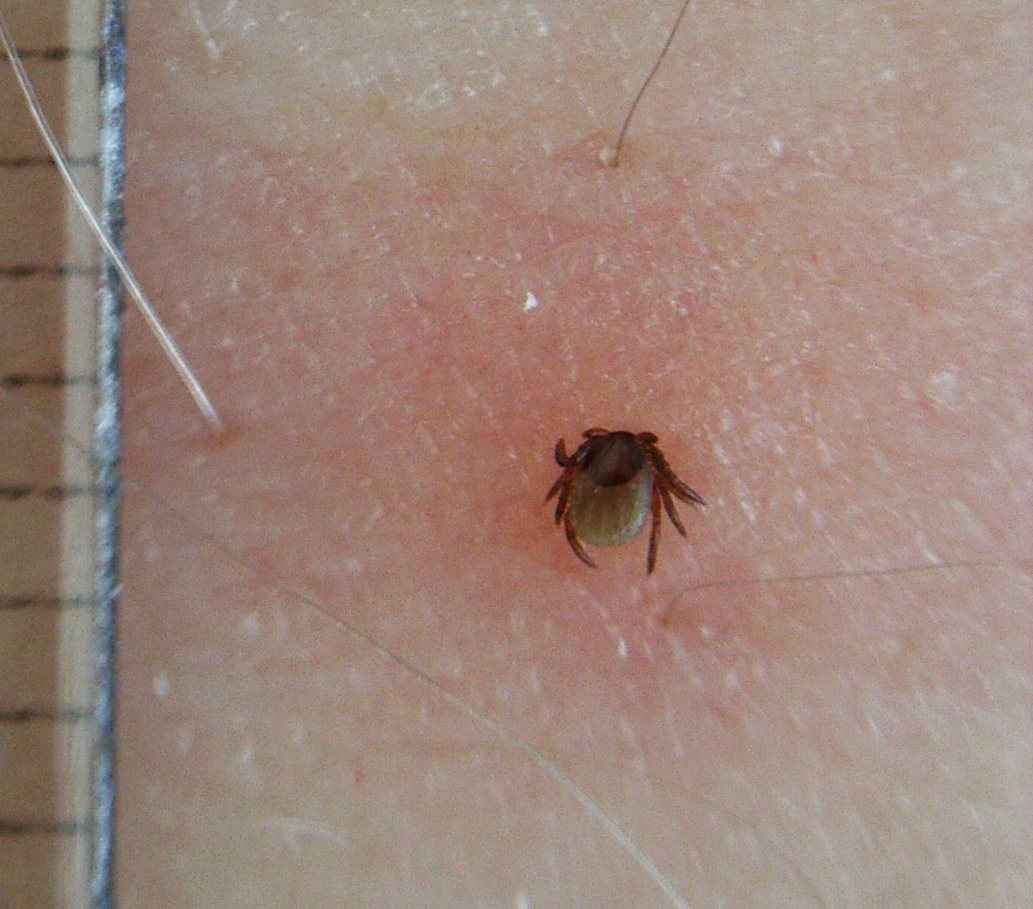
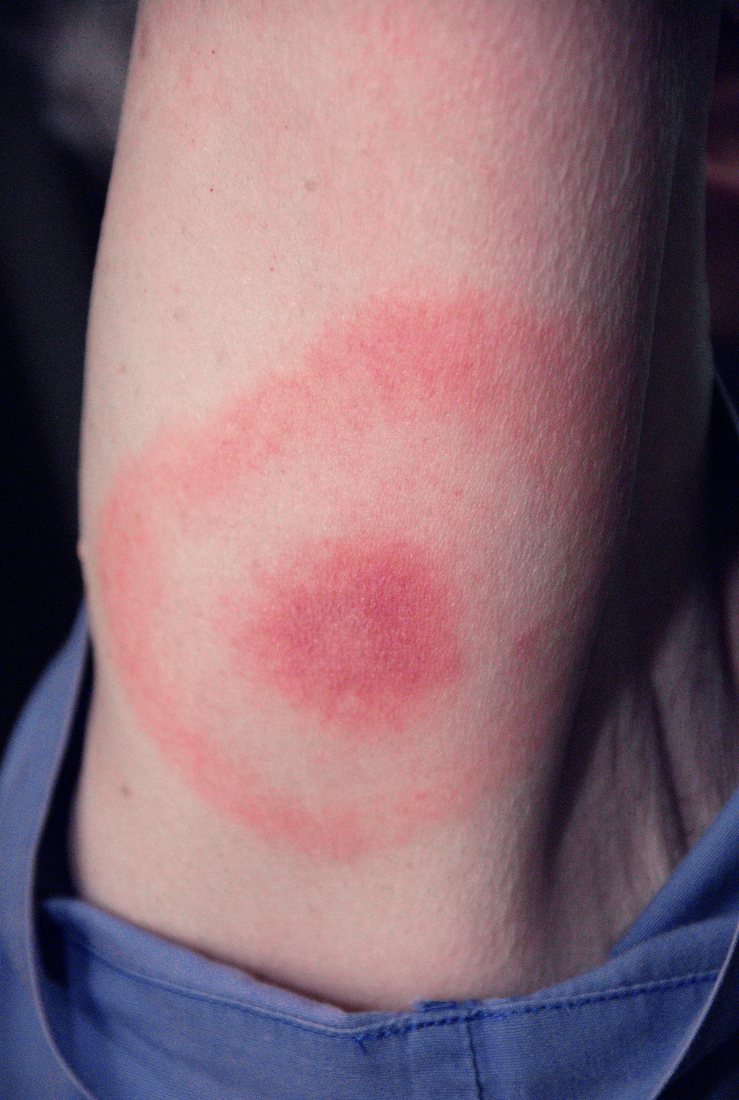
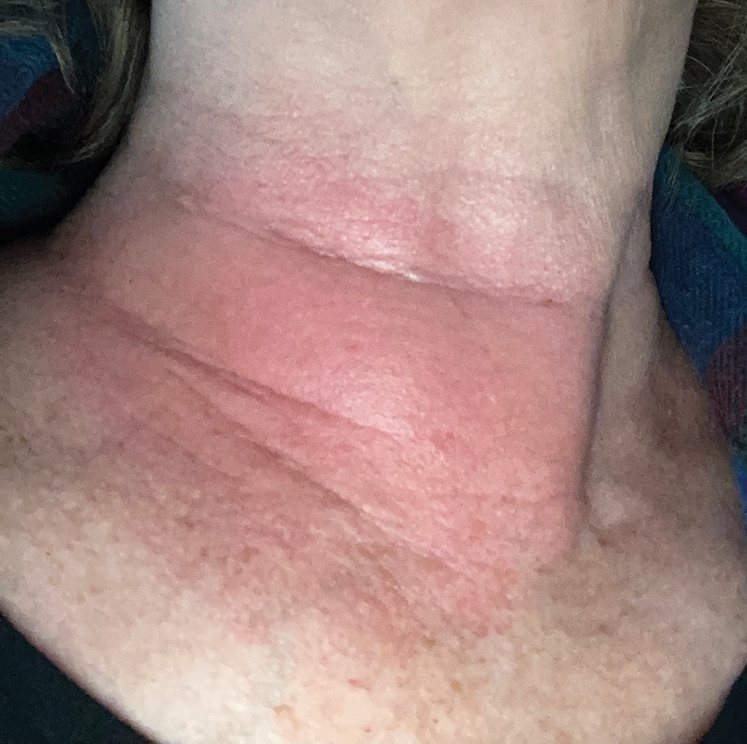
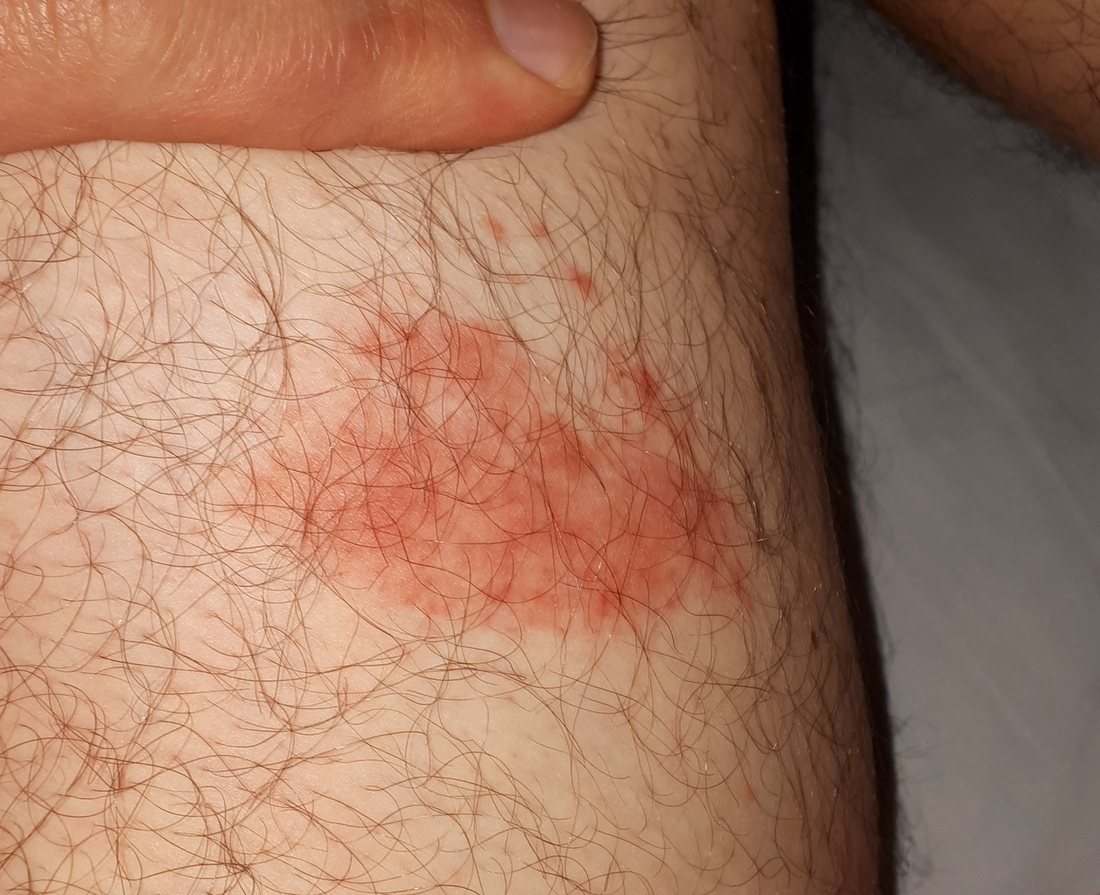
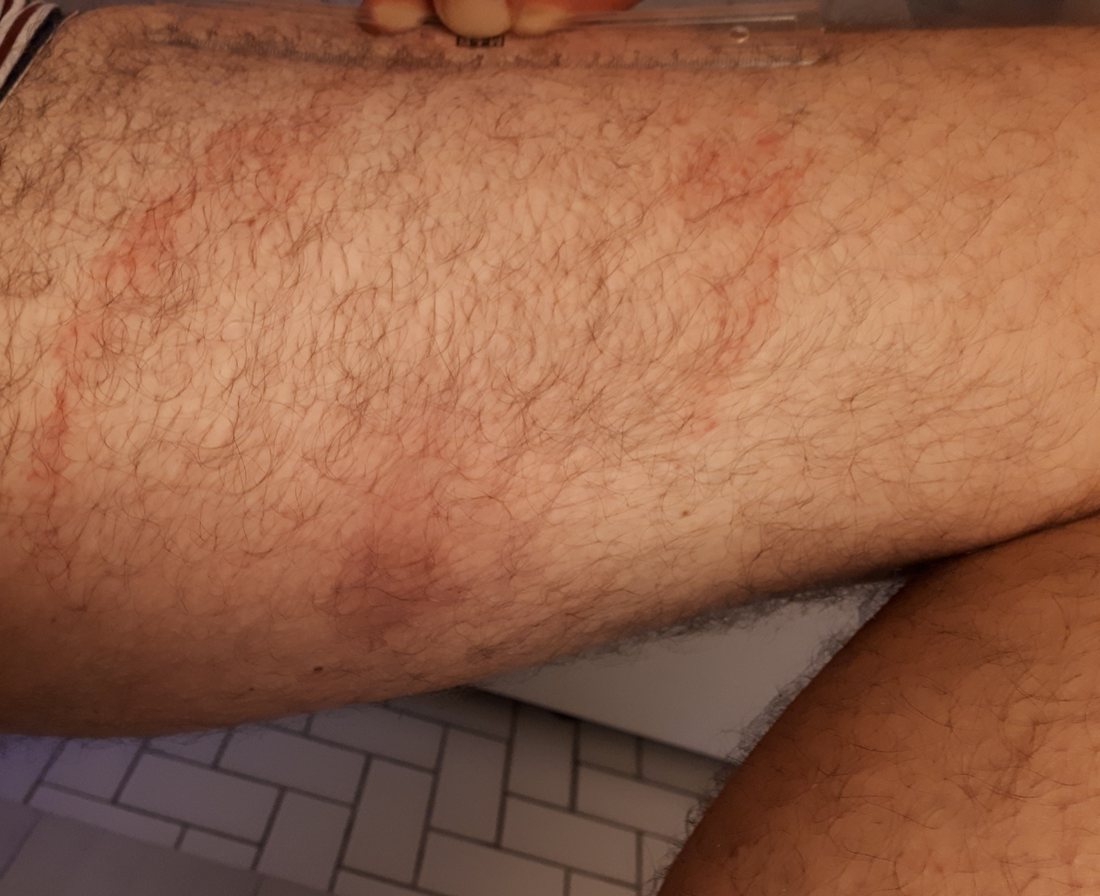
A tick bite on the day it happens usually looks like almost nothing — a small red dot, often with the tick still in it. What is worth recognising is what can come days or weeks later, and the picture most people carry in their head for that is wrong. The bull’s-eye is real, but a plain red patch with no ring at all is the same disease. Below are 6 photographs of real tick bites and the rashes that follow.
These are photographs of real bites. Every frame is a real bite or a real rash, published under CC0, public domain or CC BY, with the photographer, the licence and the source file named beneath it. None of them is a stock photograph and none is generated.
Not sure whether that is a tick bite or a rash? Point the app at it and get an assessment. Download free iPhone & iPad · no account
What the pictures actually show
| Day 0 — the bite | A small red dot, sometimes a tick attached. Painless. A ring of redness a few millimetres wide around an attached tick is the skin reacting to being fed on, not infection. |
|---|---|
| Day 1–2 — local reaction | An itchy bump up to a couple of centimetres, appearing within hours and fading within a day or two. Common, and not erythema migrans. |
| Day 3–30 — erythema migrans | A red area that appears at the site and grows outward over days, often to the width of a hand. It may have a ring, a central clearing, or none of that and be uniformly red. Usually not itchy and not painful, which is why it is ignored. |
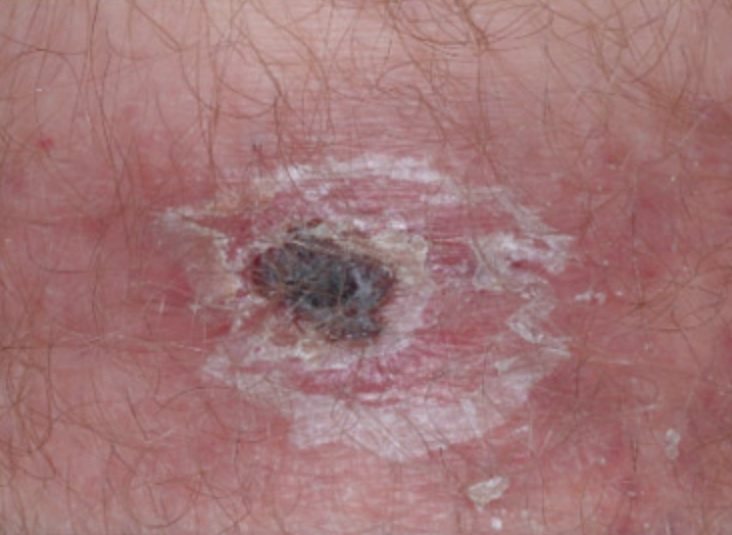
| Any time — eschar | A dark crusted centre. Points to the spotted fever group rather than Lyme, and to being seen rather than waiting. |
| The commonest outcome | Nothing at all. Most tick bites do not transmit anything, and no rash follows. |
Growing outward is the finding, not the shape
Comparing a shape against a photograph is the wrong test, because the shape varies more than any gallery can show. The test that works is direction of travel. An ordinary reaction to the bite peaks within a day or two and then shrinks. Erythema migrans keeps expanding over days, and it does so slowly enough that you cannot see it happening — only across two photographs taken several days apart. Take the second photograph from the same distance and in the same light as the first, and put a pen mark at the edge of the redness so the comparison is against something fixed.
Three of the photographs above are the same person’s rash at different points, and the difference between the first and the last is the whole point: at one week it did not look typical and no diagnosis was made; the pattern only became recognisable later.
If the tick is still attached
That is the best case, because it removes the guesswork about what bit you and when. Take it off promptly with fine-tipped tweezers, gripping as close to the skin as you can and pulling steadily upward without twisting. Do not burn it, smother it in petroleum jelly or paint it with anything — those methods are slower and there is no evidence they help. Wash the area, note the date, and keep the tick in a sealed bag if you want it identified. The step-by-step is in how to remove a tick.
Get a photo assessment in the app
Everything above is free to read. The app adds what a page cannot: point your camera at the bite and get an assessment of the most likely cause, a severity read, and a day-by-day care plan — including the specific signs that mean you should be seen.
Download on the App Store — free
iPhone and iPad · Free to download · No account needed
Which tick, and does it matter
It matters, because different ticks carry different things and are found in different places. A photograph of the tick itself settles this far better than a photograph of the skin: size, colour and markings separate the common species clearly. Deer tick versus lone star tick is the comparison that comes up most, and what bit me, by state ranks which ticks are actually recorded where you are, from verified occurrence records rather than a national average.
- Deer tickThe Lyme disease vector in the eastern and upper midwestern United States. Very small — the nymph is about the size of a poppy seed.
- Lone star tickAggressive biter with a white dot on the female’s back. Associated with a rash that looks like erythema migrans but is not Lyme.
- American dog tickLarger and mottled. The main concern is Rocky Mountain spotted fever rather than Lyme.
Seek medical care if
Call emergency services now for difficulty breathing, swelling of the lips, tongue or throat, dizziness or fainting, or hives spreading away from the bite.
- A rash that expands outward over days to weeks after a tick bite, whether or not it has a ring.
- Fever, chills, headache, or aching muscles and joints in the weeks after a tick bite.
- A dark crusted scab at the bite site, especially with fever.
- A rash on the wrists, palms, ankles or soles after a tick bite.
- A bite site that becomes hot, spreads and hurts more each day, or a red streak running away from it.
- A tick that was attached for more than a day, or one you could not remove completely — the mouthparts left in the skin are worth having looked at.
Common questions
What does a tick bite look like?
On the day it happens, usually nothing much: a small red dot, sometimes with the tick still attached, and often no itch at all. Ticks feed slowly and painlessly, so most people find the tick before they notice any mark. What matters is not the first day but the next four weeks — a rash that appears days to weeks later, at or near the bite site, and grows outward, is the finding that changes what happens next.
Does a tick bite always leave a bull’s-eye rash?
No, and this is the single most misleading thing about tick bite pictures. Erythema migrans, the rash of early Lyme disease, appears in most people who develop the illness, but only a minority of those rashes have the classic ring inside a ring. A solid, evenly red oval is just as much erythema migrans. Two photographs on this page show the same disease with no ring at all. And most tick bites produce no rash whatever, because most ticks are not carrying anything.
How soon after a tick bite does a rash appear?
Erythema migrans typically appears 3 to 30 days after the bite, most often around a week. That gap is why the rash gets missed: by the time it shows, the tick is long gone and the person has stopped connecting the two. A red bump that appears within hours and fades within a day or two is a local irritation from the bite itself, not this.
What is the black scab at a tick bite site?
A dark crusted centre is called an eschar. It belongs to the spotted fever group of tick-borne infections rather than to Lyme disease, and it is a reason to be seen rather than to watch and wait, particularly with fever, headache or a rash on the wrists and ankles.
Should I photograph a tick bite?
Yes, and photograph the tick as well if you still have it. Take one frame the day you find it and one every few days after, from the same distance and in the same light. A rash that is expanding is easy to see across two photographs a week apart and almost impossible to judge from one. Note the date you found the tick — that date is what a clinician will ask for first.