Lone star tick bite
What it looks like: A firm itchy bump, often more irritated than other tick bites, red, occasionally with a central crust. Pattern: single, sometimes dozens at once when larval "seed ticks" swarm. Onset: within hours of attachment. Worst at: days 1 to 3. Duration: up to two weeks; itch can outlast the mark.
Photographs of the bite itself: six photographs of tick bites, including an attached tick against a ruler.
| Looks like | a firm itchy bump, often more irritated than other tick bites |
|---|---|
| Pattern | single, sometimes dozens at once when larval "seed ticks" swarm |
| Size | 3–40 mm |
| Appears | within hours of attachment |
| Worst at | days 1 to 3 |
| Lasts | up to two weeks; itch can outlast the mark |
| Itch | ●●●●○ 4/5 |
| Pain | ●○○○○ 1/5 |
| Usually on | legs, waist, groin, anywhere brushed against low vegetation |
| Active | March to September, daytime; this species actively hunts and will walk towards a host |
Not sure it is lone star tick? The app reads the photo and names the likeliest cause. Download free iPhone & iPad · no account
How to tell it apart
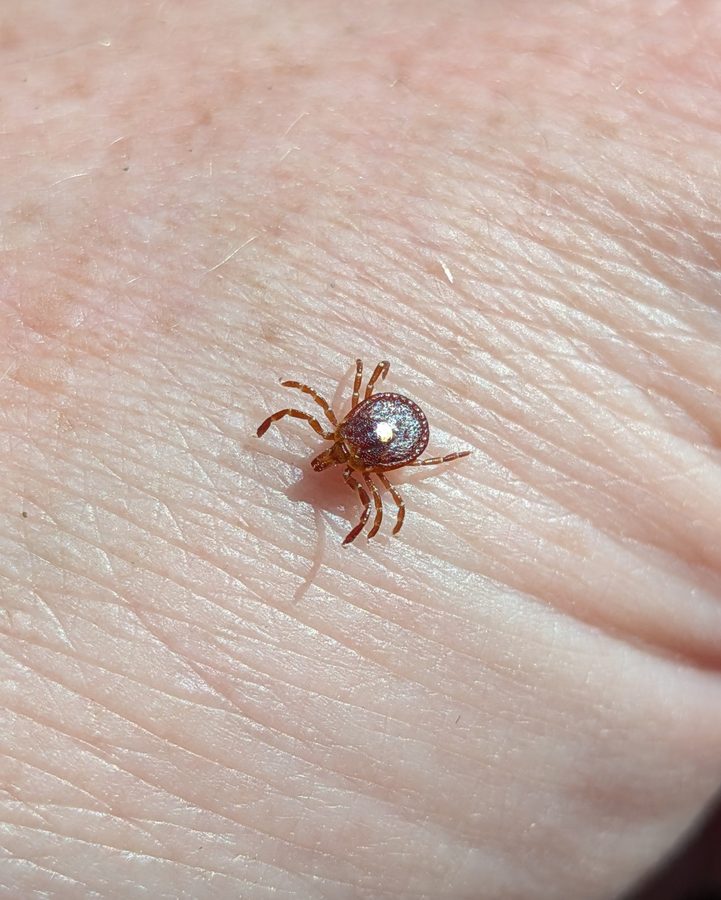
The adult female carries a single white dot on her back — the "lone star" — which makes this the one tick most people can identify without a microscope. Bites tend to itch far more than blacklegged tick bites, and the larval stage arrives in swarms: dozens of pinpoint bites over the legs and waist after a single walk is characteristic.
Where and when you meet it
Habitat: woodland edges and dense undergrowth across the Southeast, East and lower Midwest.
Across 32,514 verified US records in the GBIF biodiversity database, sightings of Amblyomma americanum concentrate in April to July. That is the window when bites are most likely — it is observation data rather than a guess, and it shifts with latitude.
States with the most recorded sightings
- Kansas 9,244 records
- Florida 4,636 records
- Tennessee 2,974 records
- Alabama 2,482 records
- Maryland 2,101 records
- Virginia 1,550 records
- Missouri 833 records
- New Jersey 822 records
- Oklahoma 436 records
- Kentucky 362 records
- North Carolina 362 records · all bites in North Carolina
- Texas 345 records
Record counts reflect where people report and identify specimens, not exact abundance. They are useful for ruling a species in, not for ruling it out.
Where it is recorded
| Country | Records | Peak months there |
|---|---|---|
| United States | 32,514 | May to July |
| Canada | 39 | May to July |
Verified records from the GBIF biodiversity database across the seven countries we cover. A country missing from this table means we have no records for it, not that the species is absent.
What it means for you
This is the tick behind alpha-gal syndrome, a delayed allergy to red meat that can begin months after a bite. Symptoms appear three to six hours after eating beef, pork or lamb, which is long enough that most people never connect the two. If that pattern fits, it is worth raising specifically with a clinician.
Associated illnesses in the US
- ehrlichiosis
- Heartland virus
- tularemia
- STARI
- alpha-gal syndrome (red meat allergy)
Most bites transmit nothing. What matters is the follow-up: note the date, and report any fever or rash in the following weeks to a clinician along with the fact that you were bitten.
Seek medical care if
- fever and headache within two weeks of a bite
- hives, stomach cramps or anaphylaxis hours after eating red meat — the alpha-gal pattern
- a spreading rash
Care at home
- remove with fine-tipped tweezers, steady upward pull
- wash and record the date
- for a swarm of seed ticks, a warm shower and a lint roller on clothing removes what tweezers cannot
Preventing the next one
- permethrin-treated clothing
- avoid sitting directly on logs and leaf litter
- tick check within two hours, including the waistband
Common questions
Do lone star ticks bite humans?
The adult female carries a single white dot on her back — the "lone star" — which makes this the one tick most people can identify without a microscope. Bites tend to itch far more than blacklegged tick bites, and the larval stage arrives in swarms: dozens of pinpoint bites over the legs and waist after a single walk is characteristic.
What does a lone star tick bite look like?
A firm itchy bump, often more irritated than other tick bites, red, occasionally with a central crust. Pattern: single, sometimes dozens at once when larval "seed ticks" swarm. Size: typically 3–40 mm across.
Does a lone star tick bite hurt?
Pain is barely noticeable (1 out of 5 on this site's scale) and itch is strong itch (4 out of 5). Onset: within hours of attachment. Worst at: days 1 to 3. Duration: up to two weeks; itch can outlast the mark.
How do I know it was a lone star tick?
The adult female carries a single white dot on her back — the "lone star" — which makes this the one tick most people can identify without a microscope. Bites tend to itch far more than blacklegged tick bites, and the larval stage arrives in swarms: dozens of pinpoint bites over the legs and waist after a single walk is characteristic.
How long does a lone star tick bite last?
Duration: up to two weeks; itch can outlast the mark. Worst at: days 1 to 3.
When is it a problem?
Seek care for: fever and headache within two weeks of a bite; hives, stomach cramps or anaphylaxis hours after eating red meat — the alpha-gal pattern; a spreading rash.
Can it transmit disease?
In the United States this species is associated with ehrlichiosis, Heartland virus, tularemia, STARI, alpha-gal syndrome (red meat allergy). Most bites transmit nothing, but symptoms in the weeks after a bite are worth reporting to a clinician.
Get a photo assessment in the app
Everything above is free to read. The app adds what a page cannot: point your camera at the bite and get an assessment of the most likely cause, a severity read, and a day-by-day care plan — including the specific signs that mean you should be seen.
Download on the App Store — free
iPhone and iPad · Free to download · No account needed