American dog tick bite
What it looks like: A firm red bump, sometimes with a small crust where the mouthparts were, red. Pattern: single. Onset: within a day. Worst at: days 1 to 3. Duration: about a week.
Photographs of the bite itself: six photographs of tick bites, including an attached tick against a ruler.
| Looks like | a firm red bump, sometimes with a small crust where the mouthparts were |
|---|---|
| Pattern | single |
| Size | 3–30 mm |
| Appears | within a day |
| Worst at | days 1 to 3 |
| Lasts | about a week |
| Itch | ●●○○○ 2/5 |
| Pain | ●○○○○ 1/5 |
| Usually on | scalp, neck, legs, anywhere covered by hair |
| Active | April to August, daytime |
Not sure it is American dog tick? The app reads the photo and names the likeliest cause. Download free iPhone & iPad · no account
How to tell it apart
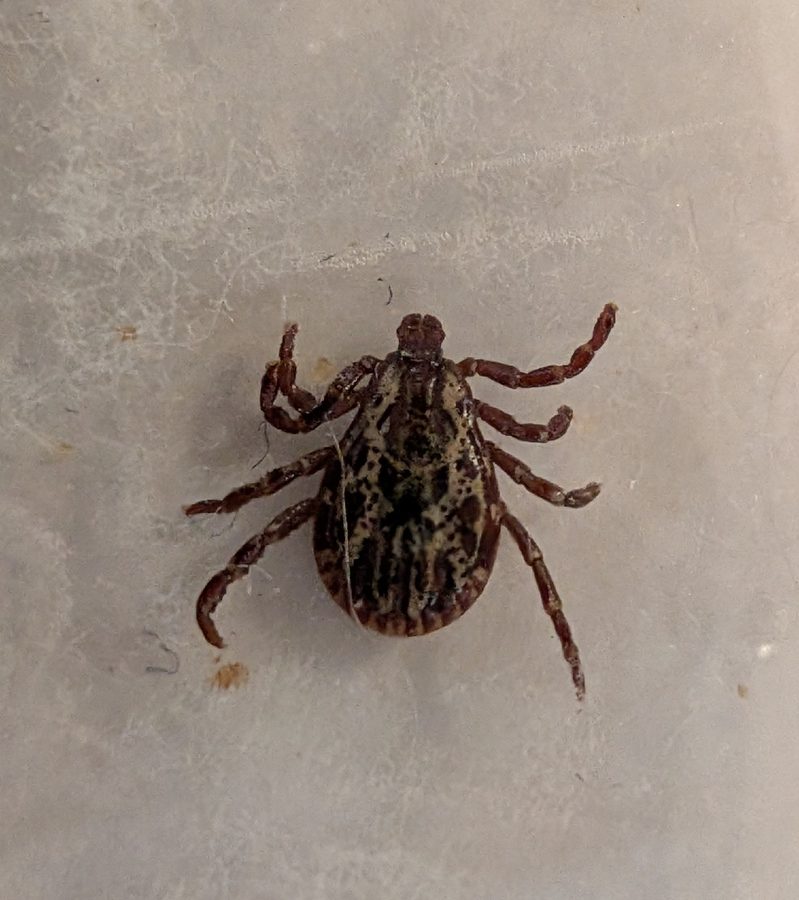
Larger than a blacklegged tick and patterned with off-white marbling on the shield, the American dog tick is the one most often found already engorged on a scalp or a dog. The bite is usually painless, so discovery is by touch rather than by symptom.
Where and when you meet it
Habitat: grassy fields, trail edges and scrub east of the Rockies, plus parts of the Pacific coast.
Across 22,349 verified US records in the GBIF biodiversity database, sightings of Dermacentor variabilis concentrate in April to July. That is the window when bites are most likely — it is observation data rather than a guess, and it shifts with latitude.
States with the most recorded sightings
- Illinois 1,865 records
- Michigan 1,463 records
- Pennsylvania 1,401 records
- Massachusetts 1,334 records
- Ohio 1,295 records
- Minnesota 984 records
- Maryland 904 records
- New Hampshire 817 records
- California 803 records
- Wisconsin 793 records
- New York 791 records
- Virginia 785 records
Record counts reflect where people report and identify specimens, not exact abundance. They are useful for ruling a species in, not for ruling it out.
Where it is recorded
| Country | Records | Peak months there |
|---|---|---|
| United States | 22,349 | April to July |
| Canada | 3,485 | May to July |
Verified records from the GBIF biodiversity database across the seven countries we cover. A country missing from this table means we have no records for it, not that the species is absent.
What it means for you
Rocky Mountain spotted fever is uncommon but genuinely dangerous, and the rash that names it starts on the wrists and ankles rather than the trunk. Fever in the two weeks after a tick bite is a reason to be seen the same day, not to wait and watch.
Associated illnesses in the US
- Rocky Mountain spotted fever
- tularemia
- tick paralysis (rare, resolves on removal)
Most bites transmit nothing. What matters is the follow-up: note the date, and report any fever or rash in the following weeks to a clinician along with the fact that you were bitten.
Seek medical care if
- fever with a rash starting on wrists and ankles — treat as urgent
- severe headache or muscle pain days after a bite
- unsteady walking or weakness while a tick is still attached
Care at home
- remove promptly with fine-tipped tweezers
- wash and note the date
- seek care early if fever develops — Rocky Mountain spotted fever is treatable but time-critical
Preventing the next one
- permethrin on clothing and boots
- keep to mown paths
- daily tick checks in season
Common questions
Do American dog ticks bite humans?
Larger than a blacklegged tick and patterned with off-white marbling on the shield, the American dog tick is the one most often found already engorged on a scalp or a dog. The bite is usually painless, so discovery is by touch rather than by symptom.
What does an American dog tick bite look like?
A firm red bump, sometimes with a small crust where the mouthparts were, red. Pattern: single. Size: typically 3–30 mm across.
Does an American dog tick bite hurt?
Pain is barely noticeable (1 out of 5 on this site's scale) and itch is mild itch (2 out of 5). Onset: within a day. Worst at: days 1 to 3. Duration: about a week.
How do I know it was a american dog tick?
Larger than a blacklegged tick and patterned with off-white marbling on the shield, the American dog tick is the one most often found already engorged on a scalp or a dog. The bite is usually painless, so discovery is by touch rather than by symptom.
How long does a american dog tick bite last?
Duration: about a week. Worst at: days 1 to 3.
When is it a problem?
Seek care for: fever with a rash starting on wrists and ankles — treat as urgent; severe headache or muscle pain days after a bite; unsteady walking or weakness while a tick is still attached.
Can it transmit disease?
In the United States this species is associated with Rocky Mountain spotted fever, tularemia, tick paralysis (rare, resolves on removal). Most bites transmit nothing, but symptoms in the weeks after a bite are worth reporting to a clinician.
Get a photo assessment in the app
Everything above is free to read. The app adds what a page cannot: point your camera at the bite and get an assessment of the most likely cause, a severity read, and a day-by-day care plan — including the specific signs that mean you should be seen.
Download on the App Store — free
iPhone and iPad · Free to download · No account needed