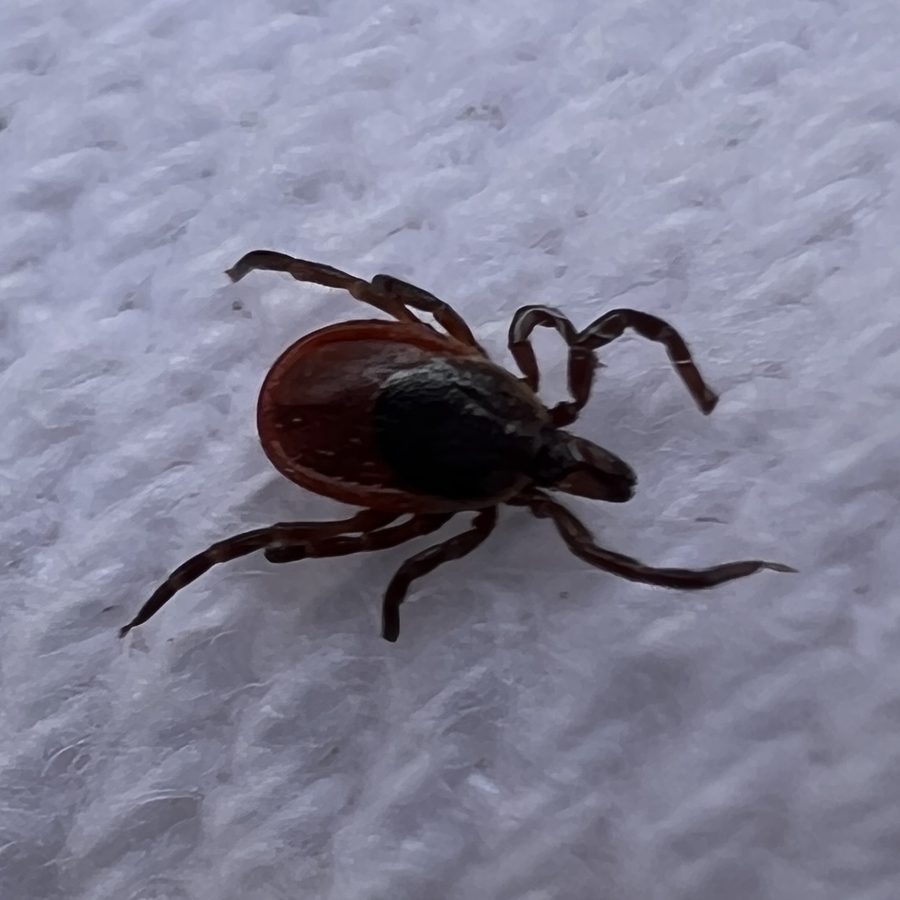
Deer tick bite
What it looks like: A small firm red bump where the tick was attached, sometimes with the tick still in place, red; a spreading ring or oval rash is the finding that matters. Pattern: single, usually in a skin fold or hairline. Onset: the bump appears within a day of removal. Worst at: rash, if any, appears 3 to 30 days later. Duration: bump a few days; untreated rash weeks.
Photographs of the bite itself: six photographs — an attached tick, and four forms of the Lyme rash.
| Looks like | a small firm red bump where the tick was attached, sometimes with the tick still in place |
|---|---|
| Pattern | single, usually in a skin fold or hairline |
| Size | 3–60 mm |
| Appears | the bump appears within a day of removal |
| Worst at | rash, if any, appears 3 to 30 days later |
| Lasts | bump a few days; untreated rash weeks |
| Itch | ●●○○○ 2/5 |
| Pain | ●○○○○ 1/5 |
| Usually on | groin, armpits, behind the knees, scalp and hairline, waistband |
| Active | April to October, any time; nymphs are most active in late spring and early summer |
Not sure it is deer tick? The app reads the photo and names the likeliest cause. Download free iPhone & iPad · no account
How to tell it apart
Blacklegged ticks are small — an unfed nymph is about the size of a poppy seed, which is why most people never see the one that bit them. The bite itself is unremarkable: a small firm bump, little itch, no pain. Everything that matters clinically happens later, in the form of a rash or fever, so the date of the bite is worth writing down.
Where and when you meet it
Habitat: leaf litter, tall grass, brush at the edge of woodland — including suburban gardens backing onto trees.
Across 16,696 verified US records in the GBIF biodiversity database, sightings of Ixodes scapularis concentrate in April to July. That is the window when bites are most likely — it is observation data rather than a guess, and it shifts with latitude.
States with the most recorded sightings
- Massachusetts 1,947 records
- Wisconsin 1,836 records
- Virginia 1,590 records
- Pennsylvania 1,283 records
- West Virginia 1,143 records
- New York 1,057 records
- Maryland 861 records
- Michigan 561 records
- Illinois 548 records
- Vermont 526 records
- Ohio 478 records
- New Hampshire 323 records
Record counts reflect where people report and identify specimens, not exact abundance. They are useful for ruling a species in, not for ruling it out.
Where it is recorded
| Country | Records | Peak months there |
|---|---|---|
| United States | 16,696 | April to June |
| Canada | 3,272 | April, May, June, October |
| United Kingdom | 2 | — |
| Germany | 2 | — |
Verified records from the GBIF biodiversity database across the seven countries we cover. A country missing from this table means we have no records for it, not that the species is absent.
What it means for you
Transmission of the Lyme bacterium generally requires the tick to stay attached for a day and a half or more, which is exactly why a same-day tick check is the single most effective thing you can do. A short-attached tick found and removed within hours is a very different situation from one discovered engorged after a weekend of camping.
Associated illnesses in the US
- Lyme disease
- anaplasmosis
- babesiosis
- Powassan virus (rare)
Most bites transmit nothing. What matters is the follow-up: note the date, and report any fever or rash in the following weeks to a clinician along with the fact that you were bitten.
Seek medical care if
- an expanding rash, with or without a clear centre, days to weeks after a bite
- fever, chills, headache, aching joints in the weeks after a bite
- a tick that was attached for more than 36 hours
- facial droop or a new severe headache
Care at home
- remove with fine-tipped tweezers, grasping as close to the skin as possible, pulling steadily upward
- do not burn the tick, smother it, or twist it
- wash the area and note the date on a calendar
- photograph the tick before disposing of it — species and engorgement matter to a clinician
Preventing the next one
- permethrin-treated clothing and repellent on skin
- stay to the centre of trails
- full-body tick check within two hours of coming indoors, especially skin folds and scalp
- tumble-dry clothes on high for 10 minutes to kill ticks
Common questions
Do deer ticks bite humans?
Blacklegged ticks are small — an unfed nymph is about the size of a poppy seed, which is why most people never see the one that bit them. The bite itself is unremarkable: a small firm bump, little itch, no pain. Everything that matters clinically happens later, in the form of a rash or fever, so the date of the bite is worth writing down.
What does a deer tick bite look like?
A small firm red bump where the tick was attached, sometimes with the tick still in place, red; a spreading ring or oval rash is the finding that matters. Pattern: single, usually in a skin fold or hairline. Size: typically 3–60 mm across.
Does a deer tick bite hurt?
Pain is barely noticeable (1 out of 5 on this site's scale) and itch is mild itch (2 out of 5). Onset: the bump appears within a day of removal. Worst at: rash, if any, appears 3 to 30 days later. Duration: bump a few days; untreated rash weeks.
How do I know it was a deer tick?
Blacklegged ticks are small — an unfed nymph is about the size of a poppy seed, which is why most people never see the one that bit them. The bite itself is unremarkable: a small firm bump, little itch, no pain. Everything that matters clinically happens later, in the form of a rash or fever, so the date of the bite is worth writing down.
How long does a deer tick bite last?
Duration: bump a few days; untreated rash weeks. Worst at: rash, if any, appears 3 to 30 days later.
When is it a problem?
Seek care for: an expanding rash, with or without a clear centre, days to weeks after a bite; fever, chills, headache, aching joints in the weeks after a bite; a tick that was attached for more than 36 hours; facial droop or a new severe headache.
Can it transmit disease?
In the United States this species is associated with Lyme disease, anaplasmosis, babesiosis, Powassan virus (rare). Most bites transmit nothing, but symptoms in the weeks after a bite are worth reporting to a clinician.
Get a photo assessment in the app
Everything above is free to read. The app adds what a page cannot: point your camera at the bite and get an assessment of the most likely cause, a severity read, and a day-by-day care plan — including the specific signs that mean you should be seen.
Download on the App Store — free
iPhone and iPad · Free to download · No account needed