Bed bug bite pictures
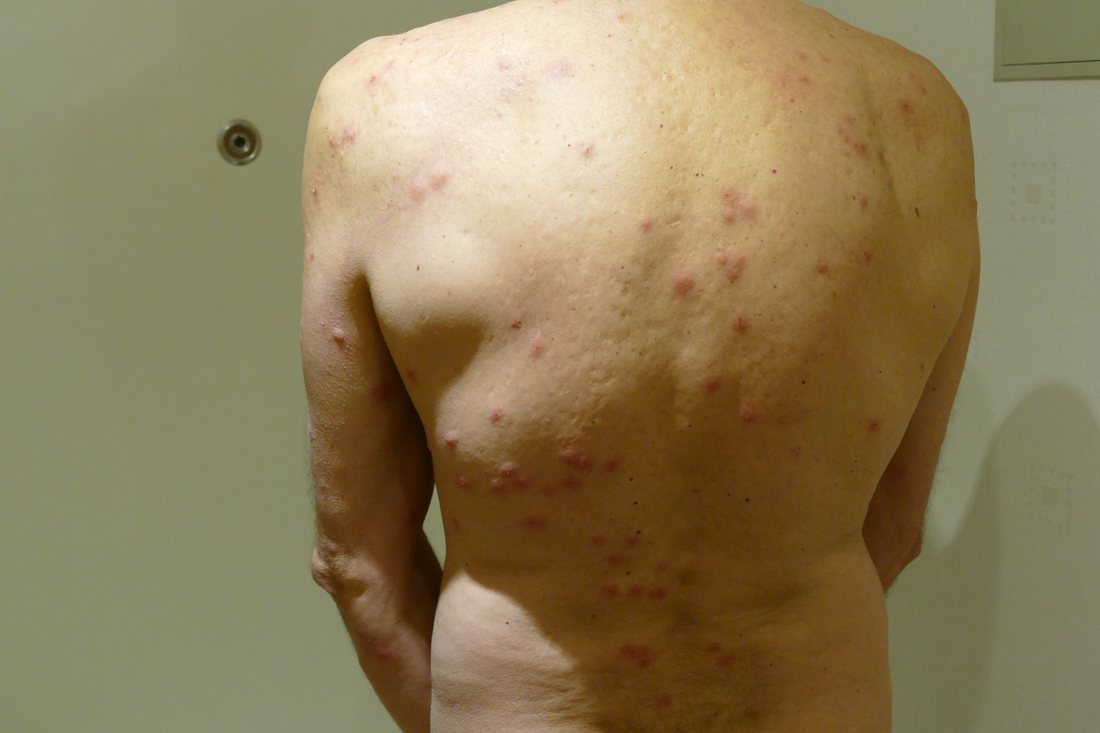
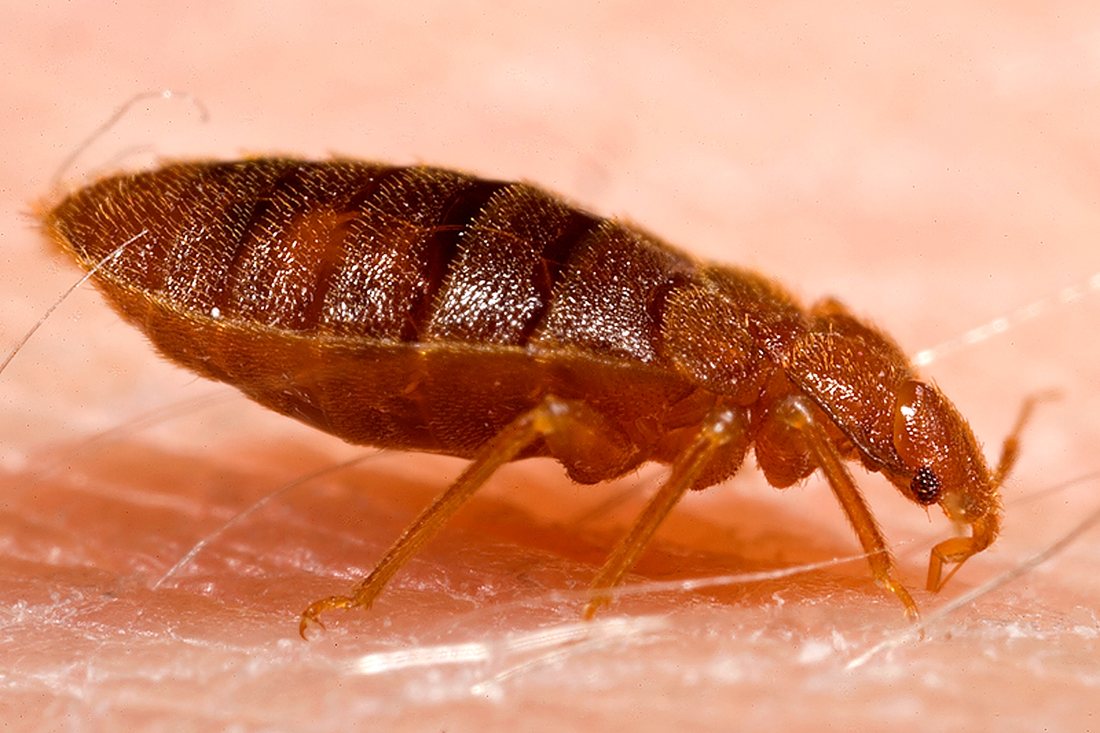
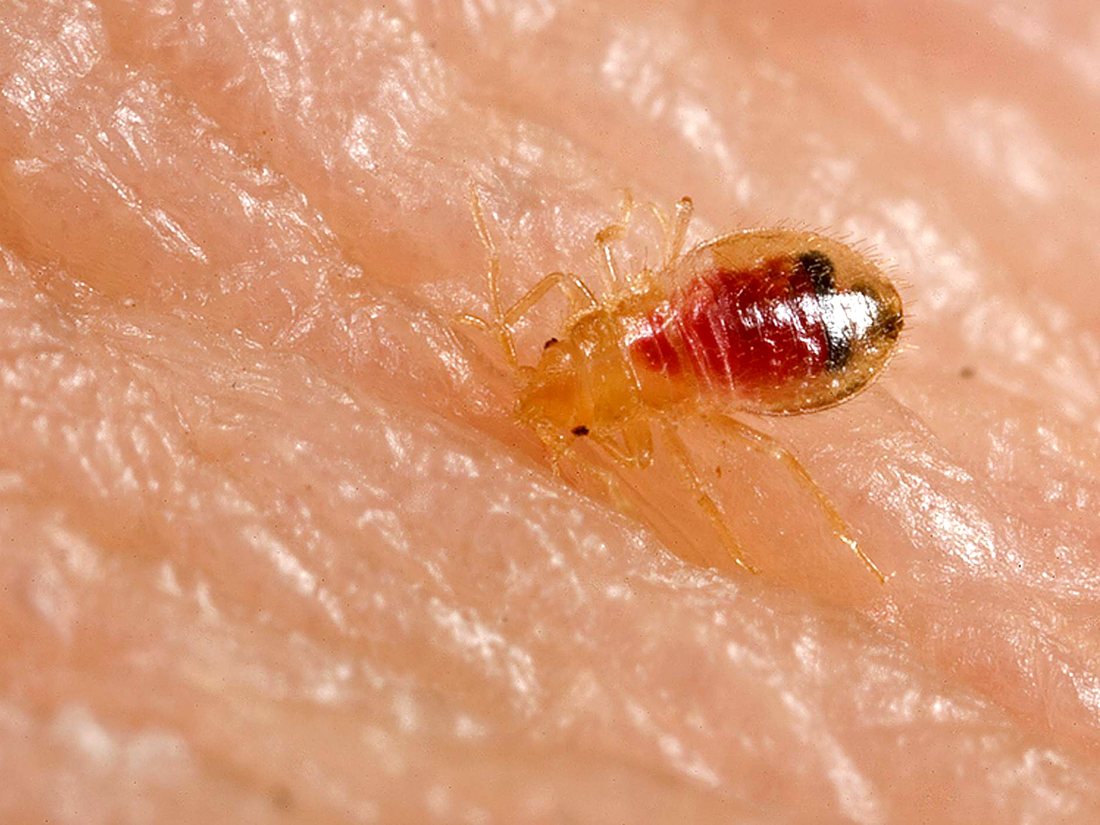
Bed bug bites are raised, itchy and usually found in the morning on skin that was against the bedding. What a photograph of them cannot do is prove they were bed bugs — the marks look like flea and mosquito bites, and the way to settle it is to look at the bed rather than the skin. Below are 5 photographs: the bites, the bug feeding, and the staining that answers the question when the bites do not.
These are photographs of real bites. Two of these are bites, two are the insect feeding on a human arm, and two are the evidence left behind in the room. Published under CC0, public domain or CC BY, with the photographer, the licence and the source file named beneath each one.
Photographs cannot prove bed bugs. The app reads your photo and tells you what the mark most likely is. Download free iPhone & iPad · no account
What the marks tell you, and what they do not
| Where | Skin exposed to the bedding while asleep: arms, shoulders, upper back, neck, face. Rarely under tight clothing. |
|---|---|
| Arrangement | Often a line or a loose cluster, because the bug is disturbed and starts again a short distance away. Single scattered marks are also common — the line is a clue, not a rule. |
| Timing | Noticed on waking. The reaction may take hours to days to become visible, and on first exposure may take a week. |
| The mark itself | A raised bump 2–5 mm, sometimes with a darker centre, usually very itchy. Blisters occur in strong reactions. |
| What it does not prove | That it was a bed bug. Flea, mosquito and mite bites produce marks that photograph identically. |
The staining is the proof
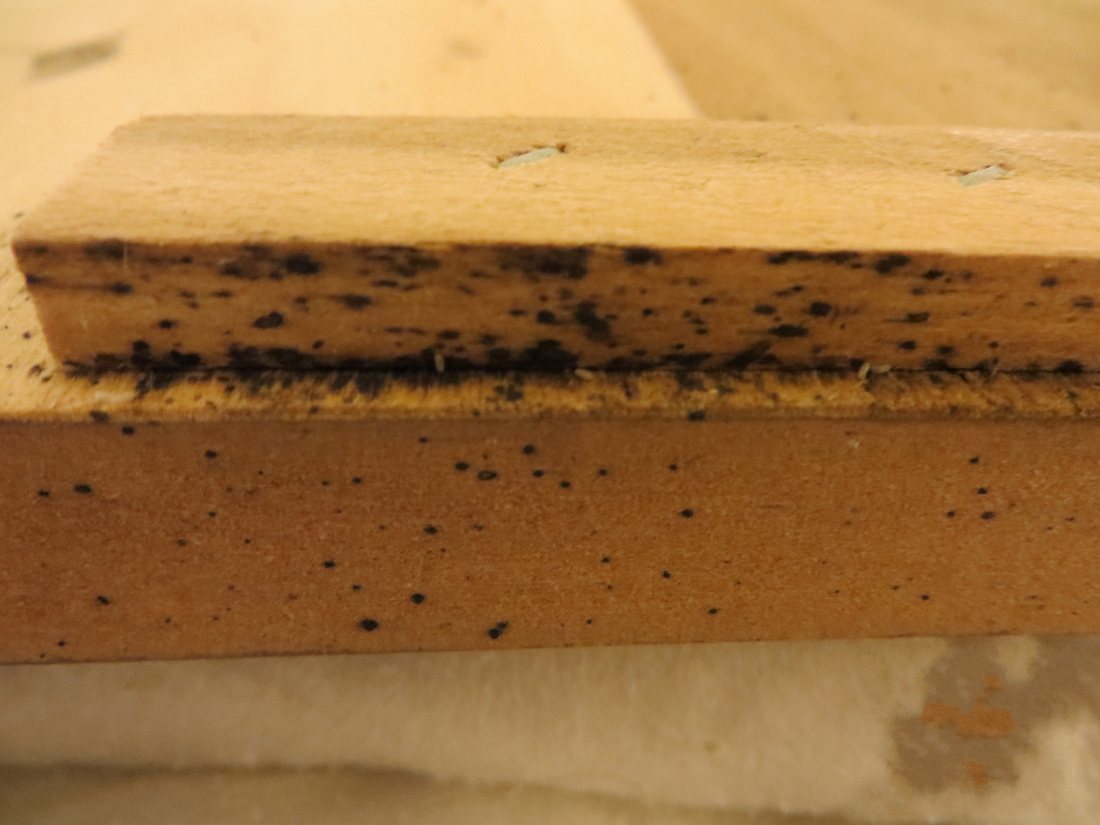
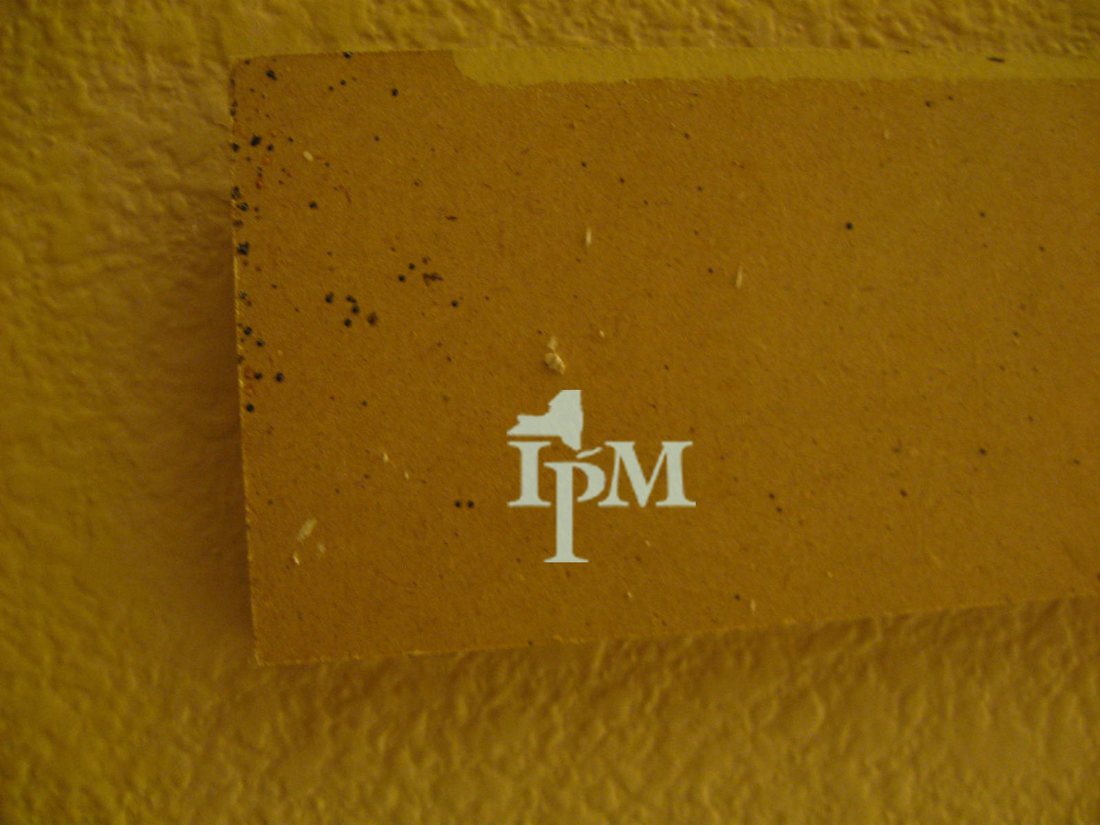
Bed bugs feed and then retreat to a hiding place a short distance away, and they defecate digested blood there. The result is the black spotting in two of the photographs above — along mattress seams, in the joints of the bed frame, behind the headboard and in the wall corner behind it. It does not wipe off cleanly; it smears rusty-brown on a damp cloth. That single observation is worth more than any number of photographs of your own skin, and it takes five minutes with a torch.
Look in this order: mattress seams and label, the box spring underside, the joints and screw holes of the frame, the back of the headboard, and then the wall and skirting within about a metre of the head of the bed. The bugs themselves are flat, oval and about the size of an apple seed; the bed bug page has the identification detail.
Get a photo assessment in the app
Everything above is free to read. The app adds what a page cannot: point your camera at the bite and get an assessment of the most likely cause, a severity read, and a day-by-day care plan — including the specific signs that mean you should be seen.
Download on the App Store — free
iPhone and iPad · Free to download · No account needed
If it is not bed bugs
Three things get confused with bed bug bites often enough to be worth ruling out before you tear the room apart. Fleas take ankles and lower legs and often leave threes; the household usually has a pet. Mosquito bites are on uncovered skin and swell within minutes. Scabies itches worst at night too, but the itch is generalised rather than at discrete marks, and the burrows sit in finger webs and wrists.
- Bed bug vs flea bitesBody area does most of the work: bedding-covered skin against ankles and lower legs.
- Bed bug vs mosquito bitesTiming separates them — minutes versus hours, and covered versus uncovered skin.
- Scabies vs bed bug bitesGeneralised night itch and burrows in the finger webs, rather than marks where the bedding touched.
What helps the itch meanwhile
Treating the skin does nothing about the infestation, but the itch is the part that keeps people awake and scratching, and scratching is what turns a harmless bite into an infected one. A cold compress, then 1% hydrocortisone cream for a few days, and an oral antihistamine at night if the itch is stopping sleep, cover most cases. Getting rid of the infestation itself is pest control work and is not something a cream reaches.
Seek medical care if
Call emergency services now for difficulty breathing, swelling of the lips, tongue or throat, dizziness or fainting, or hives spreading away from the bite.
- A bite that becomes hot, spreads outward and hurts more each day, or a red streak running away from it.
- Fever or feeling generally unwell in the days after being bitten.
- Blistering over a wide area, or marks that break down into open sores.
- Bites in an infant, or an infant sleeping in a room with a confirmed infestation.
- Itch severe enough that it is preventing sleep night after night despite treatment.
Common questions
What do bed bug bites look like?
Small raised red bumps, often intensely itchy, on skin that was in contact with bedding — arms, shoulders, back, neck and face. They are commonly found in the morning and frequently appear in a line or a loose cluster rather than scattered singly. On darker skin the marks read more as raised bumps than as redness. Some people who are being bitten develop no visible mark at all, which is why an absence of bites proves nothing.
Can you tell bed bug bites from flea or mosquito bites in a photograph?
Not reliably, and anyone who tells you otherwise is guessing. The individual marks overlap almost completely. What separates them is everything around the mark: bed bugs bite skin that was covered by bedding and the marks appear overnight; fleas concentrate on ankles and lower legs, often in threes; mosquitoes take uncovered skin and the bump rises within minutes rather than hours. Where the marks are and when they appeared does more work than any close-up.
How do I actually confirm bed bugs?
Find the evidence rather than reading the skin. Black fecal spotting along seams, on the bed frame and around the headboard is the commonest sign and is visible without any equipment. Shed skins, tiny pale eggs in crevices, and rusty smears on sheets follow. The insect itself — flat, oval, reddish-brown, about the size of an apple seed — ends the question outright. Two photographs above show the staining and two show the bug feeding.
How long do bed bug bites take to appear and to go?
The reaction can be immediate or take days to develop, and it varies more between people than any other common bite. First exposure often produces nothing visible for a week or more; repeated exposure tends to produce faster and stronger reactions. Most marks fade within one to two weeks. Marks that keep appearing morning after morning point to an ongoing infestation rather than a slow-healing bite.
Are bed bug bites dangerous?
Bed bugs are not known to transmit disease to people. The real problems are the itch, the sleep loss and the scratching, which is what actually causes infection — a bite that becomes hot, spreading and more painful over days needs to be seen. Widespread hives, swelling of the face or lips, or difficulty breathing after any bite is an emergency regardless of what caused it.