Bed bug bite
What it looks like: Firm, flat-topped welts, often with a darker centre, red and inflamed, darker on deeper skin tones. Pattern: lines or zigzags of three or more — the classic "breakfast, lunch and dinner". Onset: hours to several days — many people notice nothing on the first night. Worst at: day 2 to 3. Duration: 1 to 2 weeks.
Photographs of the bite itself: five photographs — the bites themselves, and the evidence they leave on the mattress.
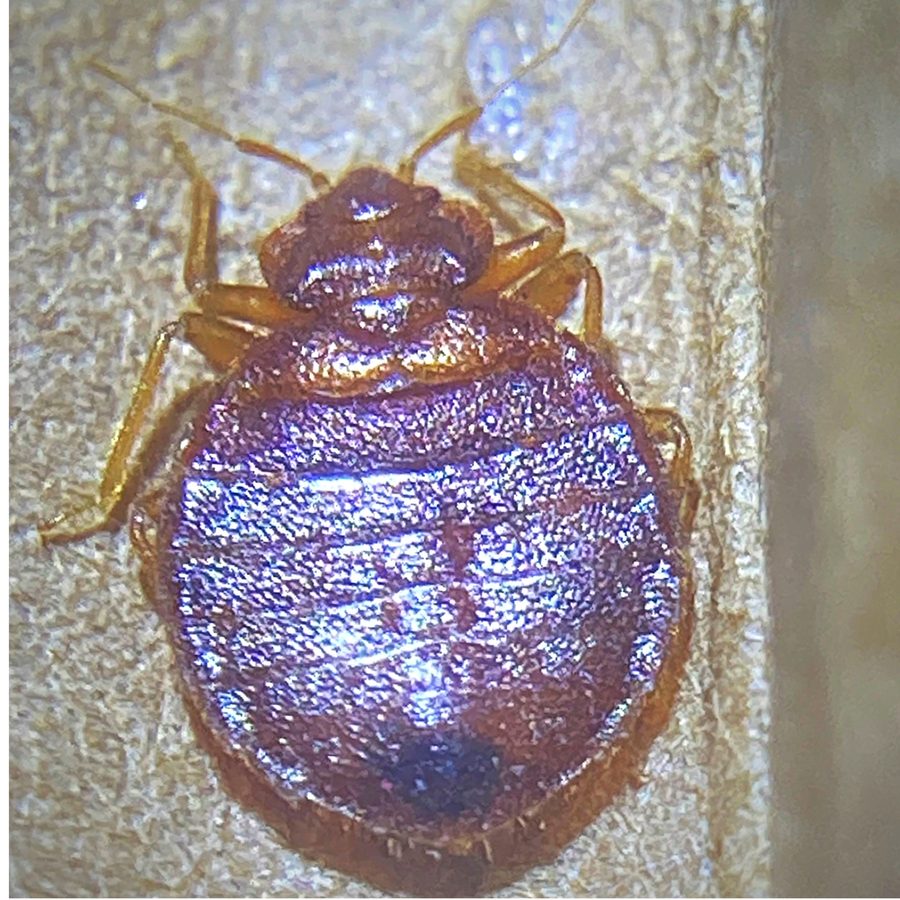
| Looks like | firm, flat-topped welts, often with a darker centre |
|---|---|
| Pattern | lines or zigzags of three or more — the classic "breakfast, lunch and dinner" |
| Size | 2–15 mm |
| Appears | hours to several days — many people notice nothing on the first night |
| Worst at | day 2 to 3 |
| Lasts | 1 to 2 weeks |
| Itch | ●●●●● 5/5 |
| Pain | ●○○○○ 1/5 |
| Usually on | arms, shoulders, neck, face, hands — skin left uncovered by bedding |
| Active | January to December, the small hours, roughly 2am to 5am |
Not sure it is bed bug? The app reads the photo and names the likeliest cause. Download free iPhone & iPad · no account
How to tell it apart
The pattern is the tell. Bed bugs feed in a straight or slightly curved line because the insect probes, is disturbed, moves a few millimetres and feeds again — so you get three or four welts along a line on skin that was uncovered at night. The second tell is timing: bites appear on the same body areas over consecutive mornings, and they show up on people sleeping in that bed and nobody else.
Where and when you meet it
Habitat: mattress seams, bed frames, headboards, sofa joints, luggage; they hide within a few metres of where you sleep.
Across 1,077 verified US records in the GBIF biodiversity database, sightings of Cimex lectularius concentrate in July, November. That is the window when bites are most likely — it is observation data rather than a guess, and it shifts with latitude.
States with the most recorded sightings
- California 190 records · all bites in California
- Illinois 83 records
- Texas 67 records
- Pennsylvania 42 records
- Ohio 38 records
- Indiana 37 records
- Colorado 36 records
- Alaska 30 records
- Kentucky 30 records
- Michigan 29 records
- Minnesota 29 records
- North Carolina 26 records
Record counts reflect where people report and identify specimens, not exact abundance. They are useful for ruling a species in, not for ruling it out.
Where it is recorded
| Country | Records | Peak months there |
|---|---|---|
| United States | 1,077 | July |
| United Kingdom | 368 | June to August |
| Canada | 330 | November |
| Australia | 171 | March, November |
| France | 119 | July, October |
| Germany | 34 | February, May, June, October |
| Brazil | 6 | — |
Verified records from the GBIF biodiversity database across the seven countries we cover. A country missing from this table means we have no records for it, not that the species is absent.
What it means for you
Bed bugs carry no known human disease. That fact does not make them harmless — the sleep loss, the anxiety and the cost of eradication are the real damage, and a heavy infestation can cause anaemia in vulnerable people. Roughly a third of people never develop a visible mark at all, which is why an unbitten partner in the same bed proves nothing.
Seek medical care if
- blisters over a wide area
- signs of skin infection — spreading warmth, pus, fever
- in rare cases, breathing difficulty or widespread hives (allergic reaction)
Care at home
- wash with soap and water
- antihistamine or steroid cream for the itch
- treat the room, not just the skin — bites stop only when the insects are gone
- wash and tumble-dry bedding on high heat
Preventing the next one
- inspect mattress seams and headboards in hotels before unpacking
- keep luggage off the bed and floor
- encasements on mattress and box spring
- professional treatment for an established infestation — retail sprays rarely finish the job
Common questions
Do bed bugs bite humans?
The pattern is the tell. Bed bugs feed in a straight or slightly curved line because the insect probes, is disturbed, moves a few millimetres and feeds again — so you get three or four welts along a line on skin that was uncovered at night. The second tell is timing: bites appear on the same body areas over consecutive mornings, and they show up on people sleeping in that bed and nobody else.
What does a bed bug bite look like?
Firm, flat-topped welts, often with a darker centre, red and inflamed, darker on deeper skin tones. Pattern: lines or zigzags of three or more — the classic "breakfast, lunch and dinner". Size: typically 2–15 mm across.
Does a bed bug bite hurt?
Pain is barely noticeable (1 out of 5 on this site's scale) and itch is intense itch (5 out of 5). Onset: hours to several days — many people notice nothing on the first night. Worst at: day 2 to 3. Duration: 1 to 2 weeks.
How do I know it was a bed bug?
The pattern is the tell. Bed bugs feed in a straight or slightly curved line because the insect probes, is disturbed, moves a few millimetres and feeds again — so you get three or four welts along a line on skin that was uncovered at night. The second tell is timing: bites appear on the same body areas over consecutive mornings, and they show up on people sleeping in that bed and nobody else.
How long does a bed bug bite last?
Duration: 1 to 2 weeks. Worst at: day 2 to 3.
When is it a problem?
Seek care for: blisters over a wide area; signs of skin infection — spreading warmth, pus, fever; in rare cases, breathing difficulty or widespread hives (allergic reaction).
Can it transmit disease?
No human disease is known to be transmitted by this species in the United States. The practical risk is infection from scratching.
Get a photo assessment in the app
Everything above is free to read. The app adds what a page cannot: point your camera at the bite and get an assessment of the most likely cause, a severity read, and a day-by-day care plan — including the specific signs that mean you should be seen.
Download on the App Store — free
iPhone and iPad · Free to download · No account needed