Mosquito bite
What it looks like: A soft, puffy raised bump (wheal) with a tiny centre dot, pink to red on lighter skin, darker brown or purple on deeper skin. Pattern: single bumps scattered over exposed skin. Onset: within minutes. Worst at: 20 minutes to 2 hours. Duration: 1 to 3 days, sometimes a week in children.
Photographs of the bite itself: nine photographs of mosquito bites, from a single welt to a severe reaction.
| Looks like | a soft, puffy raised bump (wheal) with a tiny centre dot |
|---|---|
| Pattern | single bumps scattered over exposed skin |
| Size | 2–20 mm |
| Appears | within minutes |
| Worst at | 20 minutes to 2 hours |
| Lasts | 1 to 3 days, sometimes a week in children |
| Itch | ●●●●○ 4/5 |
| Pain | ●○○○○ 1/5 |
| Usually on | ankles, lower legs, arms, neck, face |
| Active | April to October, dusk and dawn for Culex and Anopheles; daytime for Aedes |
Not sure it is mosquito? The app reads the photo and names the likeliest cause. Download free iPhone & iPad · no account
How to tell it apart
A mosquito bite is the reference point most people compare everything else against: one soft bump, fast to appear, fast to fade. What separates it from a flea or bed bug is the arrangement — mosquito bites land wherever skin was exposed and have no pattern to them, because the insect flies in, feeds for under a minute and leaves. If you can count the bumps and they sit in a line or a tight cluster, a mosquito is usually not the answer.
Where and when you meet it
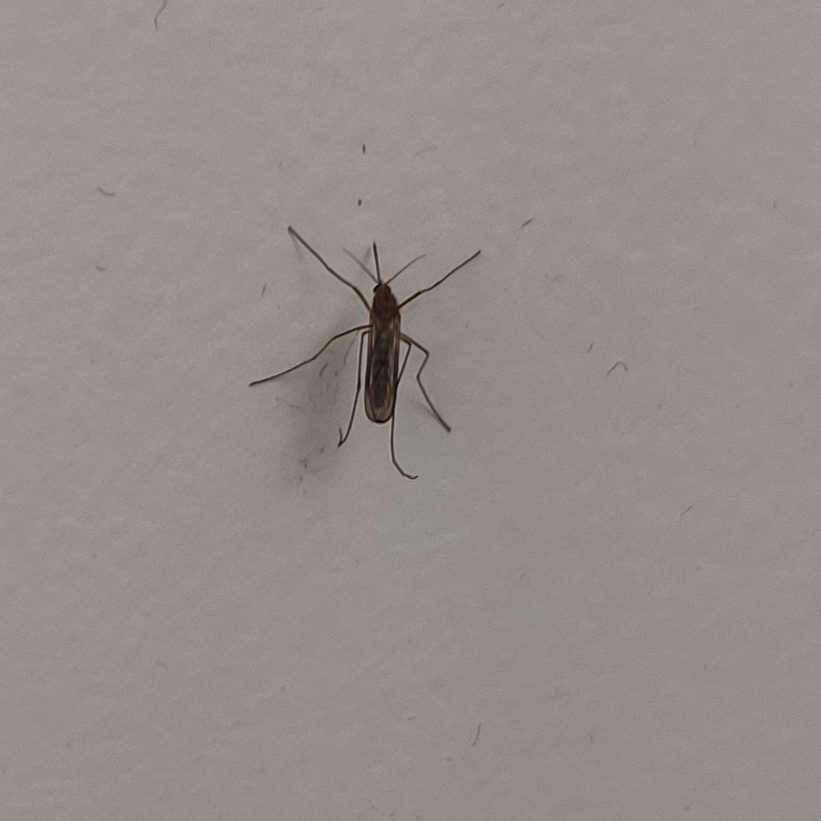
Habitat: standing water — gutters, plant saucers, tyres, ponds; they rarely travel far from where they hatched.
Across 228,363 verified US records in the GBIF biodiversity database, sightings of Culex pipiens concentrate in June to September. That is the window when bites are most likely — it is observation data rather than a guess, and it shifts with latitude.
States with the most recorded sightings
- Illinois 113,527 records
- Iowa 58,102 records
- Indiana 18,248 records
- Idaho 11,403 records
- Utah 5,557 records · all bites in Utah
- Maryland 4,199 records
- Virginia 4,125 records
- Ohio 3,851 records · all bites in Ohio
- North Dakota 3,023 records
- Massachusetts 1,408 records · all bites in Massachusetts
- Minnesota 440 records
- Montana 432 records · all bites in Montana
Record counts reflect where people report and identify specimens, not exact abundance. They are useful for ruling a species in, not for ruling it out.
Where it is recorded
| Country | Records | Peak months there |
|---|---|---|
| United States | 228,363 | June to September |
| United Kingdom | 3,462 | July to September |
| France | 1,904 | April, June, July, September |
| Germany | 1,221 | June, August |
| Canada | 491 | June to August |
| Australia | 262 | March, April, November |
| Brazil | 15 | — |
Verified records from the GBIF biodiversity database across the seven countries we cover. A country missing from this table means we have no records for it, not that the species is absent.
What it means for you
Reaction size says more about the person than about the mosquito. Children and people newly arrived in an area often swell dramatically — sometimes several centimetres, occasionally with a blister — because their immune system has not yet learned the saliva proteins. That large local reaction is uncomfortable but not dangerous by itself. Repeated exposure over years usually makes bites smaller and less itchy.
Associated illnesses in the US
- West Nile virus
- La Crosse encephalitis
- dengue (Gulf Coast and Southwest, local cases)
- chikungunya (rare, travel-linked)
Most bites transmit nothing. What matters is the follow-up: note the date, and report any fever or rash in the following weeks to a clinician along with the fact that you were bitten.
Seek medical care if
- fever, headache and neck stiffness within two weeks of a bite
- confusion or unusual drowsiness
- a spreading red area that is hot and painful (possible skin infection)
Care at home
- wash with soap and water
- cold pack for 10 minutes to cut the swelling
- an over-the-counter antihistamine or hydrocortisone cream for the itch
- keep nails short — scratching is what turns a bite into an infection
Preventing the next one
- empty standing water weekly within 100 metres of the house
- EPA-registered repellent with DEET, picaridin or oil of lemon eucalyptus
- screens on windows; avoid unprotected time outdoors at dusk
Common questions
Do mosquitoes bite humans?
A mosquito bite is the reference point most people compare everything else against: one soft bump, fast to appear, fast to fade. What separates it from a flea or bed bug is the arrangement — mosquito bites land wherever skin was exposed and have no pattern to them, because the insect flies in, feeds for under a minute and leaves. If you can count the bumps and they sit in a line or a tight cluster, a mosquito is usually not the answer.
What does a mosquito bite look like?
A soft, puffy raised bump (wheal) with a tiny centre dot, pink to red on lighter skin, darker brown or purple on deeper skin. Pattern: single bumps scattered over exposed skin. Size: typically 2–20 mm across.
Does a mosquito bite hurt?
Pain is barely noticeable (1 out of 5 on this site's scale) and itch is strong itch (4 out of 5). Onset: within minutes. Worst at: 20 minutes to 2 hours. Duration: 1 to 3 days, sometimes a week in children.
How do I know it was a mosquito?
A mosquito bite is the reference point most people compare everything else against: one soft bump, fast to appear, fast to fade. What separates it from a flea or bed bug is the arrangement — mosquito bites land wherever skin was exposed and have no pattern to them, because the insect flies in, feeds for under a minute and leaves. If you can count the bumps and they sit in a line or a tight cluster, a mosquito is usually not the answer.
How long does a mosquito bite last?
Duration: 1 to 3 days, sometimes a week in children. Worst at: 20 minutes to 2 hours.
When is it a problem?
Seek care for: fever, headache and neck stiffness within two weeks of a bite; confusion or unusual drowsiness; a spreading red area that is hot and painful (possible skin infection).
Can it transmit disease?
In the United States this species is associated with West Nile virus, La Crosse encephalitis, dengue (Gulf Coast and Southwest, local cases), chikungunya (rare, travel-linked). Most bites transmit nothing, but symptoms in the weeks after a bite are worth reporting to a clinician.
Get a photo assessment in the app
Everything above is free to read. The app adds what a page cannot: point your camera at the bite and get an assessment of the most likely cause, a severity read, and a day-by-day care plan — including the specific signs that mean you should be seen.
Download on the App Store — free
iPhone and iPad · Free to download · No account needed