Mosquito bite pictures
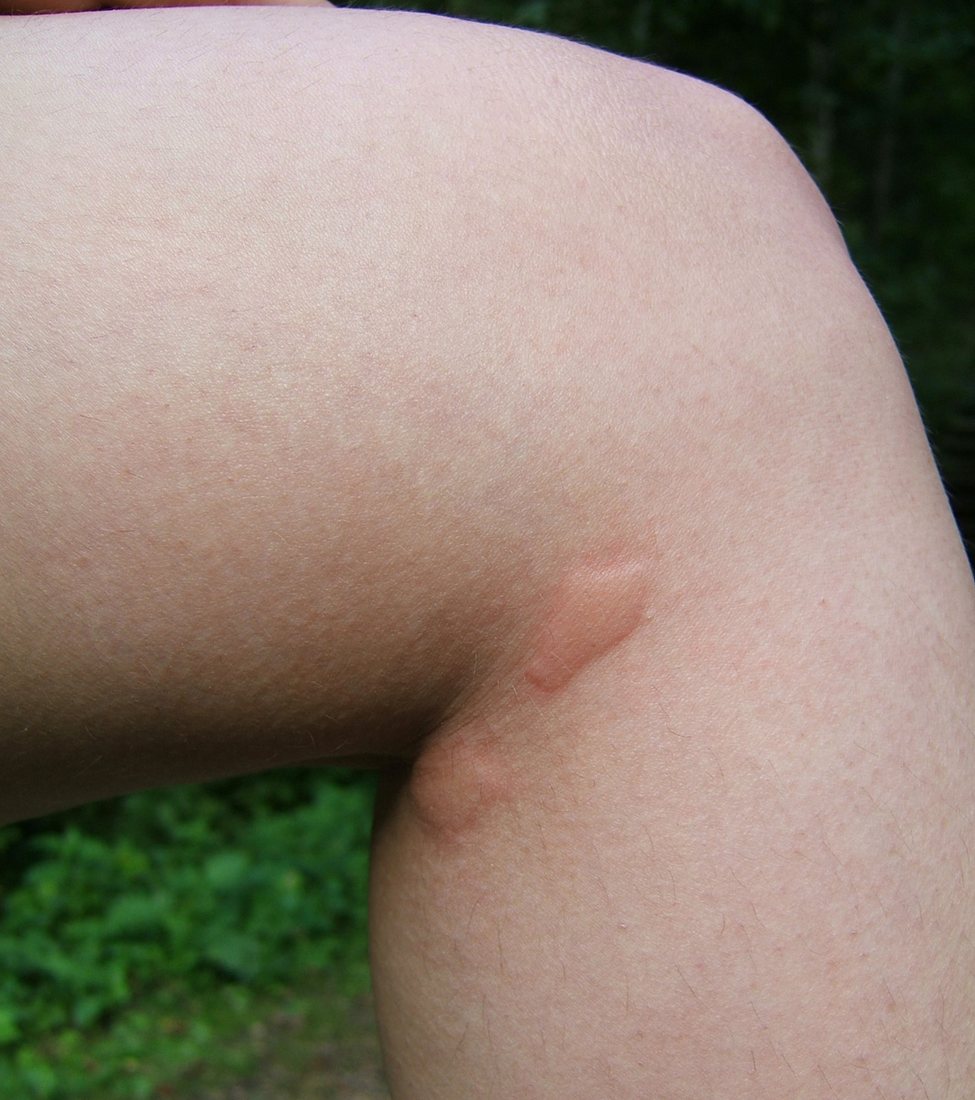
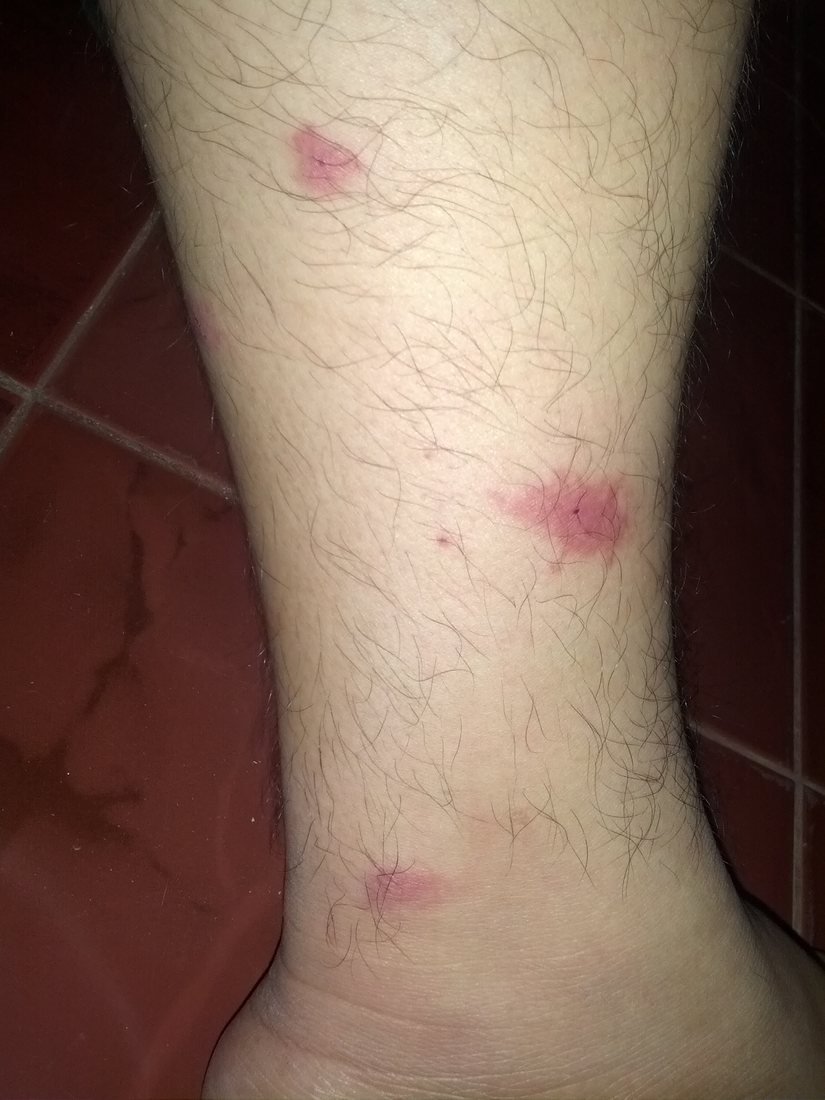
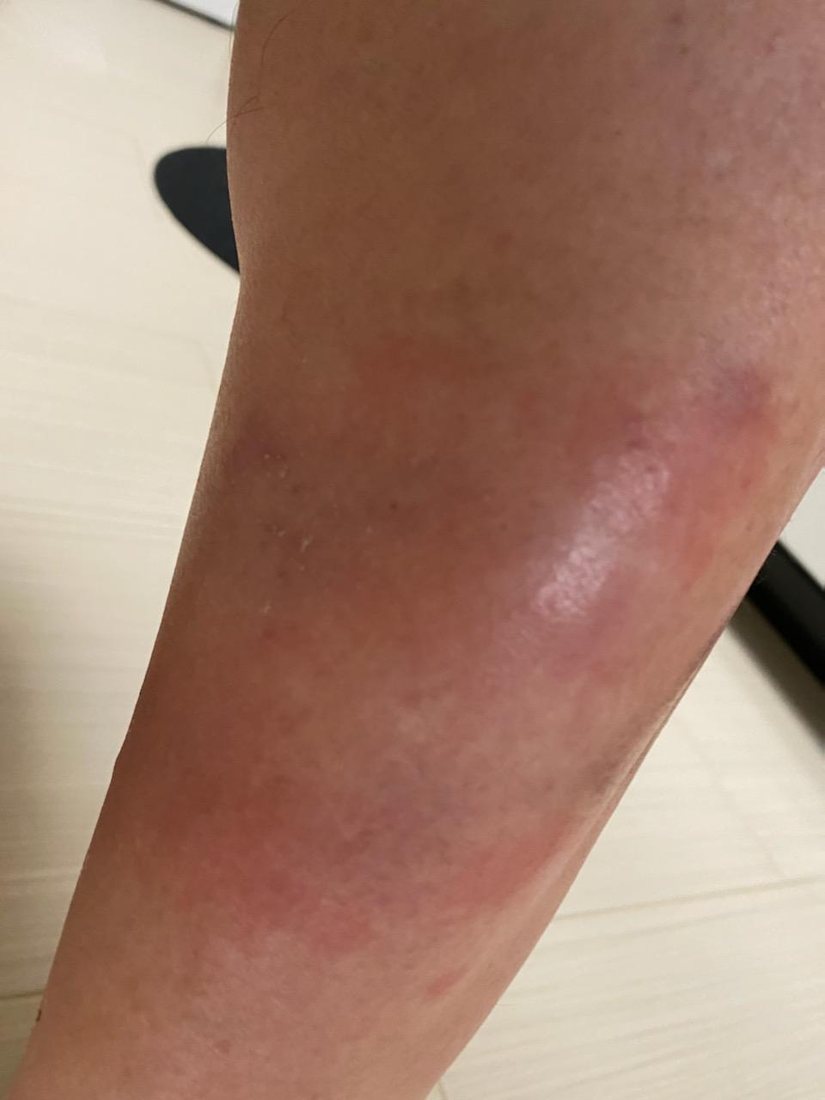
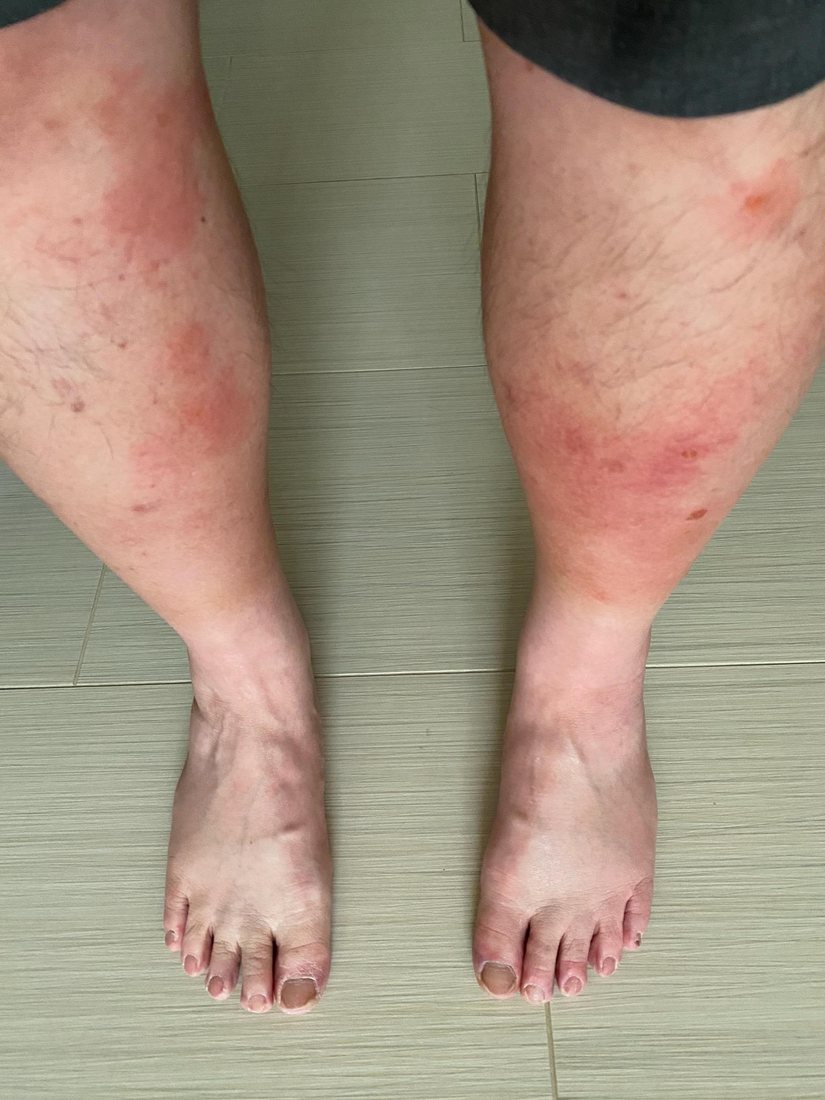
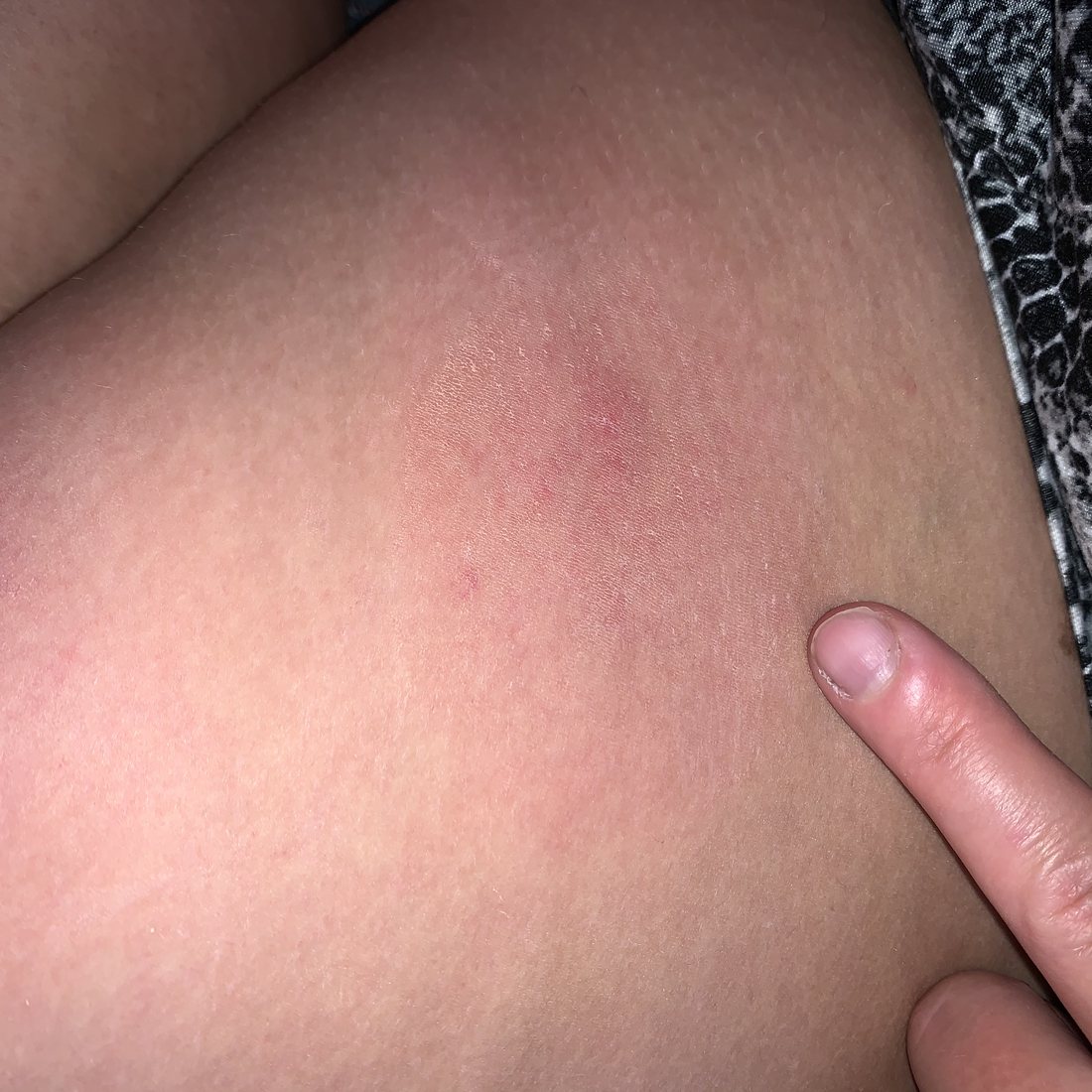
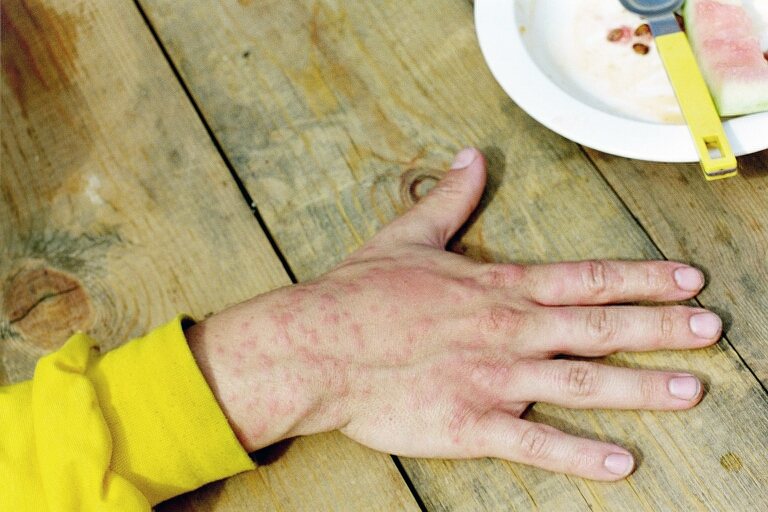
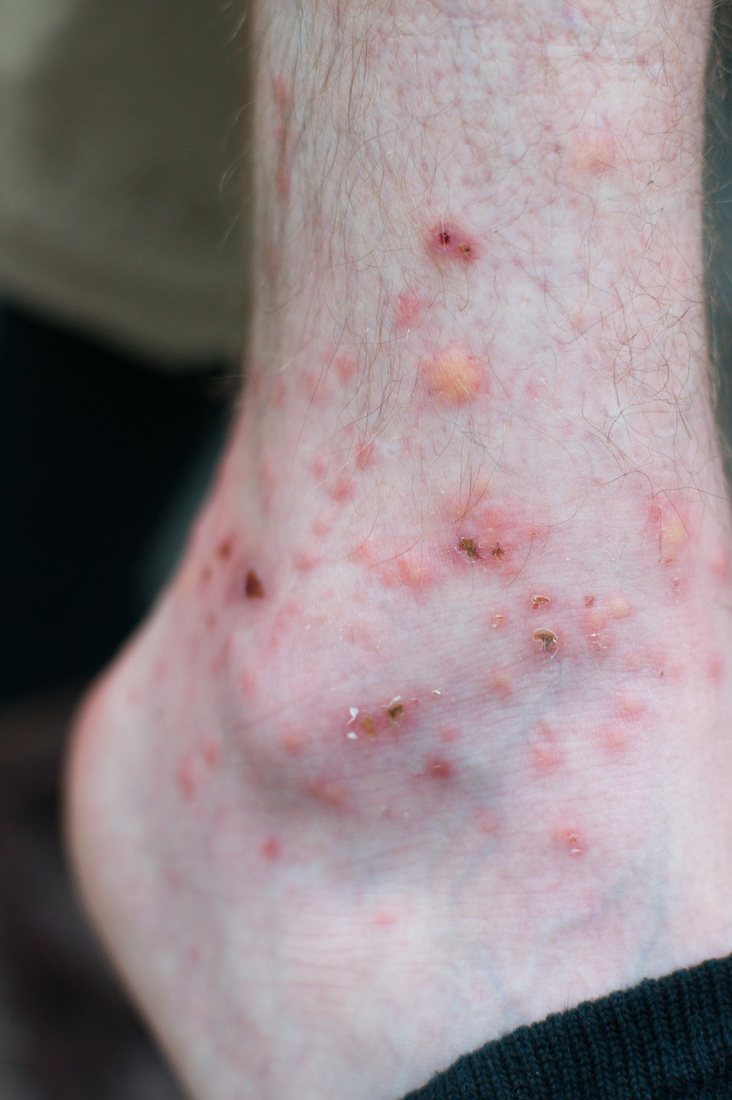
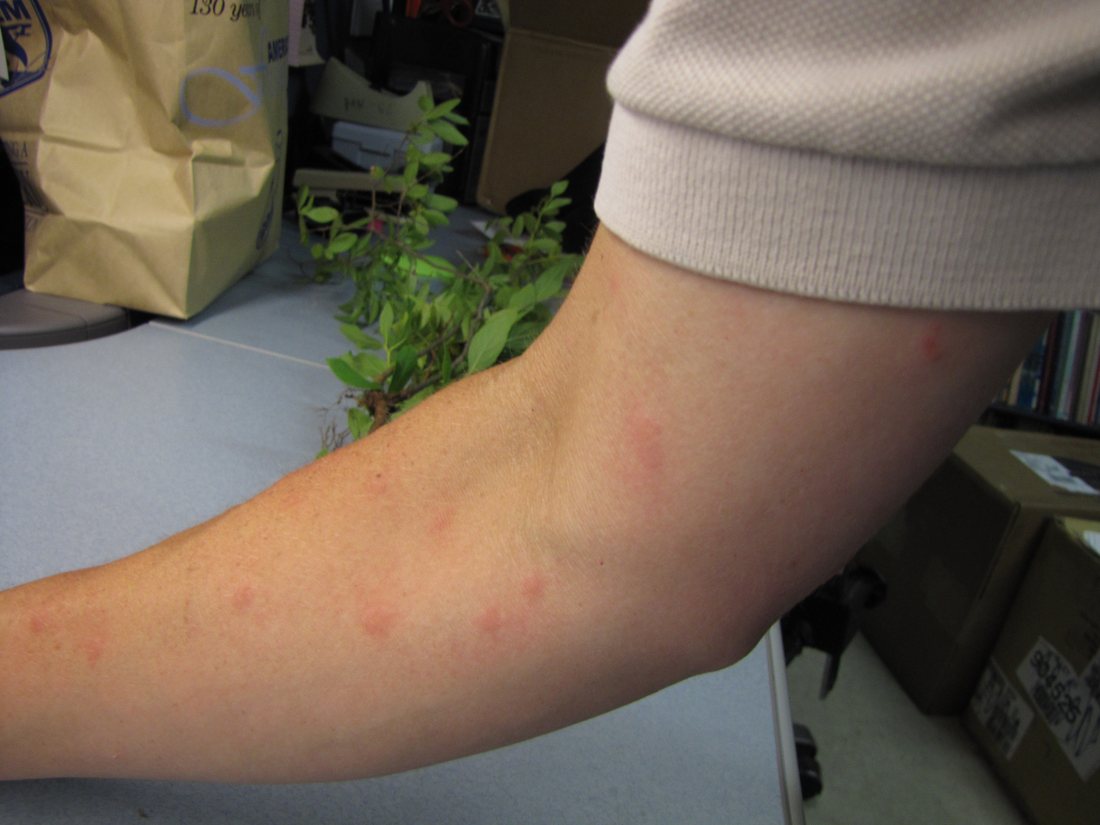
Nine photographs of real mosquito bites, arranged from the ordinary case to the alarming one. The ordinary case is the first frame and it is what almost everybody has: one raised bump that itches for two days and goes. The frames after it exist because two situations are worth recognising — a reaction far bigger than the bite deserves, and a bite that has been scratched into a wound.
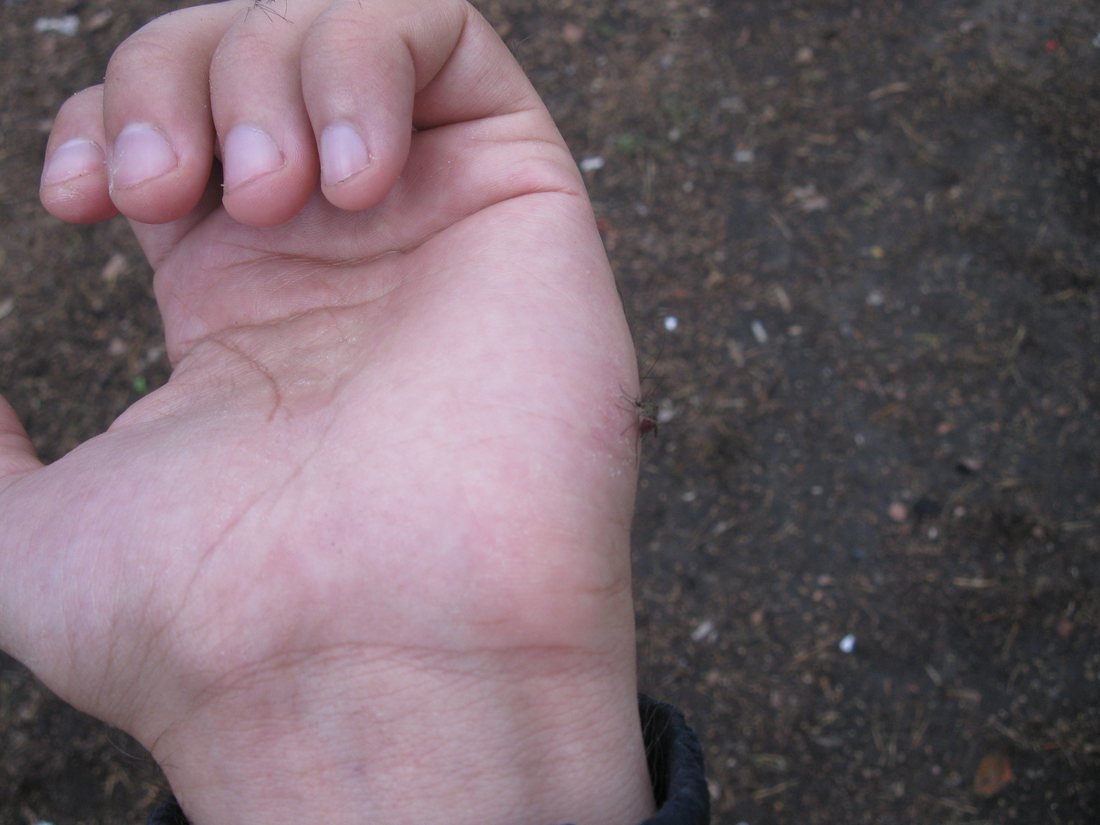
These are photographs of real bites. Eight show the mark on skin and the last shows a mosquito feeding. Published under CC BY-SA or public domain, with the photographer, the licence and the source file named beneath each one; the CC BY-SA frames have been reduced in size by us and are shared on the same terms. What none of them can show is which species bit — that is not written on the skin.
Bigger than the frames above? The app reads your photo and says whether the reaction is ordinary. Download free iPhone & iPad · no account
Size is not the question. Direction is
The single most common worry about a mosquito bite is that it has become infected, and the single most common reason people think so is that it got big. Size is a poor signal: a large local reaction to one bite can cover several centimetres, be hot, firm and genuinely alarming, and still be nothing but an immune response to saliva. What separates it from an infection is not how big it is on the day you look, but which way it is heading on the day after.
| Ordinary bite | Bump a few millimetres across, itchy, peaks within hours, fades over two to three days. Nothing to do beyond not scratching it. |
|---|---|
| Large local reaction | One bite, several centimetres of firm hot swelling, sometimes with a blister. Worst within 48 hours, then improves. Commoner in children and on first exposure to a local species. |
| Infected bite | Worse on day three than day one. Redness spreading outward, increasing heat and pain, pus, sometimes fever or a red streak. Nearly always scratched open first. |
| Dozens at once | Tells you about exposure — an evening outdoors, a still night, standing water nearby — and nothing about the species. |
| Dark marks weeks later | Post-inflammatory pigmentation from scratching, not scarring and not infection. Commoner and longer-lasting on darker skin. |
The bite you scratch is the one that causes trouble
A mosquito bite does not become infected on its own. It becomes infected when fingernails break the skin and carry bacteria into it, which is why the scratched ankle in the photographs looks so much worse than the fresh welt above it despite being the same insect. This is the one part of a mosquito bite that is genuinely within your control, and it is worth more than any cream: how to stop a mosquito bite from itching sets out what actually reduces the urge.
- Cold, not heat. A cold compress for ten minutes blunts the itch and the swelling. It works because it slows the histamine reaction, and it can be repeated as often as you like.
- Cover it if you scratch in your sleep. A plaster over the bite is more effective than willpower and is the single best way to keep a bite from becoming a wound.
- Hydrocortisone for the itch, not for the size. A thin layer of 1% twice a day settles the itch. It does not shrink a large local reaction faster and is not needed for an ordinary bite.
- Draw the edge if it is spreading. A pen line at the border turns "is this getting worse?" into something you can see rather than remember.
- Judge on day three. Better means it was always just a bite. Worse means it needs to be looked at, whatever started it.
What to put on it is set out in full under bite treatment, and the two questions people ask most have their own pages: hydrocortisone cream for insect bites and antihistamines for bug bites.
Get a photo assessment in the app
Everything above is free to read. The app adds what a page cannot: point your camera at the bite and get an assessment of the most likely cause, a severity read, and a day-by-day care plan — including the specific signs that mean you should be seen.
Download on the App Store — free
iPhone and iPad · Free to download · No account needed
When it is not a mosquito
Scattered itchy bumps on uncovered skin are the commonest presentation of a mosquito bite and also of several other things. The distinction that matters most is bed bugs, because the answer changes what you do next — a mosquito bite is over in a week, an infestation is not: bed bug versus mosquito bites sets the two side by side. Bites on covered skin, bites that appear overnight in the same bed each night, or bites in a line are all arguments against a mosquito.
- Bed bug bite picturesBites on covered skin, appearing overnight, plus the fecal staining that settles it when the bites cannot.
- Flea bite picturesSmall spots concentrated below the knee, usually with a pet in the house.
- Mosquito bites in detailThe species, the timeline, and what a mosquito bite actually does to skin.
- What bit me, by stateWhich biting species are actually recorded where you are, from verified occurrence records.
Seek medical care if
Call emergency services now for difficulty breathing, swelling of the lips, tongue or throat, dizziness or fainting, or hives spreading away from the bite.
- Redness that keeps spreading on day three, with increasing heat and pain — an infected bite rather than a large reaction.
- Pus, a red streak running away from the bite, or fever and chills.
- Fever, headache, joint pain or a rash in the days after being bitten in an area with mosquito-borne disease.
- Swelling of the lips, tongue or throat, wheezing or dizziness after a bite.
- A bite that has not begun to improve after a week, or one in a person with diabetes or a weakened immune system that is not clearly settling.
Common questions
What does a mosquito bite look like?
A raised bump a few millimetres across, pale or pink in the middle with a red halo, appearing within minutes to a couple of hours and itching for two or three days. Bites are scattered and unevenly spaced on skin that was uncovered. There is no line, no cluster pattern and no fixed number — the count tells you how long you stood outside, not which species bit you.
Why is my mosquito bite so big?
Because the reaction is to mosquito saliva, and how strongly you react is individual. A large local reaction — several centimetres of firm, hot, itchy swelling from one bite — is an exaggerated immune response, not an infection. It is commoner in children, in people newly exposed to a local mosquito species, and it tends to lessen over years of exposure. It peaks within a day or two and then settles, which is the feature that separates it from infection.
How do I tell a big reaction from an infected bite?
By what it does over two to three days. A large local reaction is at its worst within about 48 hours and then improves. An infection is worse on day three than on day one: the redness keeps spreading, the skin gets hotter and more painful, and pus, fever or a red streak running away from the site may appear. Almost every infected mosquito bite was scratched open first.
How long do mosquito bites last?
The itch is usually gone in two to three days and the mark within a week. A large local reaction can take a week or two to flatten. Scratched bites take longest because the healing restarts each time the skin is broken, and they are the ones that leave a darker mark for months afterwards, particularly on darker skin.
Can you tell which mosquito bit you from the bite?
No. The mark is your reaction to saliva, not a signature of the species, and no photograph of skin distinguishes an Aedes bite from a Culex bite. What narrows it is where you were and when: species differ by region, habitat and time of day, and that is checkable in a way the mark is not.