Flea bite pictures
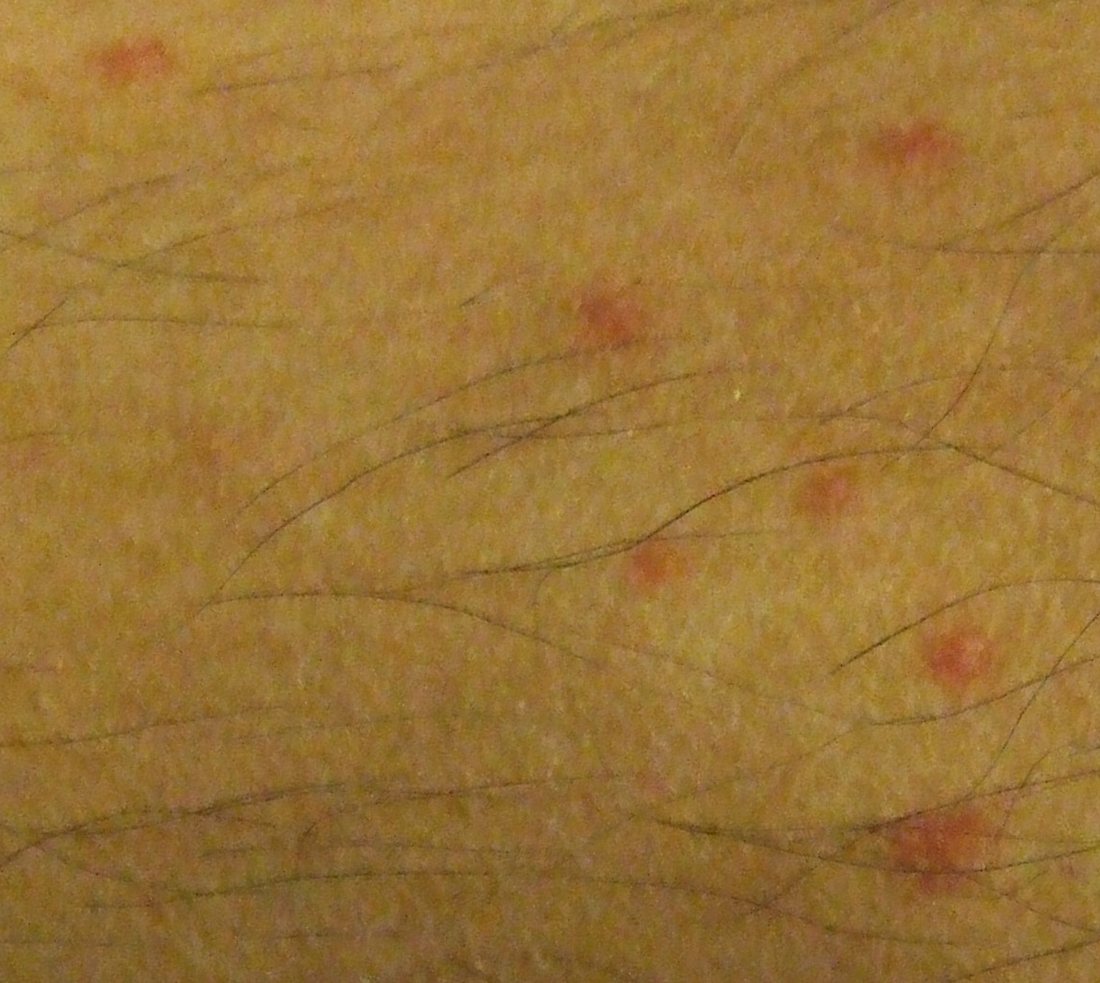
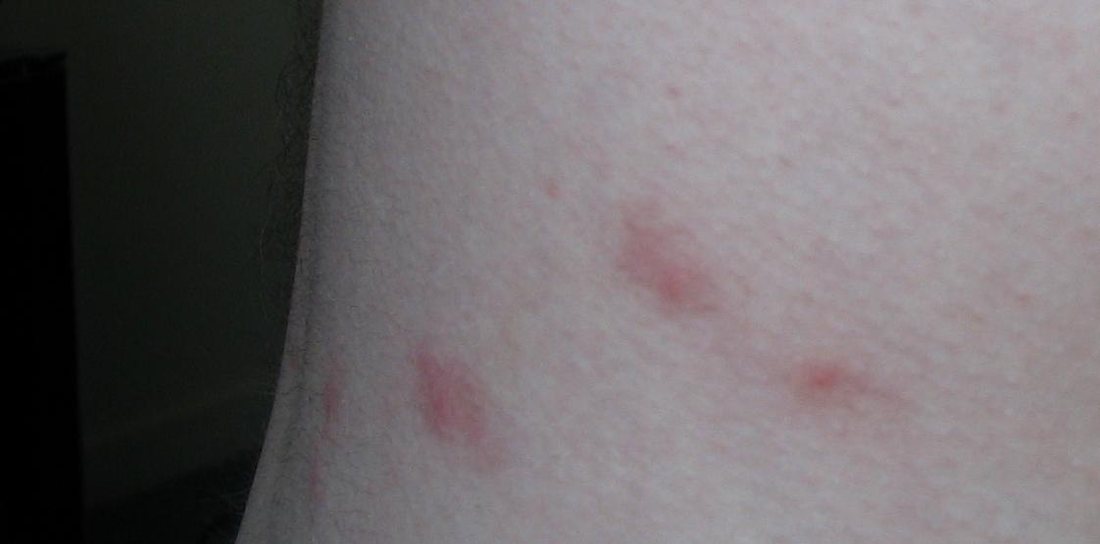
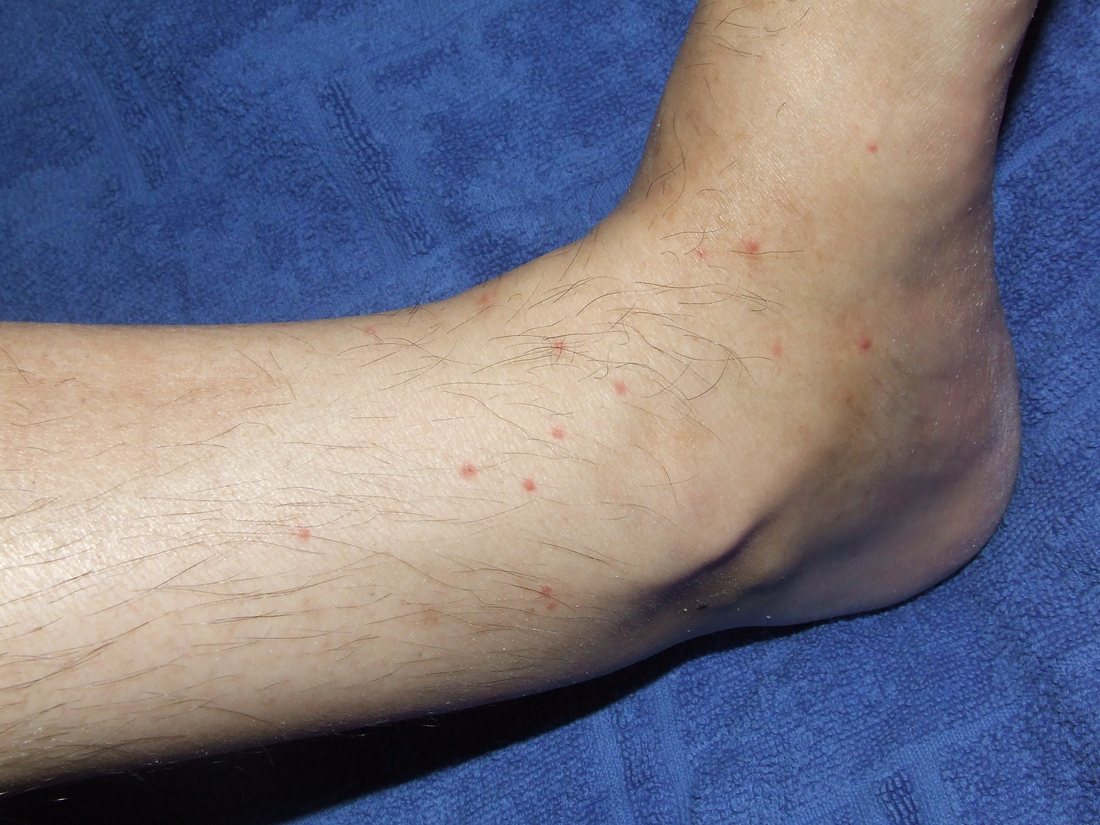
Three photographs, and that is the honest total. Freely licensed photographs of flea bites on human skin are scarce, and most of what an image search returns under that name is something else — we say which below. The three here show what an ordinary flea bite actually is: a small red spot with a darker centre, low on the leg, usually with company.
These are photographs of real bites. All three are flea bites on human skin, two of them from the same photographer. Published under CC BY and CC BY-SA, with the photographer, the licence and the source file named beneath each one; the CC BY-SA frames have been reduced in size by us and are shared on the same terms.
Three photographs is a thin sample. The app reads your own photo and names the likeliest cause. Download free iPhone & iPad · no account
Two things image searches show that are not flea bites
This matters more than another photograph would. If you go looking for pictures of flea bites you will meet both of these within the first screen of results, and both will frighten you about a bite that is nothing of the kind.
| Tungiasis (jiggers) | The sand flea Tunga penetrans burrows into the skin of the foot and stays there, producing hard crusted nodules and, untreated, severe damage. It is a flea, but it is an infestation of the skin rather than a bite, it is confined to parts of the tropics, and it looks nothing like the photographs above. |
|---|---|
| Swimmer’s itch | Often filed under "duck fleas". There is no flea involved: it is a reaction to schistosome larvae from freshwater snails, picked up while swimming. Dozens of itchy spots on skin that was under water, appearing hours later. |
Where the bites are tells you more than what they look like
A single small red spot is the least specific finding in this entire subject — almost every biting insect produces one. What separates fleas from the alternatives is the map of your own body and the contents of your house.
| Ankles and lower legs | Fleas jump from floor level and rarely get higher on an adult. Bites above the knee on someone who has been standing and walking are an argument against fleas. |
|---|---|
| Anywhere, on a child | Children sit and crawl on the floor, so the same fleas produce bites over the legs, arms and trunk. Height is a property of the person, not of the insect. |
| Groups of two or three | Common, not diagnostic. Bed bugs group as well. |
| Itch immediately | Flea bites usually itch as they happen. Bed bug bites are typically noticed on waking, hours after the fact. |
| An animal in the house | The strongest single piece of evidence. A cat or dog scratching more than usual, or flea dirt in its coat, settles the question faster than any photograph of your ankle. |
The comparison people actually need is bed bug versus flea bites, because the two are confused constantly and the response to each is completely different. Bed bug bite pictures shows the other side of that comparison, including the mattress staining that settles it.
Get a photo assessment in the app
Everything above is free to read. The app adds what a page cannot: point your camera at the bite and get an assessment of the most likely cause, a severity read, and a day-by-day care plan — including the specific signs that mean you should be seen.
Download on the App Store — free
iPhone and iPad · Free to download · No account needed
What to do about the bites, and about the fleas
- Cold compress, then leave them. Ten minutes of cold blunts the itch. The bites themselves need nothing else.
- Hydrocortisone 1% if the itch is keeping you awake. Thin layer, twice a day. An antihistamine tablet helps some people more than any cream.
- Do not scratch them open. Flea bites are low on the leg, where skin heals slowly and gets knocked; a scratched bite on an ankle is the one that turns into an infection.
- Treat the animal and the house together. Treating only the pet leaves the eggs and pupae in the carpet, and the biting resumes within weeks. Vacuuming, hot-washing bedding and treating the environment matter as much as the animal does.
- Expect it to take a few weeks. Pupae hatch over time and are resistant to insecticide, so new fleas keep appearing after the first treatment. That is normal and is not a sign it failed.
For the itch specifically, hydrocortisone cream for insect bites and antihistamines for bug bites set out what each one does and does not do.
- Bed bug bite picturesBites on covered skin, appearing overnight, plus the evidence on the mattress.
- Mosquito bite picturesScattered welts on uncovered skin, and the difference between a big reaction and an infected one.
- Flea bites in detailThe species, the timeline and what a flea bite does to skin.
- What bit me, by stateWhich biting species are actually recorded where you are.
Seek medical care if
Call emergency services now for difficulty breathing, swelling of the lips, tongue or throat, dizziness or fainting, or hives spreading away from the bite.
- A bite that is worse on day three than on day one: spreading redness, increasing heat and pain, or pus.
- A red streak running away from a bite, or fever and chills.
- Widespread blistering rather than individual spots.
- Bites in someone with diabetes or a weakened immune system that are not clearly improving — the lower leg is a bad place for a wound to be ignored.
- Swelling of the lips, tongue or throat, wheezing or dizziness after being bitten.
Common questions
What do flea bites on humans look like?
Small red spots two to five millimetres across, each often with a darker point in the centre where the flea fed, surrounded by a pale halo. They itch immediately rather than after a delay. On adults they concentrate on the ankles and lower legs, because fleas live in carpet and bedding and jump upward from the floor.
Do flea bites come in threes?
Often, but it is not a rule and it is not diagnostic. A flea may probe two or three times within a small area before it settles or is disturbed, which produces the grouping people describe as breakfast, lunch and dinner. Bed bugs do the same thing, so a group of three does not separate the two — location and timing do.
How do I tell flea bites from bed bug bites?
By where they are and when they appear. Flea bites cluster on the ankles and lower legs and can appear at any time of day; bed bug bites appear overnight on skin that was uncovered in bed — arms, shoulders, face, upper back. A pet in the house argues for fleas. Fecal spotting on the mattress seam argues for bed bugs, and that evidence is far more reliable than the marks on skin.
Why do I have flea bites if I have no pets?
Fleas survive in carpets, floorboards and upholstery after an animal has gone, and pupae can wait months before hatching in response to vibration and warmth. Moving into a property where a pet lived, or returning to an empty house, is a recognised way to be bitten with no animal anywhere in sight. Wildlife in a roof space or under a floor does the same.
Are flea bites dangerous?
For nearly everyone they are an itch and nothing more, and they settle within a week. The problems are secondary: scratching breaks the skin and lets bacteria in, and some people develop a strong allergic reaction with blistering. Fleas can transmit disease, but that is uncommon in most of the world and is not what an ordinary itchy ankle represents.