Brown recluse spider bite
What it looks like: A red bump that may develop a pale or blue-grey centre and, in a minority of cases, an ulcer, red rim, dusky centre. Pattern: single site. Onset: often painless at first. Worst at: pain and colour change over 24 to 72 hours. Duration: most heal in weeks; a true necrotic lesion can take months.
Photographs of the bite itself: eight photographs, following a recluse bite from the first day to the scar.
| Looks like | a red bump that may develop a pale or blue-grey centre and, in a minority of cases, an ulcer |
|---|---|
| Pattern | single site |
| Size | 5–50 mm |
| Appears | often painless at first |
| Worst at | pain and colour change over 24 to 72 hours |
| Lasts | most heal in weeks; a true necrotic lesion can take months |
| Itch | ●●○○○ 2/5 |
| Pain | ●●●●○ 4/5 |
| Usually on | torso under clothing, upper arms, thighs — often where clothing was put on with the spider inside |
| Active | April to October, night |
Not sure it is brown recluse spider? The app reads the photo and names the likeliest cause. Download free iPhone & iPad · no account
How to tell it apart
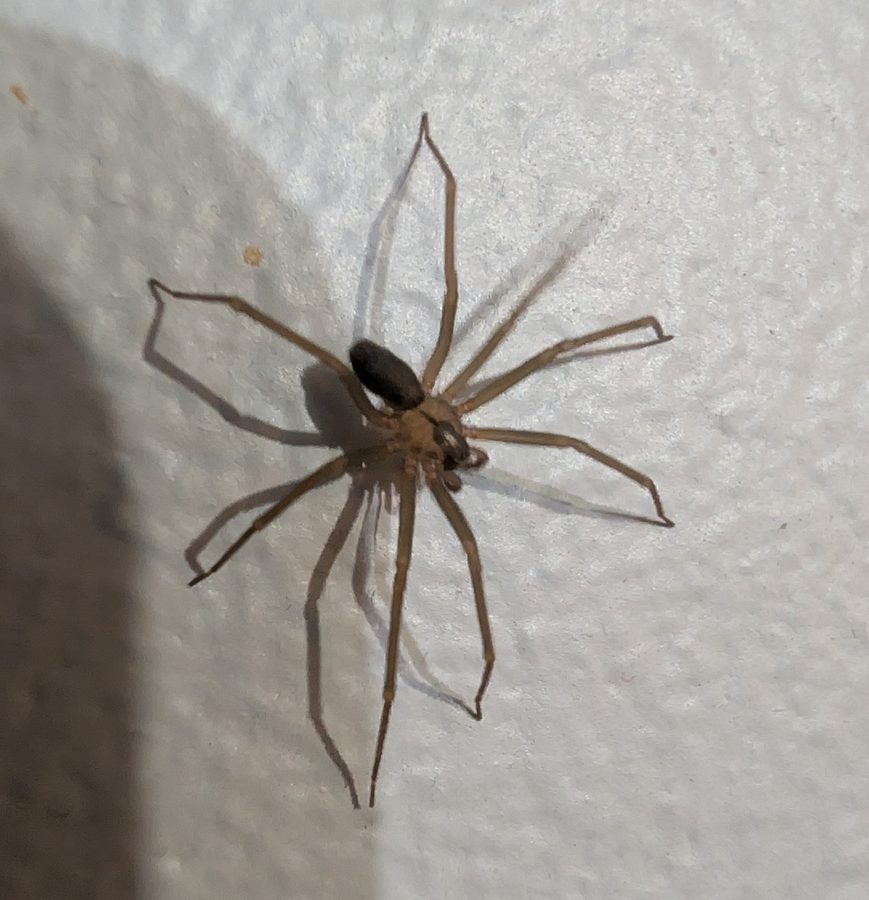
Genuine brown recluse bites are far rarer than the diagnosis. The spider is uniformly tan with a darker violin-shaped mark behind the eyes and lives in a limited geographic range — roughly Kansas to Texas and east to Georgia. Outside that range a "recluse bite" is almost always something else.
Where and when you meet it
Habitat: undisturbed storage — boxes, wardrobes, behind furniture — in the south-central states.
Across 6,719 verified US records in the GBIF biodiversity database, sightings of Loxosceles reclusa concentrate in May to August. That is the window when bites are most likely — it is observation data rather than a guess, and it shifts with latitude.
States with the most recorded sightings
- Texas 1,203 records · all bites in Texas
- Missouri 1,130 records
- Oklahoma 854 records
- Kansas 614 records
- Tennessee 589 records
- Illinois 580 records
- Arkansas 536 records
- Alabama 269 records
- Kentucky 268 records
- Indiana 193 records
- Mississippi 136 records
- Georgia 73 records
Record counts reflect where people report and identify specimens, not exact abundance. They are useful for ruling a species in, not for ruling it out.
Where it is recorded
| Country | Records | Peak months there |
|---|---|---|
| United States | 6,719 | May to August |
| Germany | 1 | — |
Verified records from the GBIF biodiversity database across the seven countries we cover. A country missing from this table means we have no records for it, not that the species is absent.
What it means for you
The most common thing mistaken for a recluse bite is a staph skin infection, which spreads faster, hurts more and needs antibiotics rather than wound care. That distinction matters more than identifying the spider: an expanding, hot, painful area with fever is a reason to be seen quickly regardless of what caused it.
Seek medical care if
- a wound that darkens, blisters or breaks down over days
- fever, chills or widespread rash
- rapidly spreading redness and pain — more often a bacterial infection than a spider
Care at home
- wash, cold pack, elevate the limb
- have a changing lesion assessed rather than treated at home
- do not apply heat, and do not let anyone cut the lesion out early
Preventing the next one
- shake out clothing and bedding stored in the garage or loft
- gloves when handling boxes
- reduce cardboard clutter
Common questions
Do brown recluse spiders bite humans?
Genuine brown recluse bites are far rarer than the diagnosis. The spider is uniformly tan with a darker violin-shaped mark behind the eyes and lives in a limited geographic range — roughly Kansas to Texas and east to Georgia. Outside that range a "recluse bite" is almost always something else.
What does a brown recluse spider bite look like?
A red bump that may develop a pale or blue-grey centre and, in a minority of cases, an ulcer, red rim, dusky centre. Pattern: single site. Size: typically 5–50 mm across.
Does a brown recluse spider bite hurt?
Pain is severe (4 out of 5 on this site's scale) and itch is mild itch (2 out of 5). Onset: often painless at first. Worst at: pain and colour change over 24 to 72 hours. Duration: most heal in weeks; a true necrotic lesion can take months.
How do I know it was a brown recluse spider?
Genuine brown recluse bites are far rarer than the diagnosis. The spider is uniformly tan with a darker violin-shaped mark behind the eyes and lives in a limited geographic range — roughly Kansas to Texas and east to Georgia. Outside that range a "recluse bite" is almost always something else.
How long does a brown recluse spider bite last?
Duration: most heal in weeks; a true necrotic lesion can take months. Worst at: pain and colour change over 24 to 72 hours.
When is it a problem?
Seek care for: a wound that darkens, blisters or breaks down over days; fever, chills or widespread rash; rapidly spreading redness and pain — more often a bacterial infection than a spider.
Can it transmit disease?
No human disease is known to be transmitted by this species in the United States. The practical risk is infection from scratching.
Get a photo assessment in the app
Everything above is free to read. The app adds what a page cannot: point your camera at the bite and get an assessment of the most likely cause, a severity read, and a day-by-day care plan — including the specific signs that mean you should be seen.
Download on the App Store — free
iPhone and iPad · Free to download · No account needed