Yellow sac spider bite
What it looks like: A red, tender bump, occasionally with a small blister, red, sometimes with a pale centre. Pattern: single, sometimes two nearby. Onset: stinging pain at the time of the bite. Worst at: 1 to 2 days. Duration: about a week.
| Looks like | a red, tender bump, occasionally with a small blister |
|---|---|
| Pattern | single, sometimes two nearby |
| Size | 3–20 mm |
| Appears | stinging pain at the time of the bite |
| Worst at | 1 to 2 days |
| Lasts | about a week |
| Itch | ●●●○○ 3/5 |
| Pain | ●●●○○ 3/5 |
| Usually on | neck, arms, torso — often bites received in bed |
| Active | April to November, night |
Not sure it is yellow sac spider? The app reads the photo and names the likeliest cause. Download free iPhone & iPad · no account
How to tell it apart
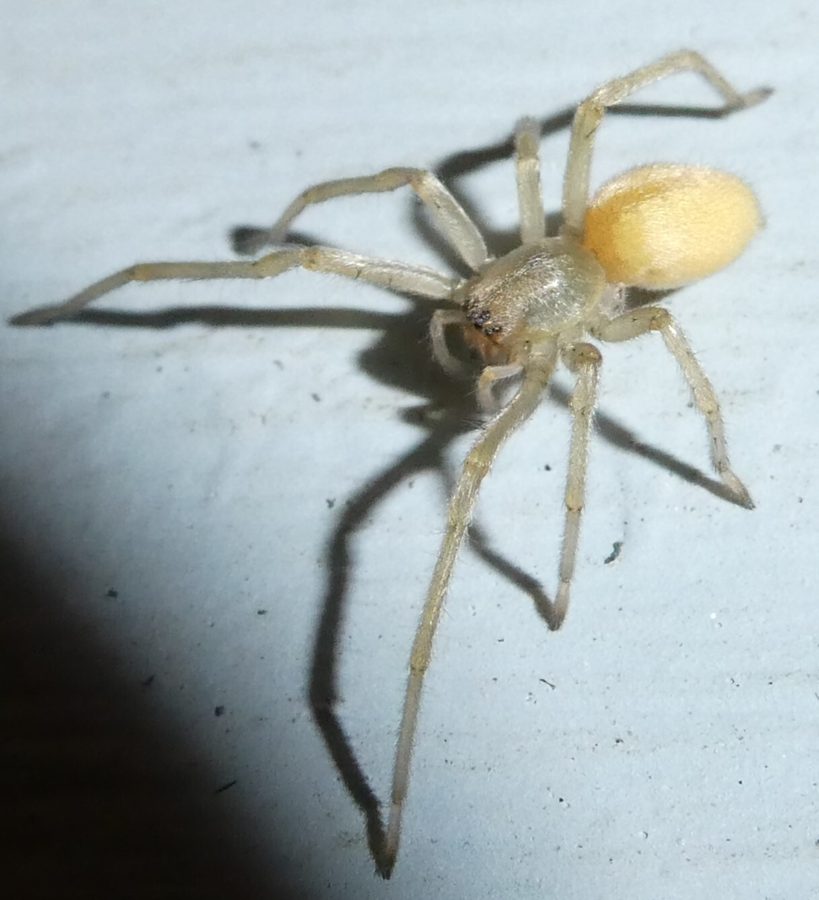
Small, pale yellow-green, and the spider most likely to bite a sleeping person indoors. The bite stings at the time, unlike a bed bug, and appears singly rather than in a line — the two are otherwise easy to confuse because both happen overnight on uncovered skin.
Where and when you meet it
Habitat: ceiling corners, curtain folds and wall junctions indoors; this is a common household spider nationwide.
Across 1,919 verified US records in the GBIF biodiversity database, sightings of Cheiracanthium mildei concentrate in April to June. That is the window when bites are most likely — it is observation data rather than a guess, and it shifts with latitude.
States with the most recorded sightings
- California 427 records
- Colorado 181 records · all bites in Colorado
- New York 138 records · all bites in New York
- Pennsylvania 124 records
- Texas 111 records · all bites in Texas
- Ohio 99 records
- Massachusetts 93 records
- Illinois 91 records · all bites in Illinois
- Michigan 77 records · all bites in Michigan
- Utah 73 records
- Oregon 67 records · all bites in Oregon
- Wisconsin 52 records
Record counts reflect where people report and identify specimens, not exact abundance. They are useful for ruling a species in, not for ruling it out.
Where it is recorded
| Country | Records | Peak months there |
|---|---|---|
| United States | 1,919 | May to June |
| Canada | 1,574 | September |
| France | 929 | May to July |
| Germany | 445 | January |
| Brazil | 1 | — |
| United Kingdom | 1 | — |
Verified records from the GBIF biodiversity database across the seven countries we cover. A country missing from this table means we have no records for it, not that the species is absent.
What it means for you
Yellow sac spiders were once widely blamed for necrotic wounds. Better evidence has largely cleared them: local pain and redness are typical, and lesions that break down usually have another cause.
Seek medical care if
- an enlarging ulcer
- spreading redness with fever
Care at home
- wash, cold pack, antihistamine if itchy
- keep the area clean while it heals
Preventing the next one
- vacuum ceiling corners and behind curtains
- seal gaps around window frames
Common questions
Do yellow sac spiders bite humans?
Small, pale yellow-green, and the spider most likely to bite a sleeping person indoors. The bite stings at the time, unlike a bed bug, and appears singly rather than in a line — the two are otherwise easy to confuse because both happen overnight on uncovered skin.
What does a yellow sac spider bite look like?
A red, tender bump, occasionally with a small blister, red, sometimes with a pale centre. Pattern: single, sometimes two nearby. Size: typically 3–20 mm across.
Does a yellow sac spider bite hurt?
Pain is moderate (3 out of 5 on this site's scale) and itch is noticeable itch (3 out of 5). Onset: stinging pain at the time of the bite. Worst at: 1 to 2 days. Duration: about a week.
How do I know it was a yellow sac spider?
Small, pale yellow-green, and the spider most likely to bite a sleeping person indoors. The bite stings at the time, unlike a bed bug, and appears singly rather than in a line — the two are otherwise easy to confuse because both happen overnight on uncovered skin.
How long does a yellow sac spider bite last?
Duration: about a week. Worst at: 1 to 2 days.
When is it a problem?
Seek care for: an enlarging ulcer; spreading redness with fever.
Can it transmit disease?
No human disease is known to be transmitted by this species in the United States. The practical risk is infection from scratching.
Get a photo assessment in the app
Everything above is free to read. The app adds what a page cannot: point your camera at the bite and get an assessment of the most likely cause, a severity read, and a day-by-day care plan — including the specific signs that mean you should be seen.
Download on the App Store — free
iPhone and iPad · Free to download · No account needed