Black widow spider bite
What it looks like: Two small puncture marks with a pale centre and a red ring, red ring, sometimes blanching in the middle. Pattern: single site. Onset: a sharp pinprick, then pain building over 30 to 60 minutes. Worst at: 2 to 12 hours. Duration: symptoms usually settle within 2 to 3 days.
| Looks like | two small puncture marks with a pale centre and a red ring |
|---|---|
| Pattern | single site |
| Size | 2–15 mm |
| Appears | a sharp pinprick, then pain building over 30 to 60 minutes |
| Worst at | 2 to 12 hours |
| Lasts | symptoms usually settle within 2 to 3 days |
| Itch | ●○○○○ 1/5 |
| Pain | ●●●●● 5/5 |
| Usually on | hands, forearms, legs — usually where a hand reached into a dark space |
| Active | April to October, the spider is nocturnal but bites when trapped against skin at any hour |
Not sure it is black widow spider? The app reads the photo and names the likeliest cause. Download free iPhone & iPad · no account
How to tell it apart
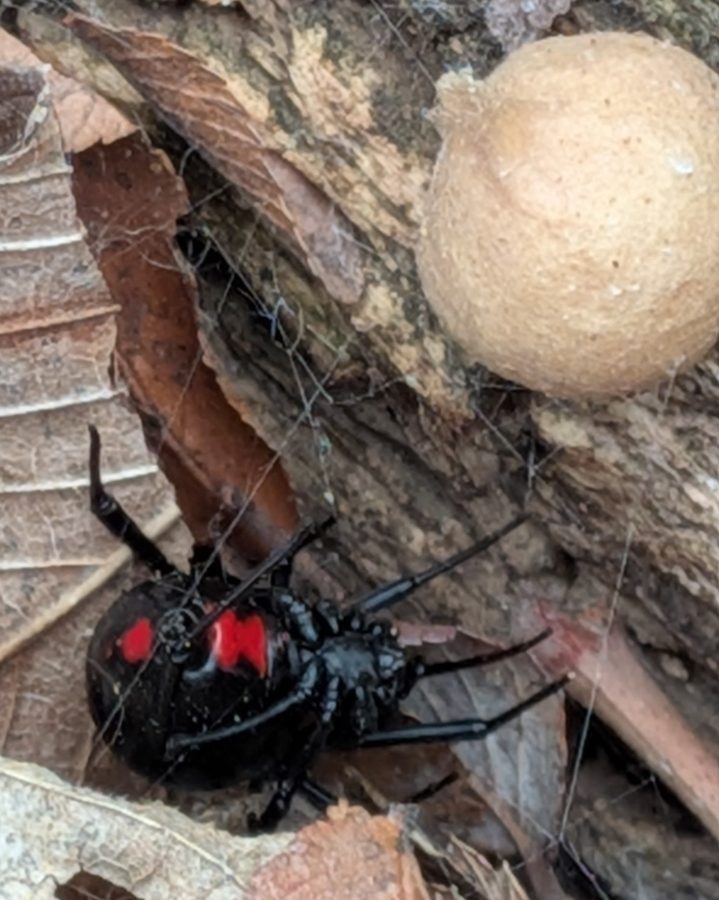
The bite itself is unimpressive — a pinprick and two faint punctures. What identifies it is what follows: pain that spreads from the bite into large muscle groups, classically severe abdominal cramping that has been mistaken for appendicitis. The spider is identifiable by the red hourglass on the underside of a glossy black abdomen.
Where and when you meet it
Habitat: woodpiles, sheds, meter boxes, garden furniture, under eaves — undisturbed dark corners.
Across 7,561 verified US records in the GBIF biodiversity database, sightings of Latrodectus mactans concentrate in July to October. That is the window when bites are most likely — it is observation data rather than a guess, and it shifts with latitude.
States with the most recorded sightings
- Texas 1,867 records · all bites in Texas
- Oklahoma 729 records
- North Carolina 634 records
- Virginia 615 records · all bites in Virginia
- Arkansas 467 records · all bites in Arkansas
- Florida 440 records · all bites in Florida
- Alabama 361 records
- Georgia 314 records
- Tennessee 289 records
- South Carolina 288 records · all bites in South Carolina
- Maryland 265 records
- Mississippi 251 records
Record counts reflect where people report and identify specimens, not exact abundance. They are useful for ruling a species in, not for ruling it out.
Where it is recorded
| Country | Records | Peak months there |
|---|---|---|
| United States | 7,561 | July to September |
| Australia | 8 | — |
| Brazil | 6 | — |
| Germany | 1 | — |
| Canada | 1 | — |
Verified records from the GBIF biodiversity database across the seven countries we cover. A country missing from this table means we have no records for it, not that the species is absent.
What it means for you
Deaths are extremely rare in the United States, and most bites resolve with supportive care. But this is one of the few bites where "wait and see at home" is the wrong instinct: symptoms peak hours later, and treatment is far easier before the cramping is established.
Seek medical care if
- severe muscle cramps in the abdomen, back or chest
- sweating, nausea, rising blood pressure
- any suspected bite in a child, an older adult or during pregnancy — seek care
Care at home
- wash the area and apply a cold pack
- seek medical care for anything beyond mild local pain — antivenom exists and pain control matters
- do not apply a tourniquet or attempt to cut or suck the wound
Preventing the next one
- gloves when moving woodpiles, boxes or garden furniture
- shake out stored shoes and gloves
- reduce clutter in sheds and garages
Common questions
Do black widow spiders bite humans?
The bite itself is unimpressive — a pinprick and two faint punctures. What identifies it is what follows: pain that spreads from the bite into large muscle groups, classically severe abdominal cramping that has been mistaken for appendicitis. The spider is identifiable by the red hourglass on the underside of a glossy black abdomen.
What does a black widow spider bite look like?
Two small puncture marks with a pale centre and a red ring, red ring, sometimes blanching in the middle. Pattern: single site. Size: typically 2–15 mm across.
Does a black widow spider bite hurt?
Pain is very severe (5 out of 5 on this site's scale) and itch is barely any itch (1 out of 5). Onset: a sharp pinprick, then pain building over 30 to 60 minutes. Worst at: 2 to 12 hours. Duration: symptoms usually settle within 2 to 3 days.
How do I know it was a black widow spider?
The bite itself is unimpressive — a pinprick and two faint punctures. What identifies it is what follows: pain that spreads from the bite into large muscle groups, classically severe abdominal cramping that has been mistaken for appendicitis. The spider is identifiable by the red hourglass on the underside of a glossy black abdomen.
How long does a black widow spider bite last?
Duration: symptoms usually settle within 2 to 3 days. Worst at: 2 to 12 hours.
When is it a problem?
Seek care for: severe muscle cramps in the abdomen, back or chest; sweating, nausea, rising blood pressure; any suspected bite in a child, an older adult or during pregnancy — seek care.
Can it transmit disease?
No human disease is known to be transmitted by this species in the United States. The practical risk is infection from scratching.
Get a photo assessment in the app
Everything above is free to read. The app adds what a page cannot: point your camera at the bite and get an assessment of the most likely cause, a severity read, and a day-by-day care plan — including the specific signs that mean you should be seen.
Download on the App Store — free
iPhone and iPad · Free to download · No account needed