Wolf spider bite
What it looks like: A red swollen area with two faint puncture points, red. Pattern: single site. Onset: immediate sharp pain. Worst at: first few hours. Duration: usually resolves in a few days.
| Looks like | a red swollen area with two faint puncture points |
|---|---|
| Pattern | single site |
| Size | 5–30 mm |
| Appears | immediate sharp pain |
| Worst at | first few hours |
| Lasts | usually resolves in a few days |
| Itch | ●●○○○ 2/5 |
| Pain | ●●●○○ 3/5 |
| Usually on | hands, feet, lower legs |
| Active | April to October, night — this spider hunts on the ground rather than building a web |
Not sure it is wolf spider? The app reads the photo and names the likeliest cause. Download free iPhone & iPad · no account
How to tell it apart
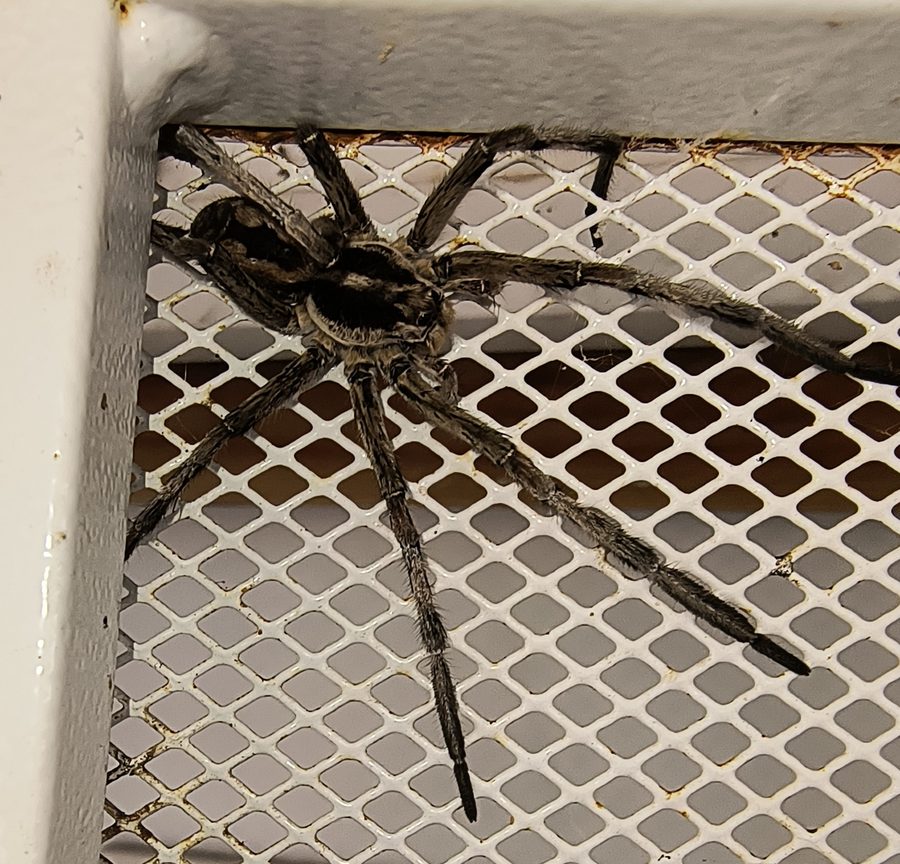
Large, hairy, fast, and frightening at close range — but medically unremarkable. Wolf spiders bite defensively when pressed against skin, the pain is immediate and sharp, and the reaction stays local. Their size makes them the spider most often blamed for bites they did not cause.
Where and when you meet it
Habitat: lawns, gardens, garages and basements across the whole country.
Across 2,110 verified US records in the GBIF biodiversity database, sightings of Hogna carolinensis concentrate in May, June, August, September. That is the window when bites are most likely — it is observation data rather than a guess, and it shifts with latitude.
States with the most recorded sightings
- Texas 652 records
- Arizona 365 records
- Colorado 239 records
- New Mexico 152 records
- Florida 110 records · all bites in Florida
- Kansas 91 records
- Utah 88 records · all bites in Utah
- Oklahoma 82 records
- North Carolina 27 records
- Arkansas 23 records
- Georgia 23 records
- Nebraska 21 records
Record counts reflect where people report and identify specimens, not exact abundance. They are useful for ruling a species in, not for ruling it out.
Where it is recorded
| Country | Records | Peak months there |
|---|---|---|
| United States | 2,110 | May, June, August, September, October |
Verified records from the GBIF biodiversity database across the seven countries we cover. A country missing from this table means we have no records for it, not that the species is absent.
What it means for you
Most "spider bites" presenting to clinics turn out to be bacterial infections or insect bites; wolf spiders get named because they are the spider people actually see indoors. If nobody saw a spider bite, the odds favour something else entirely.
Seek medical care if
- spreading redness, warmth or pus over the following days
- fever
Care at home
- wash with soap and water
- cold pack, elevate, over-the-counter pain relief
- watch for signs of infection over the next few days
Preventing the next one
- shoes on in the garden at night
- seal gaps around doors and basement windows
Common questions
Do wolf spiders bite humans?
Large, hairy, fast, and frightening at close range — but medically unremarkable. Wolf spiders bite defensively when pressed against skin, the pain is immediate and sharp, and the reaction stays local. Their size makes them the spider most often blamed for bites they did not cause.
What does a wolf spider bite look like?
A red swollen area with two faint puncture points, red. Pattern: single site. Size: typically 5–30 mm across.
Does a wolf spider bite hurt?
Pain is moderate (3 out of 5 on this site's scale) and itch is mild itch (2 out of 5). Onset: immediate sharp pain. Worst at: first few hours. Duration: usually resolves in a few days.
How do I know it was a wolf spider?
Large, hairy, fast, and frightening at close range — but medically unremarkable. Wolf spiders bite defensively when pressed against skin, the pain is immediate and sharp, and the reaction stays local. Their size makes them the spider most often blamed for bites they did not cause.
How long does a wolf spider bite last?
Duration: usually resolves in a few days. Worst at: first few hours.
When is it a problem?
Seek care for: spreading redness, warmth or pus over the following days; fever.
Can it transmit disease?
No human disease is known to be transmitted by this species in the United States. The practical risk is infection from scratching.
Get a photo assessment in the app
Everything above is free to read. The app adds what a page cannot: point your camera at the bite and get an assessment of the most likely cause, a severity read, and a day-by-day care plan — including the specific signs that mean you should be seen.
Download on the App Store — free
iPhone and iPad · Free to download · No account needed