Brown recluse bite pictures
Most wounds blamed on a brown recluse were caused by something else. That is not a technicality — it is the most useful thing on this page, because the commonest impostor is a staph infection, which gets worse while a spider bite is being waited out. Below are photographs of genuine recluse bites, day by day, and then the two questions that settle it faster than any photograph: where you were, and how fast it changed.
How a recluse bite changes over days
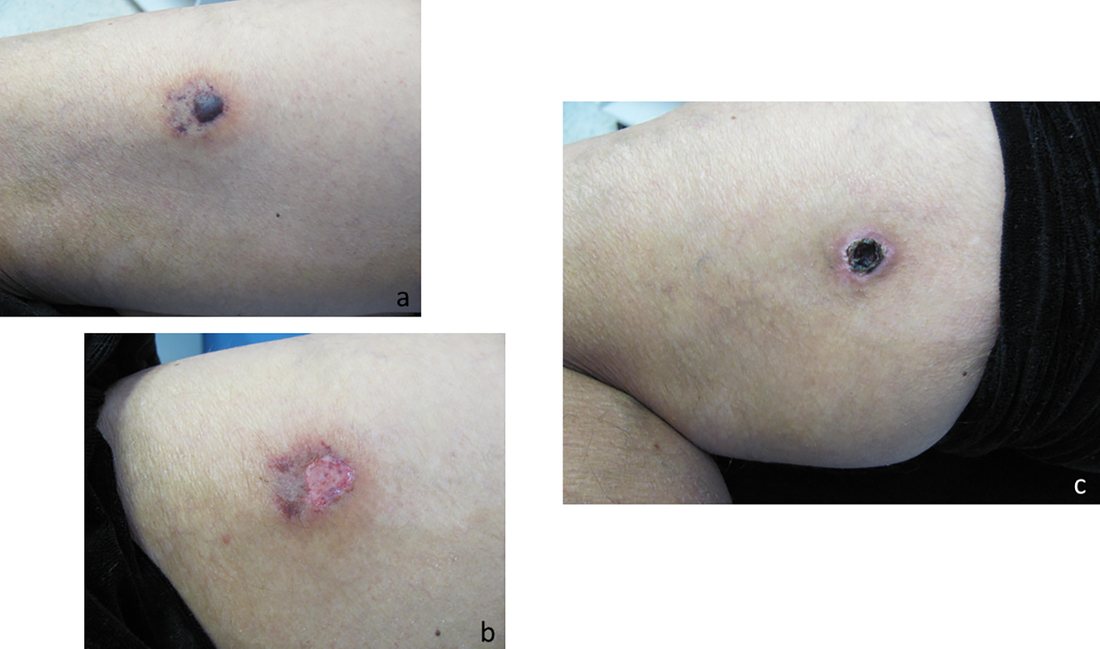
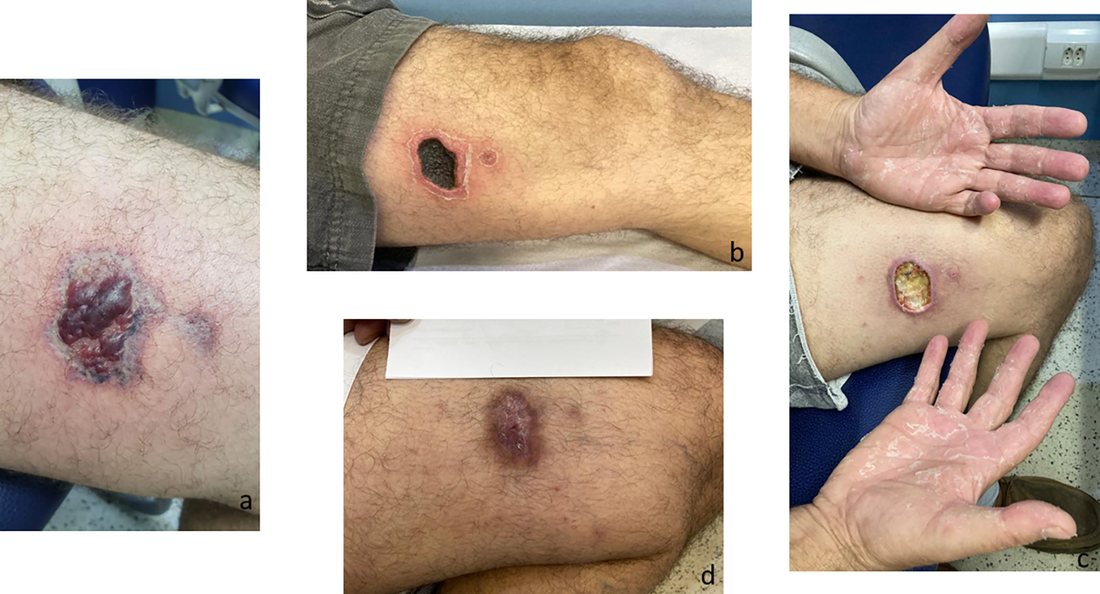
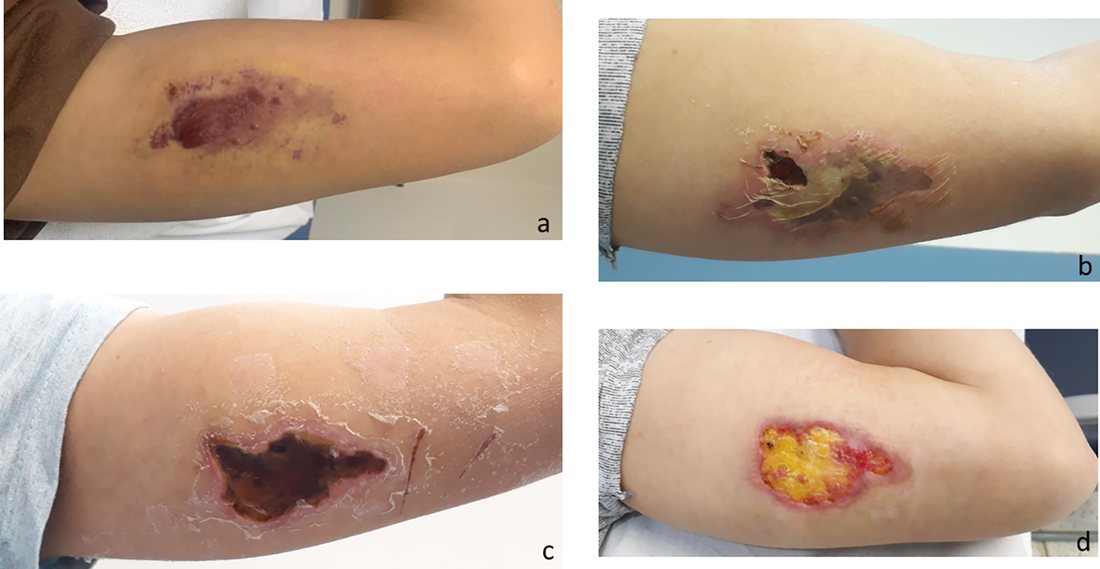
The single most misleading thing about the pictures people find online is the time scale. A recluse bite that turns into the dark crater everyone imagines takes one to two weeks to get there, and most never do. On day one there is often nothing worth photographing at all — many people do not feel the bite and cannot say when it happened.
These are photographs of real bites. Four sequences following individual bites, published under CC BY 4.0 by Malaque and colleagues, with the authors, the licence and the source file named beneath each one. These bites were photographed in Brazil and were caused by recluse spiders of the genus Loxosceles rather than confirmed Loxosceles reclusa; the venom and the wound behave the same way, and sequences this well dated do not exist for the North American species under a free licence.
Most wounds blamed on a recluse are not one. The app reads your photo and names the likeliest cause. Download free iPhone & iPad · no account
| Hours 0–6 | Usually nothing, or a mild sting. Most people do not know they have been bitten. A bite that is instantly and severely painful is arguing for something other than a recluse. |
|---|---|
| Day 1 | A small red or pale mark, sometimes with a faint ring. Itching or aching begins. At this point it is indistinguishable from a dozen other bites, and no photograph will separate them. |
| Days 1–3 | Pain increases and the patch becomes mottled or marbled — irregular red, white and bluish areas. The pale centre is failing blood supply. This is the stage that is characteristic, and it is easy to miss because it looks like a bruise. |
| Days 3–10 | In the minority that progress: a blister, then a firm sunken area that darkens. The skin around it stays inflamed. |
| Weeks 1–2 | A dry black scab with a clear edge. This is the image most people have in mind when they say "brown recluse bite", and it is the uncommon end of the range. |
| Weeks 2–12 | The scab separates and the wound underneath heals slowly from the edges. Six to twelve weeks is ordinary. The scar can stay visible for a year. |
Genuine brown recluse bites, and a close relative
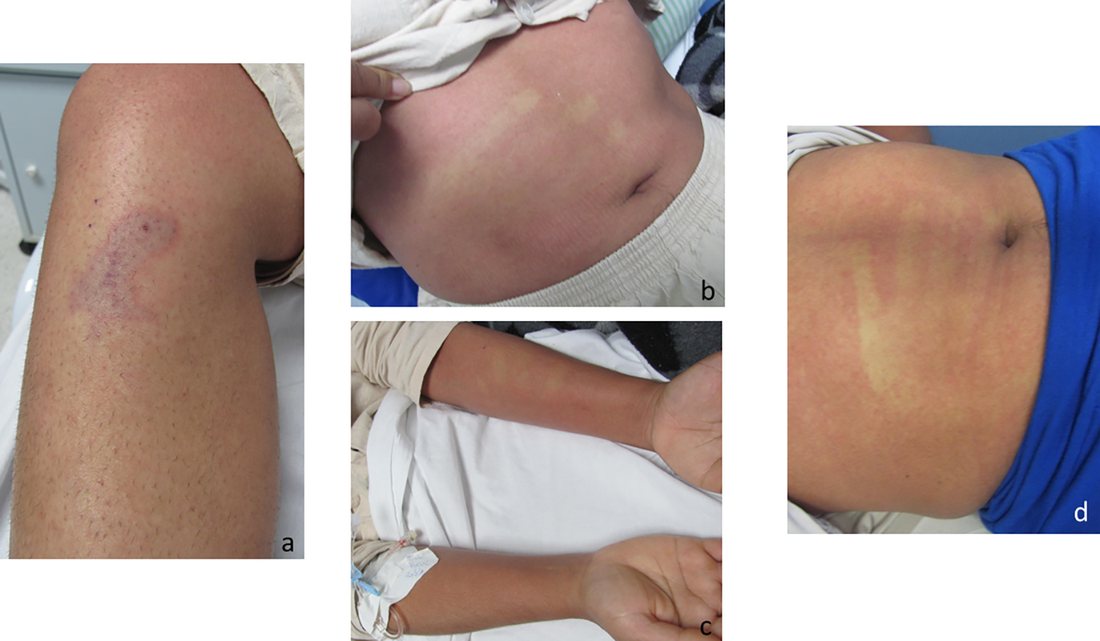
These are photographs of real bites. Four further photographs with the photographer, the licence and the source file named beneath each; the CC BY-SA frames have been reduced in size by us and are shared on the same terms. Two are confirmed brown recluse (Loxosceles reclusa) bites, one is a Chilean recluse (Loxosceles laeta) bite from South America, and one shows a rash spreading away from the bite — a sign that needs same-day attention.
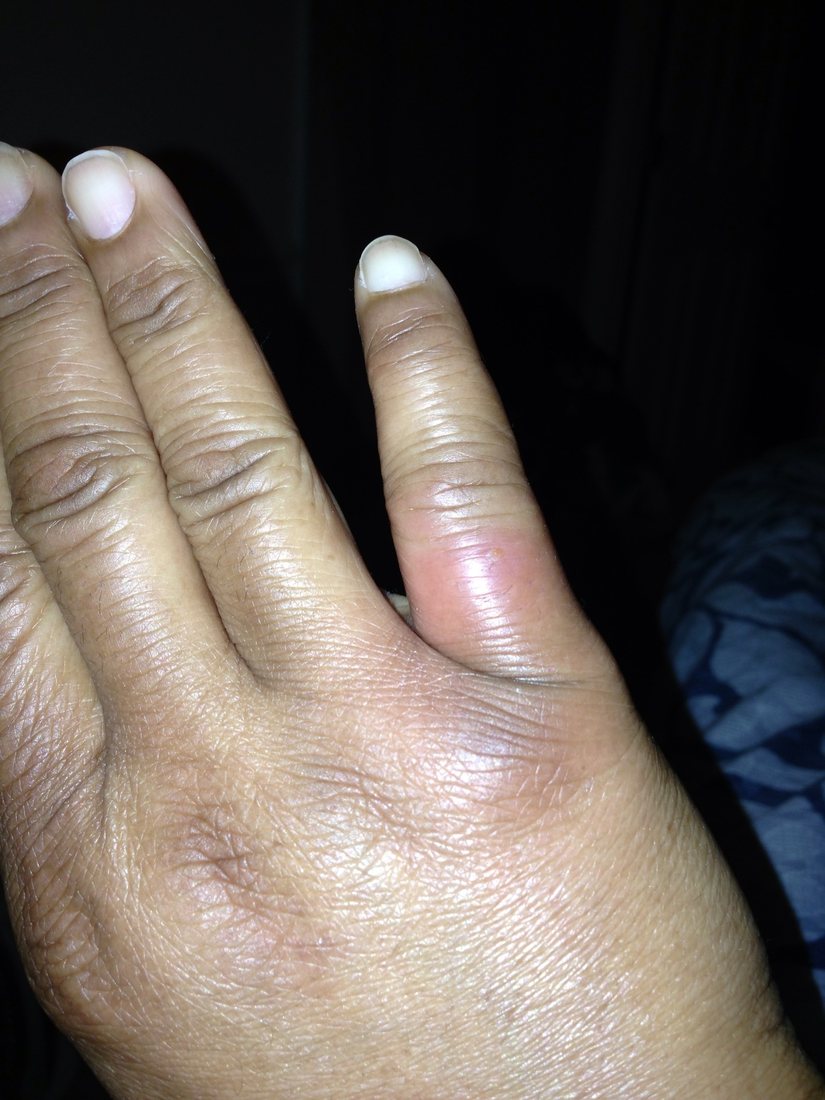
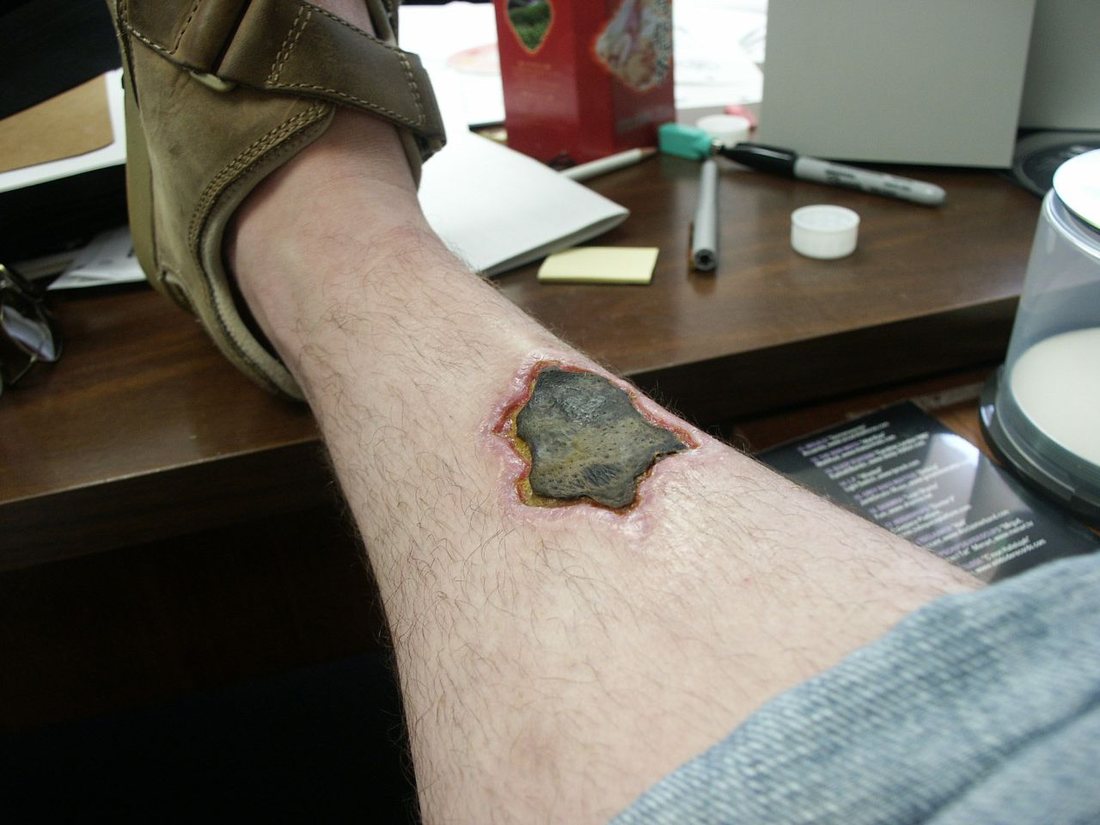
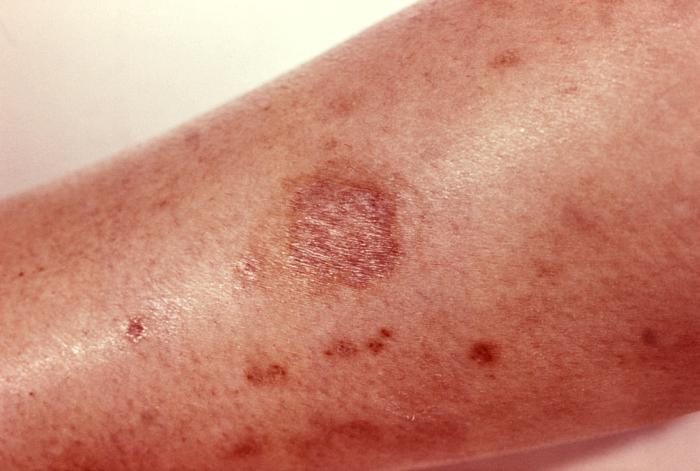
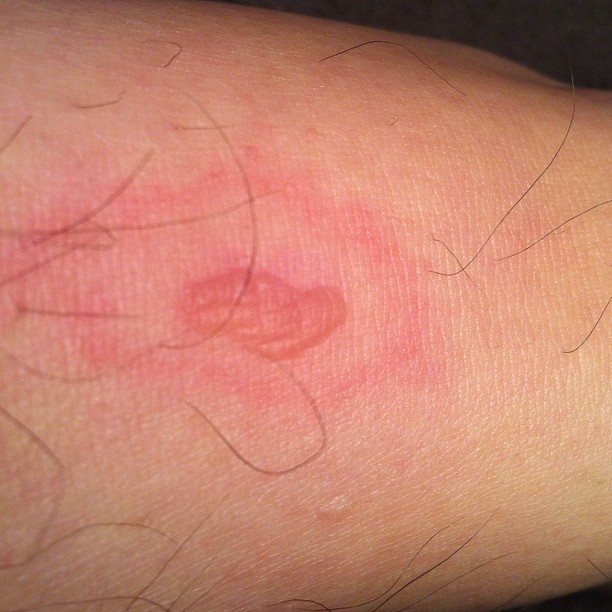
Get a photo assessment in the app
Everything above is free to read. The app adds what a page cannot: point your camera at the bite and get an assessment of the most likely cause, a severity read, and a day-by-day care plan — including the specific signs that mean you should be seen.
Download on the App Store — free
iPhone and iPad · Free to download · No account needed
Where brown recluses actually live
This is the question worth asking first, because it removes most cases in one step. Loxosceles reclusa has a defined range in the south-central United States, and outside it the spider is genuinely uncommon — while the diagnosis is not.
| Inside the range | Eastern Kansas and Oklahoma through Texas; east across Arkansas, Louisiana, Mississippi, Alabama and Tennessee into northern Georgia; north into Missouri, southern Iowa, southern Illinois, southern Ohio and Kentucky. A recluse bite here is plausible. |
|---|---|
| Outside it | Isolated populations exist, almost always indoors and usually in a single building rather than a neighbourhood. A necrotic sore in California, Oregon, New England or outside North America is far more likely to be an infection than a recluse bite. |
| Where the spider sits | Undisturbed, dry, dark places: cardboard boxes, wood piles, under furniture, in stored clothing and shoes. Bites typically happen when the spider is trapped against skin — pulling on a stored garment, rolling over in bed, reaching into a box. |
| Season | Bites cluster in warmer months. A wound appearing in midwinter in a heated house is possible but is another point against. |
What argues against a recluse bite
Clinicians use a short checklist for exactly this, and every item on it is something you can check yourself before anyone examines the wound.
| More than one lesion | Recluses bite once. A crop of several sores at once is bed bugs, fleas, folliculitis or an infection — not one spider. |
|---|---|
| It broke down within a day or two | Recluse wounds ulcerate slowly. An open sore inside forty-eight hours is far more typical of a staph infection. |
| A raised, pus-filled centre | Recluse lesions tend to sink rather than rise. A tense, pus-filled bump centred on the wound points at an abscess or infected follicle. |
| No plausible contact | No stored clothing, no boxes, no wood pile, no bed — and often no memory of anything happening. Bites people cannot account for at all are usually not bites. |
| It has lasted months | A wound still unchanged after three months is a chronic ulcer with its own cause and needs investigating as one. |
| It is very large | A necrotic area much wider than about ten centimetres is unusual for a recluse and common in serious soft-tissue infection. |
What it usually turns out to be
| Staph or MRSA skin infection | The commonest by far. Spreads over hours rather than days, is hot and very tender, often has a pus-filled centre, and responds to antibiotics — which do nothing for venom. Treating one of these as a spider bite loses days that matter. |
|---|---|
| Cellulitis | Spreading redness with heat and fever, no defined dead centre. Also needs antibiotics. |
| Infected cyst or ingrown hair | A tender lump that points and drains. Very often blamed on a spider because nobody saw anything bite. |
| Shingles | Burning pain in a band on one side of the body, before and during a blistering rash. Early on, and if only one patch is noticed, it is regularly mistaken for a bite. |
| Tick bite with an eschar | A dark scab at the bite with fever after outdoor exposure. Some tick-borne infections need prompt antibiotics — see tick bite pictures. |
| Diabetic or pressure ulcer | On a foot or a pressure point in someone with diabetes or reduced sensation. These are managed as wounds, urgently, and never as bites. |
What to do
- Wash it and leave it alone. Soap and water. No bleach, no petrol, no attempts to draw venom out — there is nothing to draw out, and the extra injury is real.
- Cool it and raise it. A cold pack for ten to fifteen minutes at a time, and keep the limb up. Heat is the one to avoid: warmth appears to make these wounds worse rather than better.
- Treat the pain plainly. Paracetamol or ibuprofen as directed. Recluse bites can hurt considerably more than they look.
- Check your tetanus cover. Any wound that breaks the skin. If it has been more than ten years, or five for a dirty wound, that is a reason to call.
- Photograph it daily against a ruler. The rate of change is the diagnosis: a sore that doubles overnight is behaving like an infection, and a dated series is the most useful thing you can bring to an appointment.
- Do not ask for it to be cut out early. Early excision has not been shown to improve the outcome and often leaves a bigger wound. Surgery, if it is needed at all, comes after the wound has settled.
- If you have the spider, keep it. Even squashed. Identification is the only thing that turns a suspicion into an answer, and a spider in a jar outranks any photograph of the skin.
For the ordinary bites this one gets confused with, spider bite pictures covers the wider group, and signs of an infected insect bite sets out the difference between a bite that is healing badly and a bite that has become an infection.
- Brown recluse bites in detailThe spider, the range and the timeline, beyond what a photograph shows.
- Spider bite picturesOther spiders whose bites are photographed and confused with this one.
- Identify a bug bite by pictureWhat a photograph can and cannot settle, and how to take one worth comparing.
- What bit me, by stateWhich biting species are actually recorded where you are.
Seek medical care if
Call emergency services now for difficulty breathing, swelling of the lips, tongue or throat, dizziness or fainting, or hives spreading away from the bite.
- Fever, chills, aching or feeling generally unwell in the first two days — the skin wound can look unimpressive while this happens, and in children it matters most.
- Dark, red or brown urine, or passing much less than usual.
- A rash spreading away from the bite, as in the last photograph above.
- Redness that advances over hours rather than days, or a red streak running away from the wound.
- An open sore within the first day or two, or a pus-filled centre — both argue for infection, which needs antibiotics now.
- Yellowing of the skin or eyes, or unusual bruising.
- Any wound in someone with diabetes, poor circulation or a weakened immune system that is not clearly improving.
Common questions
What does a brown recluse bite look like?
For the first few hours, usually very little — often less than a mosquito bite, and frequently nothing at all, because most people never feel the bite. If a lesion does develop it does so over days, not hours: a red patch that becomes mottled or marbled, sometimes with a pale sunken centre where the blood supply has failed and a red ring around it. A blister may form and break. Only a minority go on to the dark dry scab most people picture, and that takes one to two weeks to appear.
What are the stages of a brown recluse bite?
Roughly: a small red or pale mark in the first day, often painless; increasing pain and a mottled red patch over days one to three; in the minority that progress, a blister and then a firm dark area from about day four to day ten; a dry black scab from week one to week two; and slow healing over weeks to months once the scab separates. The photographs on this page follow individual bites at eight, seventeen, twenty-four and fifty-two days, and one all the way to a scar at eighty-three days.
How do I know if it was a brown recluse and not something else?
Geography answers it faster than appearance. Brown recluses live in a defined part of the south-central United States and are genuinely rare outside it. Outside that range a necrotic sore is almost always something else — most often a staph or MRSA skin infection, which spreads faster, hurts more and needs antibiotics rather than wound care. Several features argue against a recluse bite anywhere: more than one lesion, a wound that ulcerates within the first day or two, a raised pus-filled centre, or a sore that appears without any plausible contact with a spider.
How long does a brown recluse bite take to heal?
A bite that stays mild settles in one to two weeks. A bite that becomes necrotic takes much longer, because the healing begins only after the dead tissue separates: six to twelve weeks is common and some take longer. One of the sequences here runs to eighty-three days before the skin is settled, and that is a normal course rather than a complication.
Is a brown recluse bite dangerous?
Most are not, and the fear attached to them is out of proportion to what usually happens. The uncommon serious form is systemic loxoscelism, in which the venom destroys red blood cells; it is more common in children, can begin within one to two days, and — importantly — the skin wound can look unimpressive while it happens. Fever, chills, aching, dark or reduced urine, or a rash spreading away from the bite are reasons to be seen the same day.
Where do brown recluse spiders live?
Broadly the south-central United States: eastern Kansas and Oklahoma through Texas, east across Arkansas, Louisiana, Mississippi, Alabama and Tennessee into northern Georgia, and north into Missouri, southern Iowa, southern Illinois, southern Ohio and Kentucky. There are small established populations outside that band, usually inside buildings. Reports of bites from California, the Pacific Northwest, the north-east and outside North America are common; verified recluse spiders from those places are not.
What is most often mistaken for a brown recluse bite?
A staph or MRSA skin infection, by a wide margin. Others include cellulitis, an infected ingrown hair or cyst, shingles before the rash is recognised, a diabetic or pressure ulcer, pyoderma gangrenosum, a tick bite with an eschar, and Lyme disease. Several are urgent in their own right, which is why an unexplained skin wound is worth showing to a clinician rather than treating as a spider bite.
Should the wound be cut out?
Not early, and this is a place where doing less is better established than doing more. Early surgical excision of a suspected recluse bite has repeatedly been found not to improve the result and can leave a worse wound than leaving it alone. Standard care is unglamorous: clean it, cool it, raise it, keep tetanus cover current, treat the pain, and let a surgeon decide about dead tissue once the wound has declared itself.