Chigger bite pictures
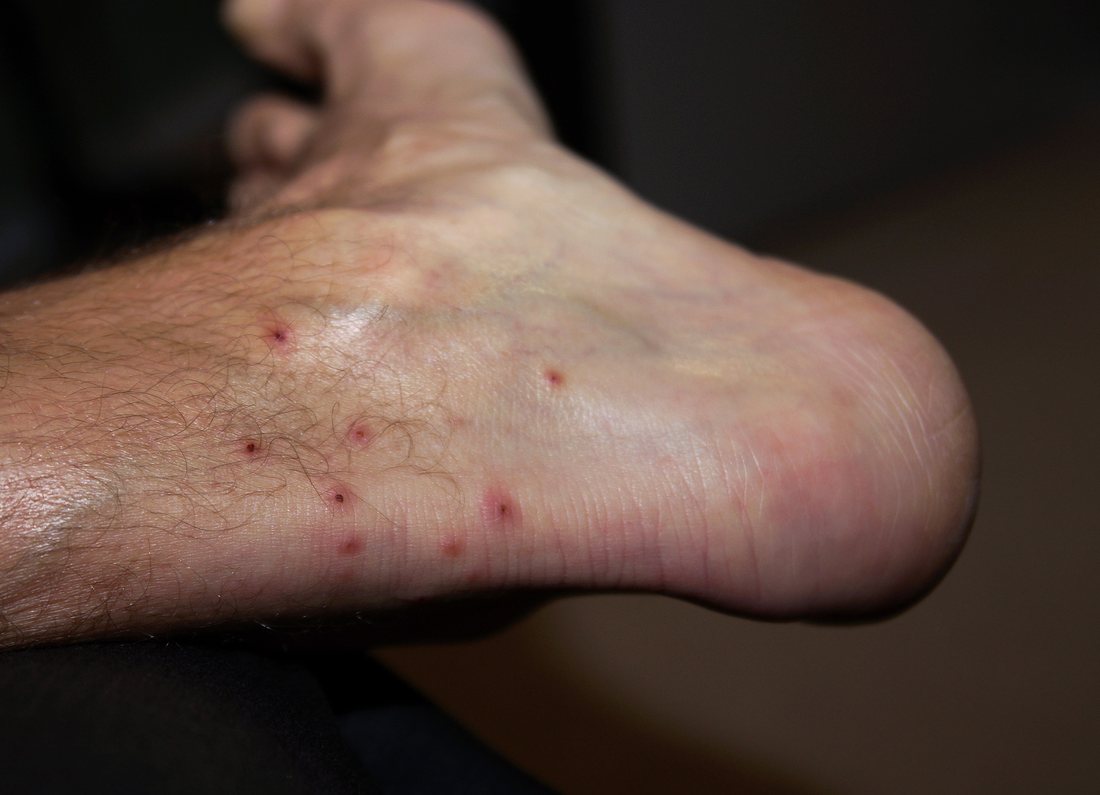
The spot itself is unremarkable. The map is the diagnosis. A single chigger bite looks like a dozen other small red bites, and no photograph will separate them for you. What separates chiggers is that the bites arrive in a band along your sock line or waistband, hours after you walked through long grass, and go on itching for a week after the animal that caused them has gone.
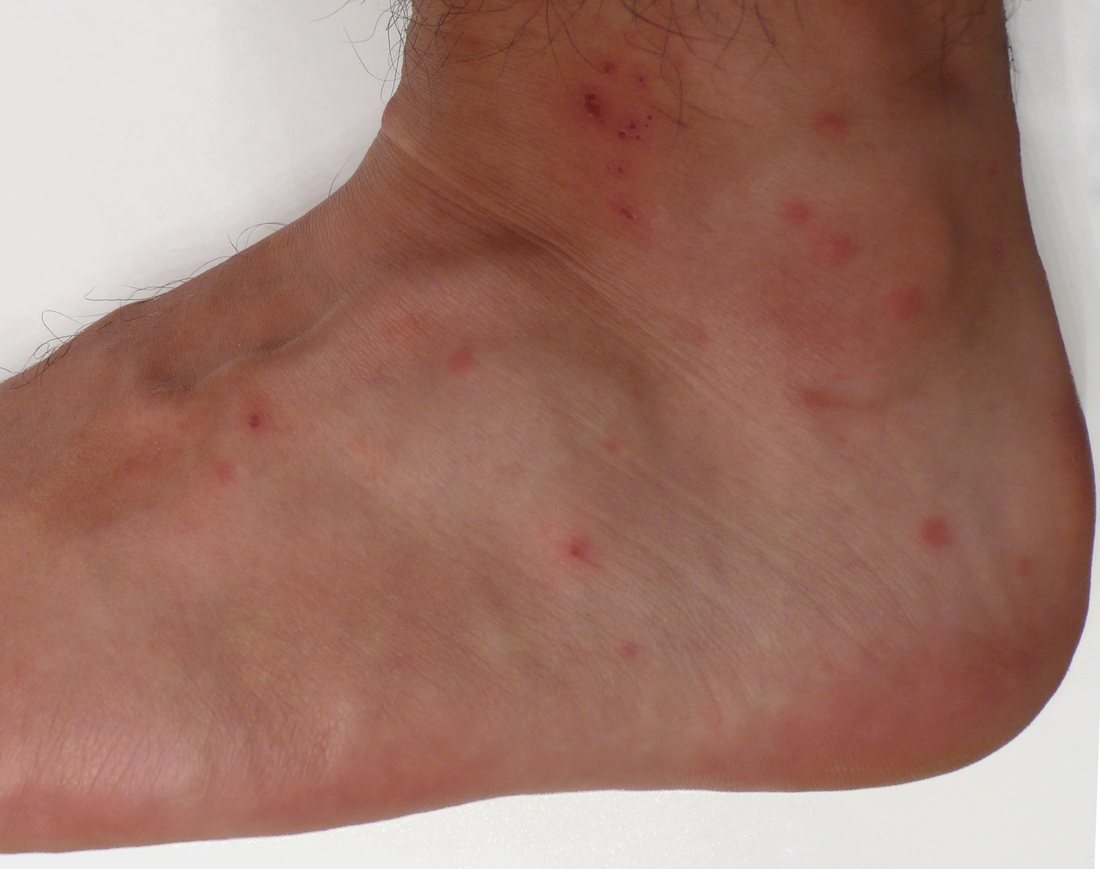
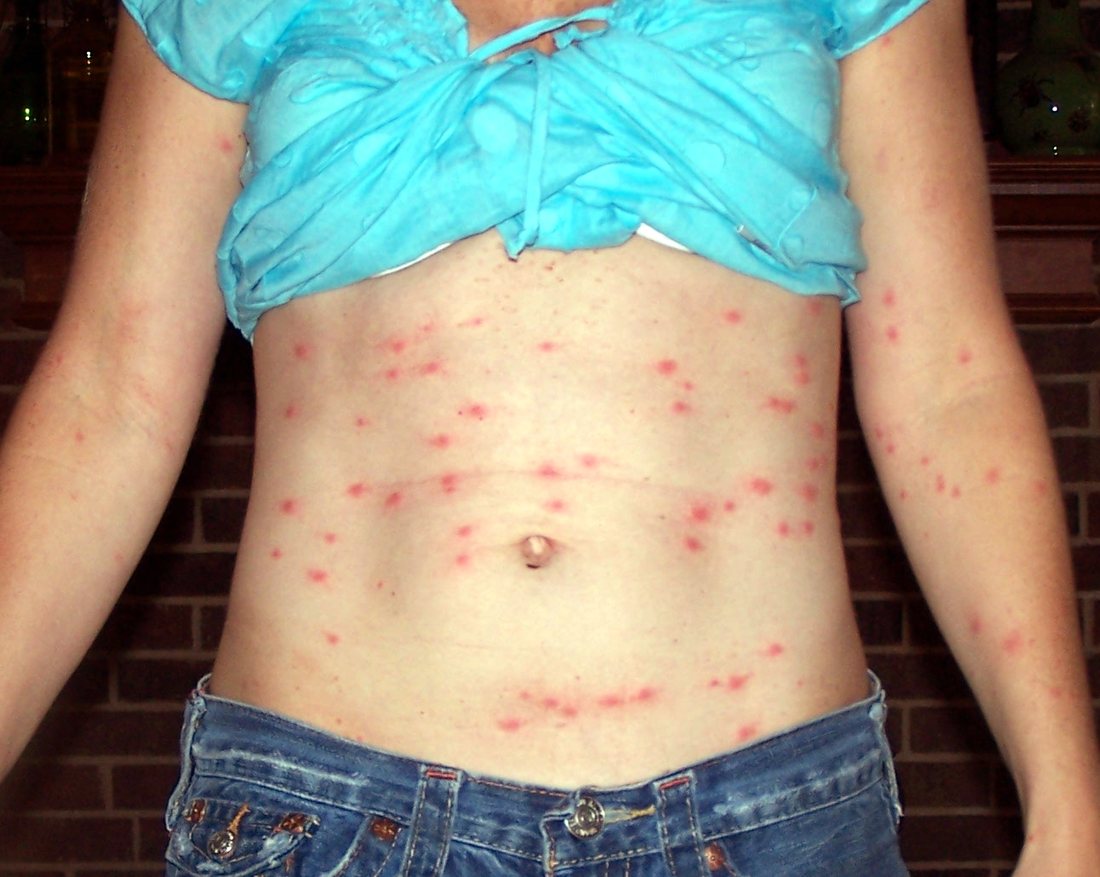
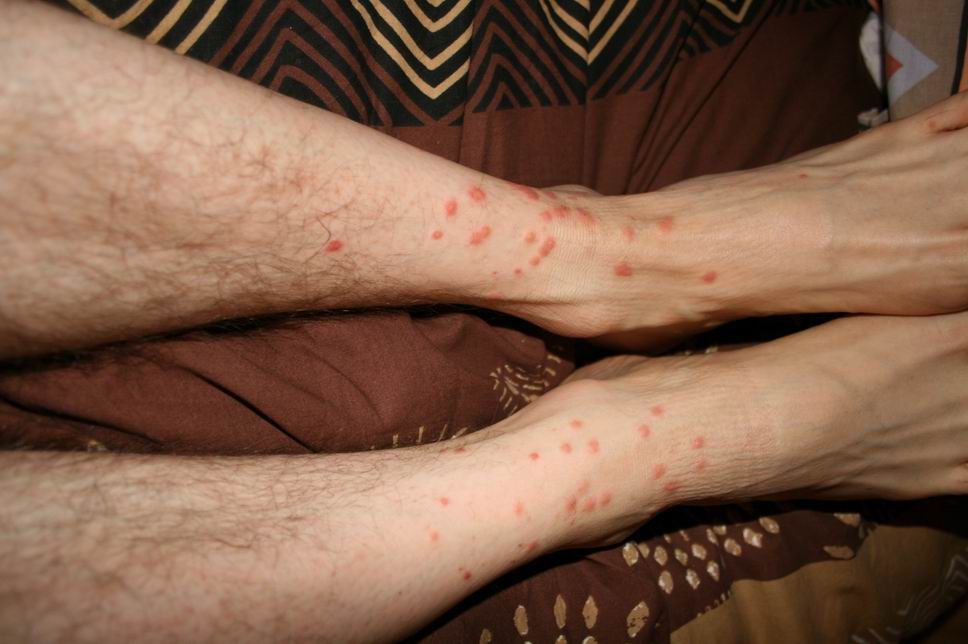
These are photographs of real bites. Four frames of chigger bites on human skin, published under public domain and CC BY-SA licences, with the photographer, the licence and the source file named beneath each one; the CC BY-SA frames have been reduced in size by us and are shared on the same terms. Two further images below are not photographs of bites — a diagram and a microscope frame — and are labelled as such.
The map matters more than the spot. The app reads your photo and names the likeliest cause. Download free iPhone & iPad · no account
What is actually happening, and why it changes the advice
Almost every folk remedy for chigger bites is built on a picture of the animal that is wrong. People are told the chigger burrows in and stays, so the treatments are all attempts to smother it. Here is what a chigger does instead.
These two are not photographs of bites. The first is a diagram of how a chigger feeds; the second is a chigger larva on skin seen through a microscope. Both are here because the animal is too small to photograph usefully any other way, and because what it does is the reason the usual remedies fail.
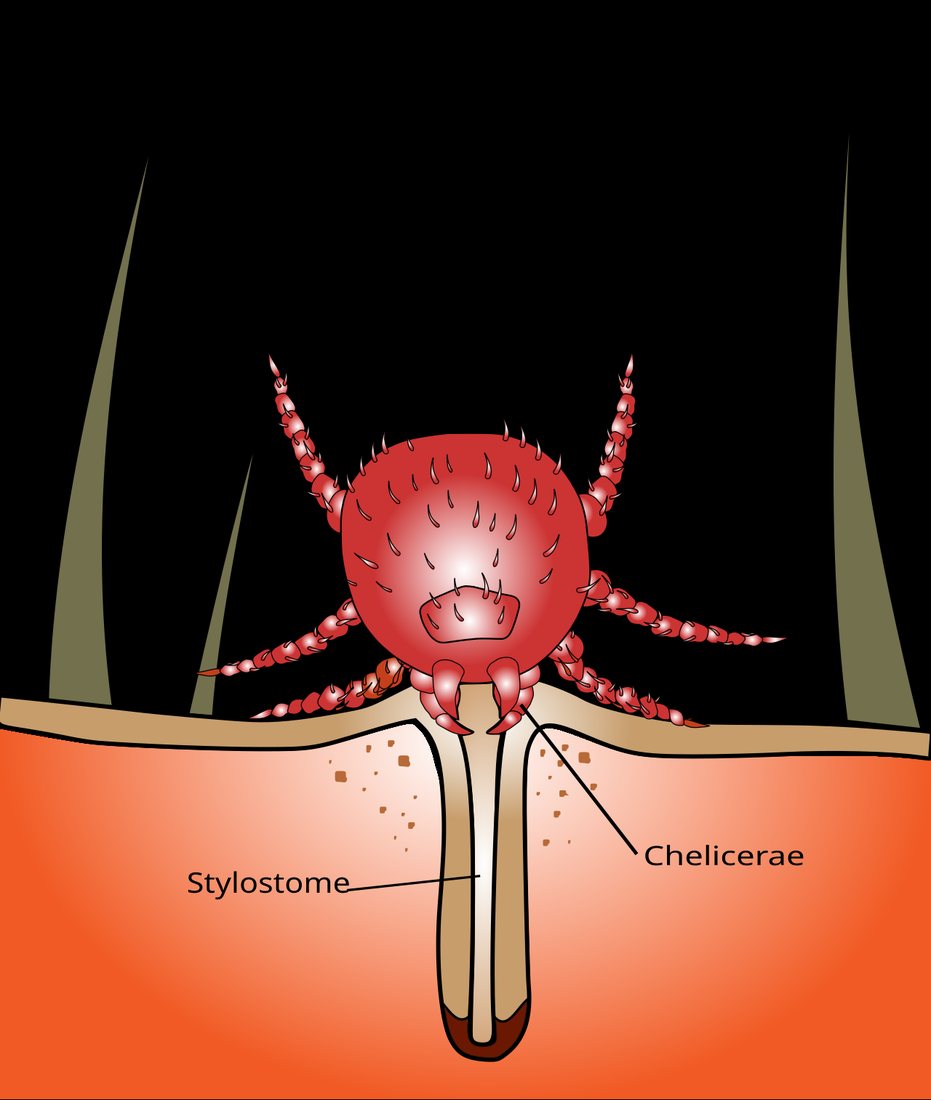
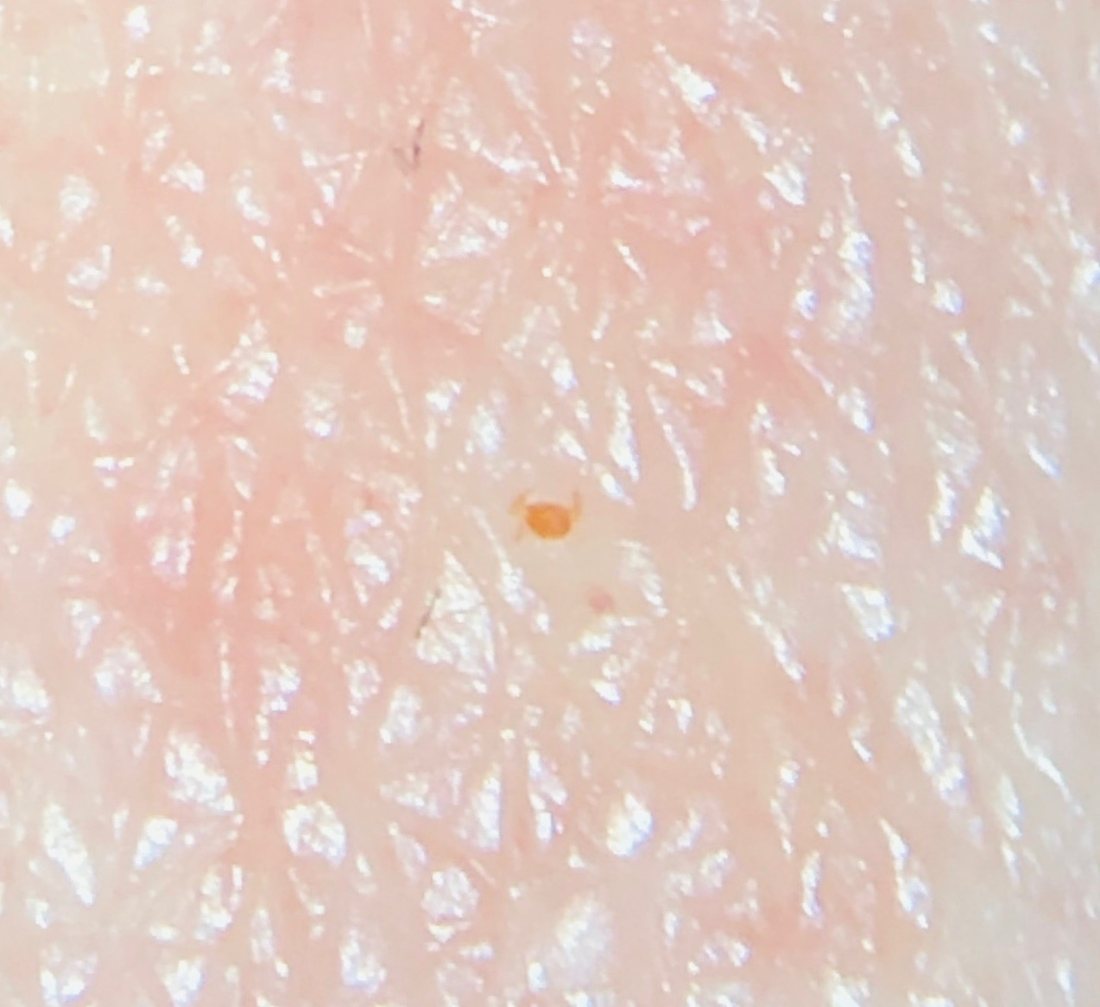
The chigger is the larval stage of a harvest mite, and only that stage bites — the nymphs and adults live in soil and eat other arthropods and their eggs. The larva is around a quarter of a millimetre across, which is why nobody sees it arrive. It climbs on at ground level, walks upward until clothing stops it, and attaches where it stops.
It then injects saliva containing digestive enzymes. Those enzymes break down skin cells, and the broken-down cells harden into a narrow tube — the stylostome — through which the mite drinks the liquefied tissue. It does not drink blood and it does not go under the skin. The itching is your immune system reacting to that tube, which is why it keeps itching long after the mite has been scratched off.
| Nail polish does nothing | There is nothing under the skin to suffocate, and usually nothing on it either by the time you notice. The same goes for bleach, alcohol and petroleum jelly used for that purpose. |
|---|---|
| The itch outlasts the animal | One to two weeks of itching is normal and does not mean you are still being bitten. A fresh crop of bites means a fresh exposure, not a surviving infestation. |
| Chiggers do not infest houses | They cannot live indoors or on people the way fleas, bed bugs or scabies mites do. There is nothing to fumigate. If bites keep appearing with no time spent outdoors, chiggers are the wrong answer. |
| They do not spread between people | You cannot catch chigger bites from someone who has them. Two people bitten on the same walk were both bitten on that walk. |
| A prompt shower helps | This is the one traditional measure that does work, and only if it is prompt. Soap and a washcloth remove larvae that have not yet attached. |
Where the bites are
This is the part worth reading twice, because it settles the question more often than any photograph does. Chiggers climb until something stops them, and they attach where skin is thin, damp or held against fabric.
| A band across the waist | The single most recognisable chigger pattern, and visible in the second photograph above. The line follows the top of your trousers. |
|---|---|
| Ankles and the sock line | Where they board and where the first obstacle is. Shared with fleas, so the sock line alone does not settle it. |
| Behind the knees, groin, armpits | Thin, warm, damp skin. Bites in these places after time outdoors point strongly at chiggers. |
| Nowhere on the face or hands | Chiggers arrive from the ground, not the air. Bites on exposed forearms and face with none below the waist argue for mosquitoes instead. |
| Several people, same outing | Chiggers are patchy in the landscape. A group that walked the same path often shares the same crop of bites on the same day. |
Get a photo assessment in the app
Everything above is free to read. The app adds what a page cannot: point your camera at the bite and get an assessment of the most likely cause, a severity read, and a day-by-day care plan — including the specific signs that mean you should be seen.
Download on the App Store — free
iPhone and iPad · Free to download · No account needed
What else looks like this
| Flea bites | Also low on the leg, but each spot tends to have a darker point at the centre, they itch immediately rather than after hours, and there is usually an animal in the house. See flea bite pictures. |
|---|---|
| Bed bug bites | Appear overnight on skin left uncovered in bed — arms, shoulders, upper back — not in a band at the waist. The mattress carries evidence the skin does not: bed bug bite pictures. |
| Scabies | Worse at night, concentrated in finger webs and wrists, and it spreads to other people in the household. Chiggers never do that. Persistent itching that is passing around a family is not chiggers. |
| Poison ivy or oak | Same walk, same legs, different mark: streaks and lines rather than separate round spots, and blisters rather than bumps. |
| Folliculitis | Small pustules centred exactly on hair follicles, often after a hot tub or shaving. Looks like a bite crop but is an infection of the follicle. |
What to do
- Shower with soap as soon as you get in. The one measure with real value, and only before the mites attach. Scrub with a washcloth, paying attention to ankles and the waist.
- Hot-wash what you were wearing. Larvae survive on clothing left in a heap and will attach when you put it back on.
- Cold compress first for the itch. Ten minutes blunts it without putting anything on the skin.
- Hydrocortisone 1% if the itch is keeping you awake. Thin layer, twice a day, up to a week. An oral antihistamine helps some people more than any cream does.
- Do not scratch them open. The bites are on ankles and waistbands, where clothing rubs and skin heals slowly. Nearly every chigger bite that turns into a problem turns into it this way.
- Next time, treat the clothes rather than the skin. Permethrin applied to trousers, socks and boots — not to skin — is the measure that actually prevents this, with repellent on the skin at the ankles. Tucking trousers into socks removes the easiest route up.
For the itch specifically, hydrocortisone cream for insect bites and antihistamines for bug bites set out what each one does and does not do.
- Chigger bites in detailThe species, the season and the timeline, beyond what a photograph shows.
- Flea bite picturesThe other bite that concentrates around the ankles, and how to tell them apart.
- Identify a bug bite by pictureWhat a photograph can and cannot settle, and how to take one worth comparing.
- What bit me, by stateWhich biting species are actually recorded where you are.
Seek medical care if
Call emergency services now for difficulty breathing, swelling of the lips, tongue or throat, dizziness or fainting, or hives spreading away from the bite.
- A bite that is worse on day three than on day one: spreading redness, increasing heat and pain, or pus.
- A red streak running away from a bite, or fever and chills.
- Fever, headache and a dark scab at one bite after travel in Asia or the western Pacific — scrub typhus is treatable, and the scab is the clue that matters.
- Widespread blistering rather than individual spots.
- Bites in someone with diabetes or a weakened immune system that are not clearly improving.
- Swelling of the lips, tongue or throat, wheezing or dizziness after being bitten.
Common questions
What do chigger bites look like?
Small flat or raised red spots, two to five millimetres across, often with a brighter red centre. What identifies them is not the individual spot — it is where they sit. Chigger bites gather in bands and clusters where clothing presses against skin or where skin is thin: the sock line, the waistband, behind the knees, the groin and the armpits. Scattered single bites on an exposed forearm are more likely to be something else.
Do chiggers burrow into your skin?
No. This is the most persistent myth about them, and it drives most of the useless remedies. A chigger attaches to the surface, usually at a hair follicle or pore, and injects saliva that liquefies skin cells. Those cells harden into a narrow feeding tube called a stylostome, and the chigger drinks through it. The tube goes into the skin; the animal stays on top of it.
How long do chiggers stay on you?
Usually not long, and almost never as long as the itch. Chiggers begin feeding within a few hours of climbing on, and most are scratched, rubbed or washed off well before they finish. By the time the itching is bad enough to make you look — typically the second day — the mite has generally been gone for some time. The bump you are looking at is your own reaction to the feeding tube left behind.
Does painting nail polish on a chigger bite work?
No, and the reason it fails explains the myth. Nail polish, bleach and alcohol are all meant to suffocate a chigger supposedly buried in the skin. There is no chigger buried in the skin, and by the time the bite itches there is usually no chigger at all. The polish seals in nothing and treats nothing. It can irritate skin that is already inflamed.
How long do chigger bites last?
The itch usually starts three to six hours after the mites attach, is at its worst on the first and second day, and settles over one to two weeks. That is longer than most people expect, and it is not a sign that anything is still feeding on you. Bites that were scratched open take longer, because the delay is then wound healing rather than the reaction itself.
Can chiggers give you a disease?
In North America and Europe, no. Chiggers there cause itching and nothing more. The exception is geographical: in parts of Asia and the Pacific, mites of the genus Leptotrombidium can transmit scrub typhus, which is a serious illness needing antibiotics. That risk belongs to that region, not to a walk through long grass in Missouri.
Are chiggers the same as jiggers?
No, and confusing them is alarming for no reason. A jigger, or chigoe flea, is Tunga penetrans, a flea of parts of the tropics that genuinely does burrow into the foot and stay there, producing hard crusted nodules. A chigger is a mite larva that sits on the surface for a day or two and leaves. The names are close, the animals are not related, and image searches mix them constantly.