Redback spider bite
What it looks like: Often little to see — a pinprick, sometimes two punctures with a red mark, red, sometimes with local sweating. Pattern: single site. Onset: often little pain at the moment of the bite, then pain that builds over the first hour. Worst at: 1 to 12 hours. Duration: median 48 hours; two thirds still hurt after a day.
| Looks like | often little to see — a pinprick, sometimes two punctures with a red mark |
|---|---|
| Pattern | single site |
| Size | 2–20 mm |
| Appears | often little pain at the moment of the bite, then pain that builds over the first hour |
| Worst at | 1 to 12 hours |
| Lasts | median 48 hours; two thirds still hurt after a day |
| Itch | ●○○○○ 1/5 |
| Pain | ●●●●● 5/5 |
| Usually on | hands, buttocks, feet — often from reaching into or sitting on something stored outdoors |
| Active | September, October, November, December, January, February, March, April, the spider is nocturnal but bites whenever trapped against skin |
Not sure it is redback spider? The app reads the photo and names the likeliest cause. Download free iPhone & iPad · no account
How to tell it apart
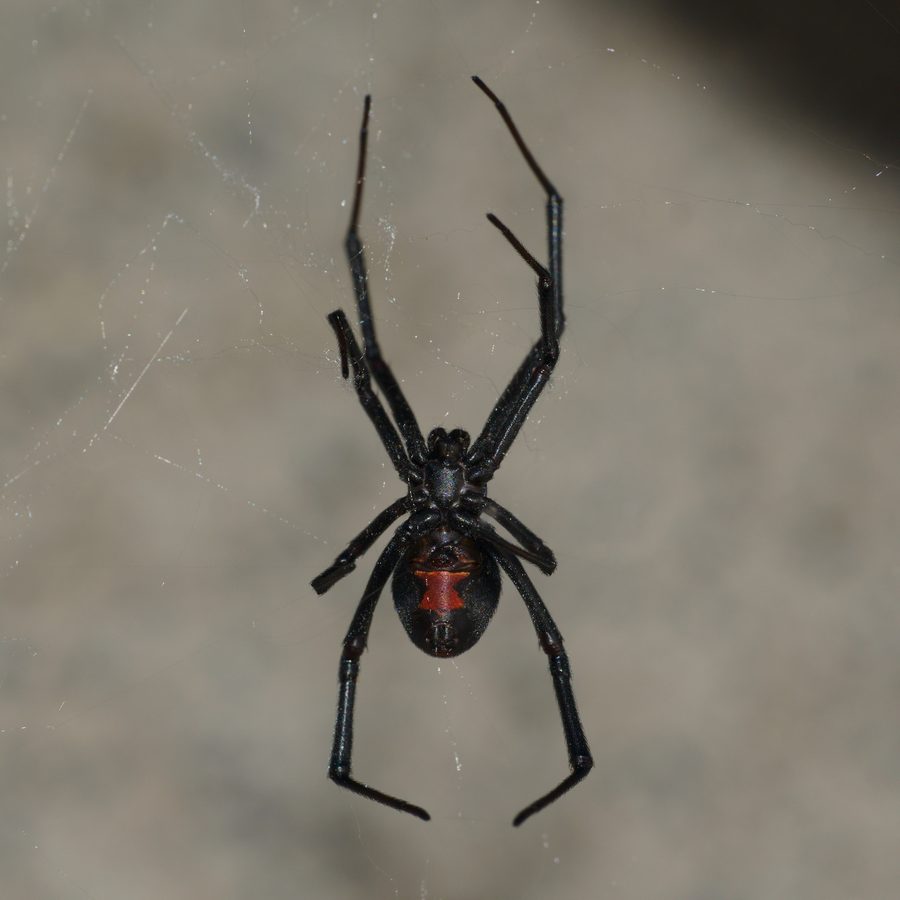
A glossy black spider with a red or orange stripe along the back of the abdomen, found across Australia including in cities. The bite itself may show almost nothing — what identifies it is pain that builds rather than fades, often with sweating at the site.
What a redback bite looks like — and why that is the wrong question
Usually there is almost nothing to see
This is the honest answer, and it is not the answer most pages give. In the Royal Children's Hospital Melbourne clinical guideline, fang marks are visible in about 5% of redback bites. In the other 95% there is no puncture to find. What may appear within about an hour is mild redness, local sweating, or piloerection — the skin standing up in gooseflesh over the bite.
When something is visible, it is usually undramatic: one or two small red punctures, mild redness, sometimes a target-like patch with sweating at the centre and paler skin around it. There is no blister, no spreading ulcer and no dying tissue. A redback bite does not rot. If you are looking at a wound that is breaking down, that is a reason to be seen by a clinician — but it is evidence against a redback, not for one.
What identifies the bite is the pain curve, not the mark
Isbister and Gray followed 68 people with bites from redbacks that had been formally identified — the spider itself was caught and named, so these are definite cases rather than assumptions. Pain followed every single bite, and it was severe in 42 of them (62%).
Two features stood out as far more common in redback bites than in bites from other spiders: pain that increased over the first hour, seen in 37 cases (54%), and sweating at or around the bite site, seen in 23 (34%). Localised sweating is the unusual one. Skin that is visibly damp over the bite and dry a few centimetres away is close to a signature, and it is a thing you can check without any equipment.
That is why the mark matters so little. The bite is identified by how the pain behaves over the first hour and by whether the skin sweats — neither of which is visible in a photograph.
Day one, and the days after
The bite itself is often barely felt. Pain builds over minutes to hours rather than arriving at full strength, and it can radiate away from the bite — up the limb, or into the back, abdomen or chest.
It lasts longer than most people expect. In the same cohort, 45 of the 68 (66%) still had pain after 24 hours, and the median duration was 48 hours. Twenty-two people (32%) could not sleep because of it. Systemic effects — nausea, vomiting, sweating elsewhere, muscle pain — occurred in 24 (35%).
So a bite that still hurts on day two is behaving normally for a redback. That is not in itself a reason for alarm, though uncontrolled pain is a reason to be seen.
What to do, and the one thing not to do
Apply an ice pack or cold compress, for no longer than 20 minutes at a time, and take simple pain relief. Wash the site. That is the whole of the first aid.
Do not apply a pressure immobilisation bandage. The Australian and New Zealand Committee on Resuscitation is explicit that the pressure immobilisation technique is not used for redback bites, "because the venom acts slowly and any attempt to slow its movement tends to increase local pain". This is the opposite of the advice for a funnel-web bite, where pressure immobilisation is urgent and correct — and confusing the two makes a redback bite hurt more.
Antivenom exists, but it is not the routine answer. The Royal Children's Hospital guideline notes there is not strong evidence to support its effect, and frames its use as a discussion to have with a toxicologist when pain relief has not worked. The realistic goal of treatment is controlling pain.
Why there is no photograph of a bite on this page
We looked. Across Wikimedia Commons searches and the relevant categories we found photographs of the spider, diagrams of symptoms and unrelated wounds, but not one freely licensed photograph of a confirmed redback bite on skin.
On reflection that absence is consistent with the medicine rather than a gap in the archive. If fang marks show in roughly one bite in twenty and the rest leave mild redness at most, there is very little to photograph. We would rather say that plainly than illustrate the page with a dramatic wound from a different cause, which is what a search for redback bite images will otherwise show you.
Sources
Where and when you meet it
Habitat: dry sheltered spots across Australia — under outdoor furniture, in letterboxes, sheds, pot plants and the underside of outdoor toilet seats.
Where it is recorded
| Country | Records | Peak months there |
|---|---|---|
| Australia | 7,317 | January, April |
| Germany | 2 | — |
Verified records from the GBIF biodiversity database across the seven countries we cover. A country missing from this table means we have no records for it, not that the species is absent.
What it means for you
There has been no confirmed death from a redback bite in Australia since antivenom became available in the 1950s, and many bites cause only local pain. The reason to be seen is not mortality but that the pain can be severe and prolonged, and it is treatable.
Seek medical care if
- pain that spreads from the bite up the limb
- sweating, nausea, vomiting or muscle weakness
- any suspected bite in a child, an older adult or during pregnancy
Care at home
- apply an ice pack or cold compress for no longer than 20 minutes at a time, and take simple pain relief
- do NOT apply a pressure immobilisation bandage — the venom acts slowly, and slowing it further tends to increase local pain
- seek medical care if simple pain relief is not controlling the pain
Preventing the next one
- gloves when moving pots, boxes and outdoor furniture
- shake out shoes and gloves stored outside
- check under garden seats and around letterboxes
Common questions
Do redback spiders bite humans?
A glossy black spider with a red or orange stripe along the back of the abdomen, found across Australia including in cities. The bite itself may show almost nothing — what identifies it is pain that builds rather than fades, often with sweating at the site.
What does a redback spider bite look like?
Often little to see — a pinprick, sometimes two punctures with a red mark, red, sometimes with local sweating. Pattern: single site. Size: typically 2–20 mm across.
Does a redback spider bite hurt?
Pain is very severe (5 out of 5 on this site's scale) and itch is barely any itch (1 out of 5). Onset: often little pain at the moment of the bite, then pain that builds over the first hour. Worst at: 1 to 12 hours. Duration: median 48 hours; two thirds still hurt after a day.
How do I know it was a redback spider?
A glossy black spider with a red or orange stripe along the back of the abdomen, found across Australia including in cities. The bite itself may show almost nothing — what identifies it is pain that builds rather than fades, often with sweating at the site.
How long does a redback spider bite last?
Duration: median 48 hours; two thirds still hurt after a day. Worst at: 1 to 12 hours.
When is it a problem?
Seek care for: pain that spreads from the bite up the limb; sweating, nausea, vomiting or muscle weakness; any suspected bite in a child, an older adult or during pregnancy.
Can it transmit disease?
No human disease is known to be transmitted by this species in the United States. The practical risk is infection from scratching.
Get a photo assessment in the app
Everything above is free to read. The app adds what a page cannot: point your camera at the bite and get an assessment of the most likely cause, a severity read, and a day-by-day care plan — including the specific signs that mean you should be seen.
Download on the App Store — free
iPhone and iPad · Free to download · No account needed