Aedes mosquito bite
What it looks like: A raised itchy bump, often larger and more persistent than a common house mosquito bite, pink to red, darker on deeper skin tones. Pattern: several bites, frequently on ankles and lower legs. Onset: within minutes. Worst at: 20 minutes to several hours. Duration: 2 to 5 days, longer in people newly exposed.
Photographs of the bite itself: nine photographs of mosquito bites on skin.
| Looks like | a raised itchy bump, often larger and more persistent than a common house mosquito bite |
|---|---|
| Pattern | several bites, frequently on ankles and lower legs |
| Size | 2–25 mm |
| Appears | within minutes |
| Worst at | 20 minutes to several hours |
| Lasts | 2 to 5 days, longer in people newly exposed |
| Itch | ●●●●○ 4/5 |
| Pain | ●○○○○ 1/5 |
| Usually on | ankles, lower legs, elbows, behind the knees |
| Active | January to December, daytime — the key difference from Culex, which bites at dusk |
Not sure it is Aedes mosquito? The app reads the photo and names the likeliest cause. Download free iPhone & iPad · no account
How to tell it apart
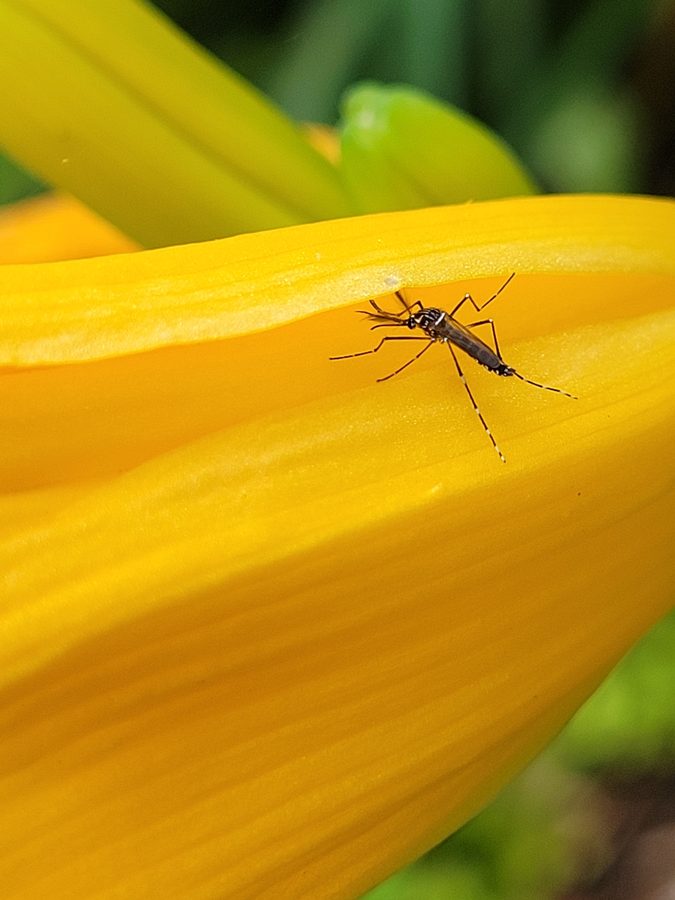
A small black mosquito with white banded legs that bites during the day, usually around the ankles, and often approaches quietly from behind. The bite looks like any mosquito bite — the identifying features are the time of day, the position on the body, and that it happens indoors as readily as out.
Where and when you meet it
Habitat: small containers of clean water around houses: plant saucers, buckets, roof gutters, discarded tyres, water tanks. An urban mosquito that rarely flies more than a hundred metres from where it hatched.
Where it is recorded
| Country | Records | Peak months there |
|---|---|---|
| United States | 17,443 | June to October |
| Brazil | 8,860 | February |
| Australia | 634 | May, August |
| France | 193 | April |
| United Kingdom | 126 | April, July, December |
| Germany | 87 | April, October |
| Canada | 32 | April, October |
Verified records from the GBIF biodiversity database across the seven countries we cover. A country missing from this table means we have no records for it, not that the species is absent.
What it means for you
This is the mosquito that matters medically across Brazil, much of Latin America and northern Australia, and it is establishing in southern Europe. The bite is unremarkable; the follow-up is not. Fever within two weeks of exposure in a dengue area is a reason to be seen and to mention where you have been — dengue is managed by monitoring, and the warning signs appear as the fever breaks.
Associated illnesses in the US
- dengue
- Zika
- chikungunya
- yellow fever
Most bites transmit nothing. What matters is the follow-up: note the date, and report any fever or rash in the following weeks to a clinician along with the fact that you were bitten.
Seek medical care if
- fever within two weeks of being bitten in a dengue area — seek care and say where you have been
- severe abdominal pain, persistent vomiting, bleeding gums or nose, or extreme lethargy — dengue warning signs that need urgent assessment
- rash with fever after travel
Care at home
- wash with soap and water, cold pack, antihistamine for the itch
- the bite itself is minor; what matters is watching for fever afterwards
- paracetamol rather than ibuprofen or aspirin if dengue is possible, because of bleeding risk
Preventing the next one
- empty and scrub water containers weekly — more effective than any spray
- repellent during the day, not just at dusk
- screens, air conditioning and long sleeves during outbreaks
Common questions
Do Aedes mosquitoes bite humans?
A small black mosquito with white banded legs that bites during the day, usually around the ankles, and often approaches quietly from behind. The bite looks like any mosquito bite — the identifying features are the time of day, the position on the body, and that it happens indoors as readily as out.
What does an Aedes mosquito bite look like?
A raised itchy bump, often larger and more persistent than a common house mosquito bite, pink to red, darker on deeper skin tones. Pattern: several bites, frequently on ankles and lower legs. Size: typically 2–25 mm across.
Does an Aedes mosquito bite hurt?
Pain is barely noticeable (1 out of 5 on this site's scale) and itch is strong itch (4 out of 5). Onset: within minutes. Worst at: 20 minutes to several hours. Duration: 2 to 5 days, longer in people newly exposed.
How do I know it was a aedes mosquito?
A small black mosquito with white banded legs that bites during the day, usually around the ankles, and often approaches quietly from behind. The bite looks like any mosquito bite — the identifying features are the time of day, the position on the body, and that it happens indoors as readily as out.
How long does a aedes mosquito bite last?
Duration: 2 to 5 days, longer in people newly exposed. Worst at: 20 minutes to several hours.
When is it a problem?
Seek care for: fever within two weeks of being bitten in a dengue area — seek care and say where you have been; severe abdominal pain, persistent vomiting, bleeding gums or nose, or extreme lethargy — dengue warning signs that need urgent assessment; rash with fever after travel.
Can it transmit disease?
In the United States this species is associated with dengue, Zika, chikungunya, yellow fever. Most bites transmit nothing, but symptoms in the weeks after a bite are worth reporting to a clinician.
Get a photo assessment in the app
Everything above is free to read. The app adds what a page cannot: point your camera at the bite and get an assessment of the most likely cause, a severity read, and a day-by-day care plan — including the specific signs that mean you should be seen.
Download on the App Store — free
iPhone and iPad · Free to download · No account needed