Yellowjacket sting
What it looks like: A raised red welt, often with a visible central point, and marked swelling, red with pale swollen centre. Pattern: single or several — this wasp can sting repeatedly. Onset: immediate sharp pain. Worst at: 2 to 24 hours. Duration: pain hours; swelling can last several days.
| Looks like | a raised red welt, often with a visible central point, and marked swelling |
|---|---|
| Pattern | single or several — this wasp can sting repeatedly |
| Size | 10–100 mm |
| Appears | immediate sharp pain |
| Worst at | 2 to 24 hours |
| Lasts | pain hours; swelling can last several days |
| Itch | ●●●○○ 3/5 |
| Pain | ●●●●● 5/5 |
| Usually on | hands, face, neck, legs |
| Active | June to October, daytime, peaking in late summer when colonies are largest and food-seeking |
Not sure it is yellowjacket? The app reads the photo and names the likeliest cause. Download free iPhone & iPad · no account
How to tell it apart
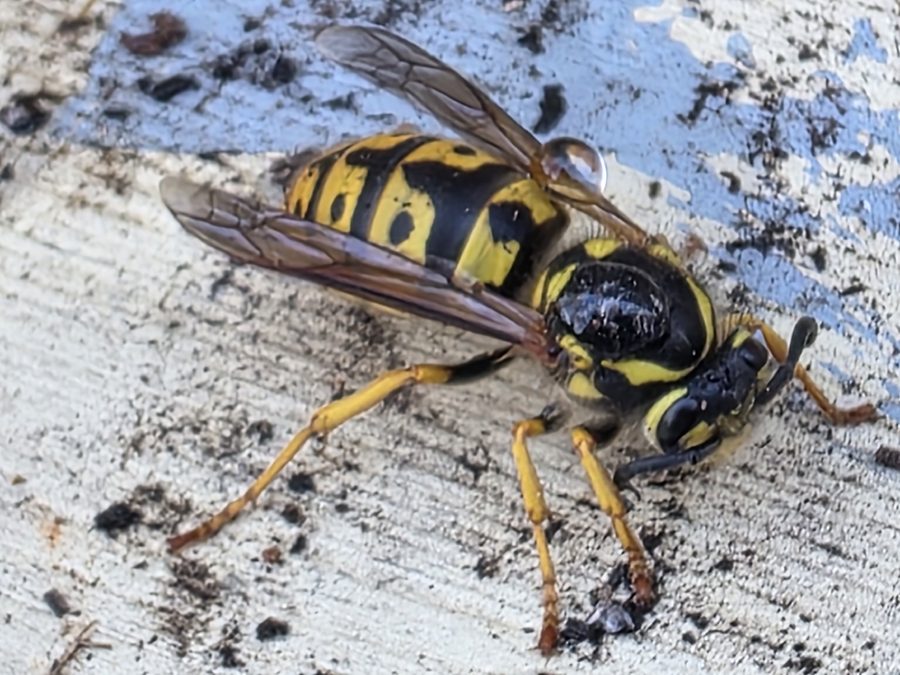
Yellowjackets are the wasps at the picnic. Unlike honey bees they leave no stinger behind and can sting several times, and the pain is immediate and intense rather than building. Late summer is when stings peak, because colonies are at their largest and switching to sugar.
Where and when you meet it
Habitat: ground nests in banks and lawns, wall cavities, rubbish bins and picnic tables.
Across 7,273 verified US records in the GBIF biodiversity database, sightings of Vespula germanica concentrate in August to October. That is the window when bites are most likely — it is observation data rather than a guess, and it shifts with latitude.
States with the most recorded sightings
- New York 1,726 records
- Pennsylvania 818 records
- Ohio 700 records · all bites in Ohio
- Massachusetts 585 records
- Illinois 519 records
- Michigan 324 records
- Minnesota 313 records
- Wisconsin 292 records
- Indiana 268 records
- Maryland 257 records · all bites in Maryland
- New Jersey 249 records
- Vermont 151 records
Record counts reflect where people report and identify specimens, not exact abundance. They are useful for ruling a species in, not for ruling it out.
Where it is recorded
| Country | Records | Peak months there |
|---|---|---|
| Germany | 8,991 | April, August, September |
| United States | 7,273 | August to October |
| United Kingdom | 6,926 | April, July, August, September |
| Canada | 4,693 | August to October |
| Australia | 4,304 | March to May |
| France | 2,715 | April, July, August, September, October |
| Brazil | 1 | — |
Verified records from the GBIF biodiversity database across the seven countries we cover. A country missing from this table means we have no records for it, not that the species is absent.
What it means for you
Most severe sting reactions in the United States involve this group. A large local swelling — a whole forearm over a couple of days — is uncomfortable but not the same as anaphylaxis; the emergency signs are breathing difficulty, faintness and symptoms away from the sting site.
Seek medical care if
Call emergency services now for difficulty breathing, swelling of the lips, tongue or throat, dizziness or fainting, or hives spreading away from the bite.
- throat tightness, breathing difficulty, dizziness, hives away from the sting — emergency
- stings inside the mouth or throat
- many stings at once
- swelling that spreads across a whole limb over 24 to 48 hours
Care at home
- move away — yellowjackets release an alarm pheromone and recruit
- wash and apply a cold pack
- antihistamine and pain relief
- adrenaline auto-injector immediately if previously prescribed
Preventing the next one
- cover food and sweet drinks outdoors — check cans before drinking
- keep bins closed and away from seating
- have ground nests treated professionally
Common questions
Do yellowjackets sting humans?
Yellowjackets are the wasps at the picnic. Unlike honey bees they leave no stinger behind and can sting several times, and the pain is immediate and intense rather than building. Late summer is when stings peak, because colonies are at their largest and switching to sugar.
What does a yellowjacket sting look like?
A raised red welt, often with a visible central point, and marked swelling, red with pale swollen centre. Pattern: single or several — this wasp can sting repeatedly. Size: typically 10–100 mm across.
Does a yellowjacket sting hurt?
Pain is very severe (5 out of 5 on this site's scale) and itch is noticeable itch (3 out of 5). Onset: immediate sharp pain. Worst at: 2 to 24 hours. Duration: pain hours; swelling can last several days.
How do I know it was a yellowjacket?
Yellowjackets are the wasps at the picnic. Unlike honey bees they leave no stinger behind and can sting several times, and the pain is immediate and intense rather than building. Late summer is when stings peak, because colonies are at their largest and switching to sugar.
How long does a yellowjacket sting last?
Duration: pain hours; swelling can last several days. Worst at: 2 to 24 hours.
When is it a problem?
Seek care for: throat tightness, breathing difficulty, dizziness, hives away from the sting — emergency; stings inside the mouth or throat; many stings at once; swelling that spreads across a whole limb over 24 to 48 hours.
Can it transmit disease?
No human disease is known to be transmitted by this species in the United States. The practical risk is infection from scratching.
Get a photo assessment in the app
Everything above is free to read. The app adds what a page cannot: point your camera at the bite and get an assessment of the most likely cause, a severity read, and a day-by-day care plan — including the specific signs that mean you should be seen.
Download on the App Store — free
iPhone and iPad · Free to download · No account needed