Paper wasp sting
What it looks like: A red welt with a bright centre and firm swelling, red. Pattern: usually single. Onset: immediate sharp pain. Worst at: 1 to 12 hours. Duration: a few days for swelling.
| Looks like | a red welt with a bright centre and firm swelling |
|---|---|
| Pattern | usually single |
| Size | 10–60 mm |
| Appears | immediate sharp pain |
| Worst at | 1 to 12 hours |
| Lasts | a few days for swelling |
| Itch | ●●●○○ 3/5 |
| Pain | ●●●●○ 4/5 |
| Usually on | hands, head, arms — often while gardening or opening a shutter |
| Active | May to September, daytime |
Not sure it is paper wasp? The app reads the photo and names the likeliest cause. Download free iPhone & iPad · no account
How to tell it apart
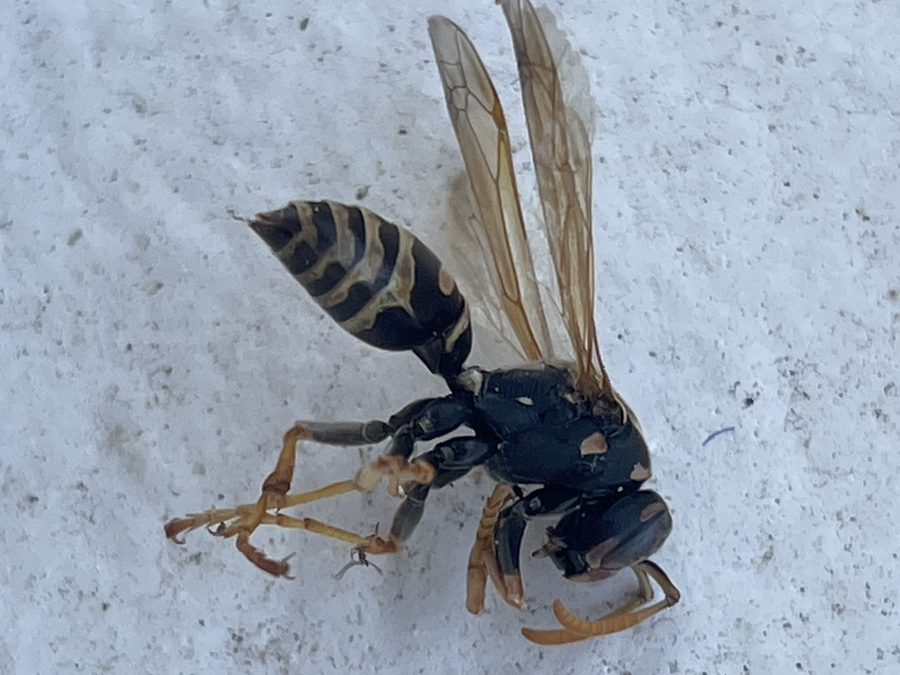
Paper wasps are slimmer and longer-legged than yellowjackets and far less aggressive away from the nest — most stings happen when someone opens a shutter or reaches under an eave. The nest is an open, downward-facing honeycomb on a single stalk, unlike the enclosed grey ball of a hornet.
Where and when you meet it
Habitat: open honeycomb nests under eaves, in shutters, on garden furniture and playground equipment.
Across 33,569 verified US records in the GBIF biodiversity database, sightings of Polistes dominula concentrate in June to September. That is the window when bites are most likely — it is observation data rather than a guess, and it shifts with latitude.
States with the most recorded sightings
- California 6,484 records
- New York 2,739 records
- Colorado 2,433 records
- Oregon 1,810 records
- Utah 1,539 records
- Ohio 1,532 records
- Illinois 1,476 records
- Massachusetts 1,454 records
- Pennsylvania 1,441 records
- Minnesota 1,163 records
- Idaho 1,089 records
- Wisconsin 894 records
Record counts reflect where people report and identify specimens, not exact abundance. They are useful for ruling a species in, not for ruling it out.
Where it is recorded
| Country | Records | Peak months there |
|---|---|---|
| United States | 33,569 | June to September |
| Germany | 20,755 | June to August |
| Canada | 10,053 | July to September |
| France | 4,580 | June to August |
| Australia | 764 | November to February |
| United Kingdom | 71 | April, July, August |
Verified records from the GBIF biodiversity database across the seven countries we cover. A country missing from this table means we have no records for it, not that the species is absent.
What it means for you
Because they defend only the immediate area around the nest, paper wasps rarely cause multiple stings. The reaction pattern is the same as any wasp sting: local pain and swelling in most people, and true allergy in a small minority.
Seek medical care if
Call emergency services now for difficulty breathing, swelling of the lips, tongue or throat, dizziness or fainting, or hives spreading away from the bite.
- breathing difficulty, throat tightness or faintness
- stings to the mouth or eye
- symptoms away from the sting site
Care at home
- cold pack, antihistamine, pain relief
- adrenaline auto-injector if previously prescribed
- keep the limb elevated to limit swelling
Preventing the next one
- check under eaves and inside shutters before working there
- remove small nests early in the season, professionally if large
Common questions
Do paper wasps sting humans?
Paper wasps are slimmer and longer-legged than yellowjackets and far less aggressive away from the nest — most stings happen when someone opens a shutter or reaches under an eave. The nest is an open, downward-facing honeycomb on a single stalk, unlike the enclosed grey ball of a hornet.
What does a paper wasp sting look like?
A red welt with a bright centre and firm swelling, red. Pattern: usually single. Size: typically 10–60 mm across.
Does a paper wasp sting hurt?
Pain is severe (4 out of 5 on this site's scale) and itch is noticeable itch (3 out of 5). Onset: immediate sharp pain. Worst at: 1 to 12 hours. Duration: a few days for swelling.
How do I know it was a paper wasp?
Paper wasps are slimmer and longer-legged than yellowjackets and far less aggressive away from the nest — most stings happen when someone opens a shutter or reaches under an eave. The nest is an open, downward-facing honeycomb on a single stalk, unlike the enclosed grey ball of a hornet.
How long does a paper wasp sting last?
Duration: a few days for swelling. Worst at: 1 to 12 hours.
When is it a problem?
Seek care for: breathing difficulty, throat tightness or faintness; stings to the mouth or eye; symptoms away from the sting site.
Can it transmit disease?
No human disease is known to be transmitted by this species in the United States. The practical risk is infection from scratching.
Get a photo assessment in the app
Everything above is free to read. The app adds what a page cannot: point your camera at the bite and get an assessment of the most likely cause, a severity read, and a day-by-day care plan — including the specific signs that mean you should be seen.
Download on the App Store — free
iPhone and iPad · Free to download · No account needed