Castor bean tick bite
What it looks like: A small firm red bump where the tick was attached, often with the tick still in place, red; an expanding ring or oval rash is the finding that matters. Pattern: single, usually in a skin fold or the hairline. Onset: the bump appears within a day of removal. Worst at: rash, if any, appears 3 to 30 days later. Duration: bump a few days; untreated rash weeks.
Photographs of the bite itself: six photographs — an attached tick, and four forms of the Lyme rash.
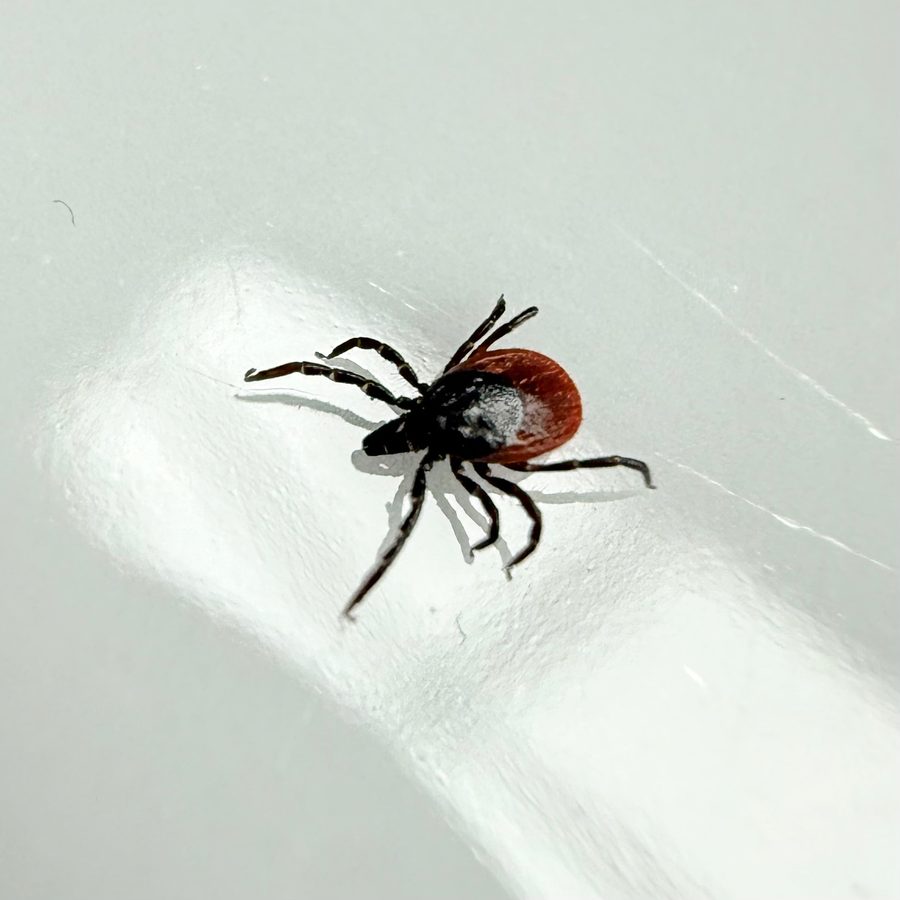
| Looks like | a small firm red bump where the tick was attached, often with the tick still in place |
|---|---|
| Pattern | single, usually in a skin fold or the hairline |
| Size | 3–60 mm |
| Appears | the bump appears within a day of removal |
| Worst at | rash, if any, appears 3 to 30 days later |
| Lasts | bump a few days; untreated rash weeks |
| Itch | ●●○○○ 2/5 |
| Pain | ●○○○○ 1/5 |
| Usually on | behind the knees, groin, armpits, hairline, waistband |
| Active | March to October, any time; nymphs peak in late spring and early summer |
Not sure it is castor bean tick? The app reads the photo and names the likeliest cause. Download free iPhone & iPad · no account
How to tell it apart
This is the tick most people in Europe are actually bitten by. An unfed nymph is roughly the size of a poppy seed and its bite is painless, which is why most people never notice the tick that mattered. What identifies it is not the bite but what follows: an expanding rash or a flu-like illness in the weeks afterwards.
Where and when you meet it
Habitat: long grass, bracken and woodland edges across Britain, Ireland and continental Europe — including city parks and gardens backing onto scrub.
Where it is recorded
| Country | Records | Peak months there |
|---|---|---|
| United Kingdom | 6,730 | May to July |
| Germany | 6,005 | April to June |
| France | 1,755 | April to June |
| United States | 6 | — |
Verified records from the GBIF biodiversity database across the seven countries we cover. A country missing from this table means we have no records for it, not that the species is absent.
What it means for you
Lyme borreliosis transmission generally needs the tick attached for a day or more, so a same-day check is the single most effective habit. In central and eastern Europe the same species also carries tick-borne encephalitis, which is vaccine-preventable — a relevant distinction if you are walking in Bavaria, Austria, the Baltics or the Alps rather than in Britain.
Associated illnesses in the US
- Lyme borreliosis
- tick-borne encephalitis (central and eastern Europe, not the UK)
- anaplasmosis
Most bites transmit nothing. What matters is the follow-up: note the date, and report any fever or rash in the following weeks to a clinician along with the fact that you were bitten.
Seek medical care if
- an expanding rash, with or without a clear centre, days to weeks after a bite
- fever, headache, aching joints or marked fatigue in the weeks after a bite
- a tick that was attached for more than 24 to 36 hours
- facial droop or a severe new headache
Care at home
- remove with fine-tipped tweezers or a tick hook, grasping as close to the skin as possible and pulling steadily upward
- do not burn it, smother it in petroleum jelly, or twist it
- wash the area and write the date on a calendar
- photograph the tick before disposing of it
Preventing the next one
- tuck trousers into socks on woodland and moorland paths
- permethrin-treated clothing and repellent on exposed skin
- full-body tick check within two hours of coming indoors
- consider TBE vaccination for travel to affected parts of central and eastern Europe
Common questions
Do castor bean ticks bite humans?
This is the tick most people in Europe are actually bitten by. An unfed nymph is roughly the size of a poppy seed and its bite is painless, which is why most people never notice the tick that mattered. What identifies it is not the bite but what follows: an expanding rash or a flu-like illness in the weeks afterwards.
What does a castor bean tick bite look like?
A small firm red bump where the tick was attached, often with the tick still in place, red; an expanding ring or oval rash is the finding that matters. Pattern: single, usually in a skin fold or the hairline. Size: typically 3–60 mm across.
Does a castor bean tick bite hurt?
Pain is barely noticeable (1 out of 5 on this site's scale) and itch is mild itch (2 out of 5). Onset: the bump appears within a day of removal. Worst at: rash, if any, appears 3 to 30 days later. Duration: bump a few days; untreated rash weeks.
How do I know it was a castor bean tick?
This is the tick most people in Europe are actually bitten by. An unfed nymph is roughly the size of a poppy seed and its bite is painless, which is why most people never notice the tick that mattered. What identifies it is not the bite but what follows: an expanding rash or a flu-like illness in the weeks afterwards.
How long does a castor bean tick bite last?
Duration: bump a few days; untreated rash weeks. Worst at: rash, if any, appears 3 to 30 days later.
When is it a problem?
Seek care for: an expanding rash, with or without a clear centre, days to weeks after a bite; fever, headache, aching joints or marked fatigue in the weeks after a bite; a tick that was attached for more than 24 to 36 hours; facial droop or a severe new headache.
Can it transmit disease?
In the United States this species is associated with Lyme borreliosis, tick-borne encephalitis (central and eastern Europe, not the UK), anaplasmosis. Most bites transmit nothing, but symptoms in the weeks after a bite are worth reporting to a clinician.
Get a photo assessment in the app
Everything above is free to read. The app adds what a page cannot: point your camera at the bite and get an assessment of the most likely cause, a severity read, and a day-by-day care plan — including the specific signs that mean you should be seen.
Download on the App Store — free
iPhone and iPad · Free to download · No account needed