Brazilian recluse spider bite
What it looks like: Often painless at first, then a red mark that may develop a pale or blue-grey centre and, in some cases, an ulcer, red rim, dusky centre. Pattern: single site. Onset: frequently unnoticed at the time. Worst at: pain and colour change over 24 to 72 hours. Duration: weeks; a necrotic lesion can take months.
Photographs of the bite itself: eight photographs of recluse bites, including plates of South American Loxosceles.
| Looks like | often painless at first, then a red mark that may develop a pale or blue-grey centre and, in some cases, an ulcer |
|---|---|
| Pattern | single site |
| Size | 5–80 mm |
| Appears | frequently unnoticed at the time |
| Worst at | pain and colour change over 24 to 72 hours |
| Lasts | weeks; a necrotic lesion can take months |
| Itch | ●●○○○ 2/5 |
| Pain | ●●●●○ 4/5 |
| Usually on | torso under clothing, thighs, upper arms — often bitten while dressing or in bed |
| Active | January to December, night |
Not sure it is Brazilian recluse spider? The app reads the photo and names the likeliest cause. Download free iPhone & iPad · no account
How to tell it apart
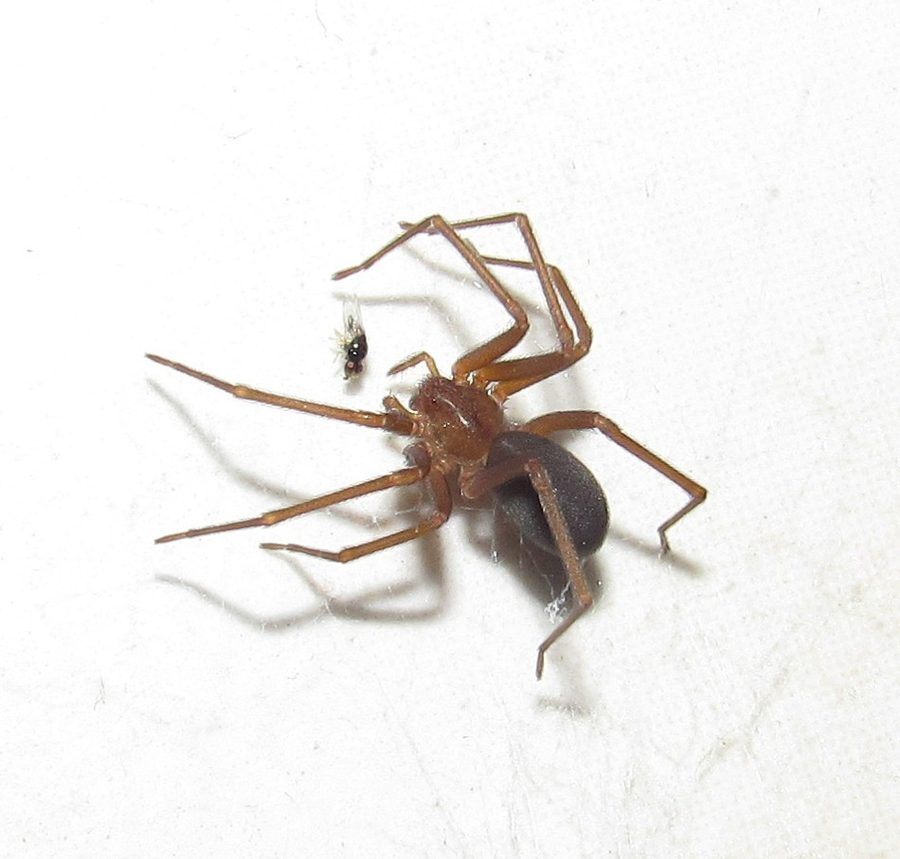
Small, uniformly brown, with long thin legs and a violin-shaped mark behind the eyes. Bites happen when the spider is pressed against skin — while dressing, or turning over in bed. The bite is often painless, so the first sign is a mark that changes over the following days.
Where and when you meet it
Habitat: behind furniture, in wardrobes and among stored clothes and boxes — common in southern Brazil, particularly Paraná and Santa Catarina.
Where it is recorded
| Country | Records | Peak months there |
|---|---|---|
| Brazil | 286 | November |
Verified records from the GBIF biodiversity database across the seven countries we cover. A country missing from this table means we have no records for it, not that the species is absent.
What it means for you
Brazil records more Loxosceles bites than anywhere in the world, concentrated in the south. Most cause a local lesion that heals; a minority cause a systemic reaction with red blood cell breakdown, which is why dark urine and fever after a suspected bite are urgent rather than something to watch.
Seek medical care if
- a wound that darkens, blisters or breaks down over days
- fever, dark urine or yellowing of the eyes — these suggest the systemic form and need urgent care
- rapidly spreading redness and pain
Care at home
- wash, cold pack, elevate the limb
- seek medical assessment rather than treating a changing lesion at home — antivenom exists and is most useful early
- do not apply heat, and do not let the lesion be cut out early
Preventing the next one
- shake out clothes and bedding that have been stored
- move beds away from walls; avoid leaving clothes on the floor
- gloves when handling boxes and firewood
Common questions
Do Brazilian recluse spiders bite humans?
Small, uniformly brown, with long thin legs and a violin-shaped mark behind the eyes. Bites happen when the spider is pressed against skin — while dressing, or turning over in bed. The bite is often painless, so the first sign is a mark that changes over the following days.
What does a Brazilian recluse spider bite look like?
Often painless at first, then a red mark that may develop a pale or blue-grey centre and, in some cases, an ulcer, red rim, dusky centre. Pattern: single site. Size: typically 5–80 mm across.
Does a Brazilian recluse spider bite hurt?
Pain is severe (4 out of 5 on this site's scale) and itch is mild itch (2 out of 5). Onset: frequently unnoticed at the time. Worst at: pain and colour change over 24 to 72 hours. Duration: weeks; a necrotic lesion can take months.
How do I know it was a brazilian recluse spider?
Small, uniformly brown, with long thin legs and a violin-shaped mark behind the eyes. Bites happen when the spider is pressed against skin — while dressing, or turning over in bed. The bite is often painless, so the first sign is a mark that changes over the following days.
How long does a brazilian recluse spider bite last?
Duration: weeks; a necrotic lesion can take months. Worst at: pain and colour change over 24 to 72 hours.
When is it a problem?
Seek care for: a wound that darkens, blisters or breaks down over days; fever, dark urine or yellowing of the eyes — these suggest the systemic form and need urgent care; rapidly spreading redness and pain.
Can it transmit disease?
No human disease is known to be transmitted by this species in the United States. The practical risk is infection from scratching.
Get a photo assessment in the app
Everything above is free to read. The app adds what a page cannot: point your camera at the bite and get an assessment of the most likely cause, a severity read, and a day-by-day care plan — including the specific signs that mean you should be seen.
Download on the App Store — free
iPhone and iPad · Free to download · No account needed