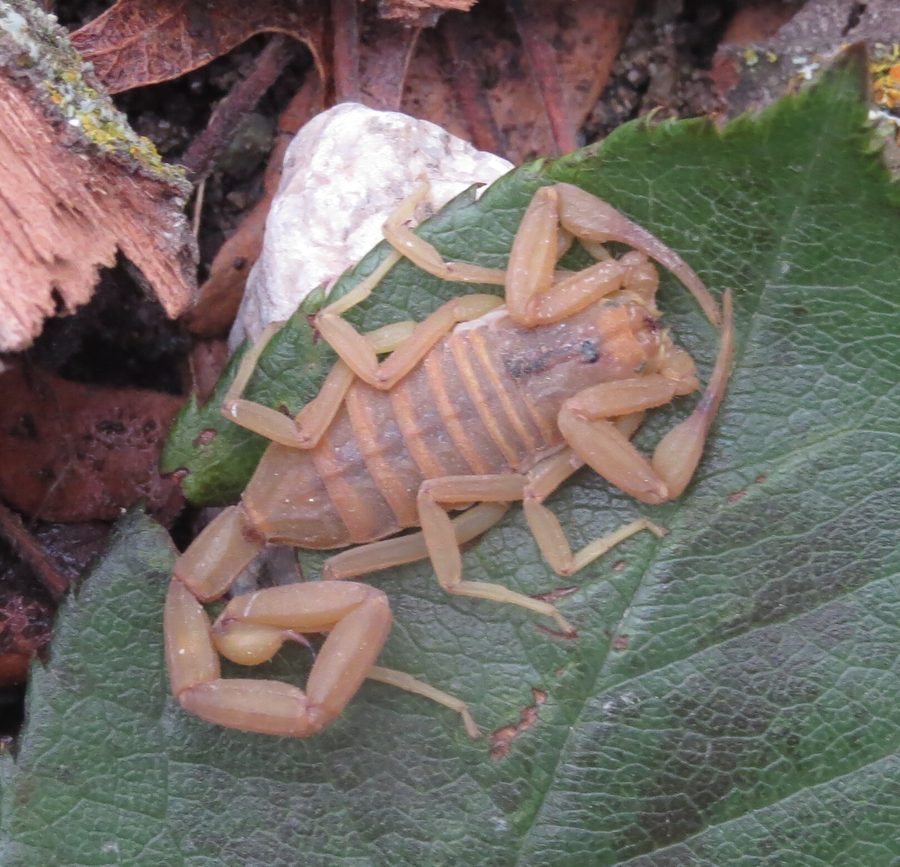
Bark scorpion sting
What it looks like: Often no visible mark at all — pain out of proportion to what can be seen, minimal redness. Pattern: single site. Onset: immediate burning pain. Worst at: 1 to 4 hours. Duration: pain and tingling can persist 24 to 72 hours.
| Looks like | often no visible mark at all — pain out of proportion to what can be seen |
|---|---|
| Pattern | single site |
| Size | 0–10 mm |
| Appears | immediate burning pain |
| Worst at | 1 to 4 hours |
| Lasts | pain and tingling can persist 24 to 72 hours |
| Itch | ●○○○○ 1/5 |
| Pain | ●●●●● 5/5 |
| Usually on | hands, feet — commonly a bare foot at night or a hand into a stored item |
| Active | March to October, night |
Not sure it is bark scorpion? The app reads the photo and names the likeliest cause. Download free iPhone & iPad · no account
How to tell it apart
The distinguishing feature is the mismatch: severe burning pain and tingling with almost nothing to see. Tapping the site sharply increases the pain, which clinicians use as a bedside sign.
Where and when you meet it
Habitat: the Southwest, especially Arizona — under bark, rocks, in block walls, and indoors in shoes and bedding.
Across 2,001 verified US records in the GBIF biodiversity database, sightings of Centruroides sculpturatus concentrate in April, May, July, August. That is the window when bites are most likely — it is observation data rather than a guess, and it shifts with latitude.
States with the most recorded sightings
- Arizona 1,717 records
- Nevada 146 records
- Utah 69 records
- New Mexico 38 records
- California 15 records
- Texas 14 records
- Colorado 2 records
Record counts reflect where people report and identify specimens, not exact abundance. They are useful for ruling a species in, not for ruling it out.
Where it is recorded
| Country | Records | Peak months there |
|---|---|---|
| United States | 2,001 | April, July, August |
Verified records from the GBIF biodiversity database across the seven countries we cover. A country missing from this table means we have no records for it, not that the species is absent.
What it means for you
This is the only scorpion in the United States whose venom is medically significant, and children are the group at real risk. Most stings in healthy adults are managed with pain relief at home; anything neurological in a child is an emergency department visit, not a wait-and-see.
Seek medical care if
- roving eye movements, slurred speech, muscle twitching or difficulty swallowing — emergency, especially in children
- breathing difficulty
- any sting in a young child or an older adult
Care at home
- wash and apply a cold pack
- over-the-counter pain relief for a simple sting in a healthy adult
- emergency care for a child, or for any neurological symptom — antivenom exists
Preventing the next one
- shake out shoes, towels and bedding
- shoes and a torch outdoors at night
- seal gaps under doors; they can pass through a credit-card-width crack
Common questions
Do bark scorpions sting humans?
The distinguishing feature is the mismatch: severe burning pain and tingling with almost nothing to see. Tapping the site sharply increases the pain, which clinicians use as a bedside sign.
What does a bark scorpion sting look like?
Often no visible mark at all — pain out of proportion to what can be seen, minimal redness. Pattern: single site. Size: typically 0–10 mm across.
Does a bark scorpion sting hurt?
Pain is very severe (5 out of 5 on this site's scale) and itch is barely any itch (1 out of 5). Onset: immediate burning pain. Worst at: 1 to 4 hours. Duration: pain and tingling can persist 24 to 72 hours.
How do I know it was a bark scorpion?
The distinguishing feature is the mismatch: severe burning pain and tingling with almost nothing to see. Tapping the site sharply increases the pain, which clinicians use as a bedside sign.
How long does a bark scorpion sting last?
Duration: pain and tingling can persist 24 to 72 hours. Worst at: 1 to 4 hours.
When is it a problem?
Seek care for: roving eye movements, slurred speech, muscle twitching or difficulty swallowing — emergency, especially in children; breathing difficulty; any sting in a young child or an older adult.
Can it transmit disease?
No human disease is known to be transmitted by this species in the United States. The practical risk is infection from scratching.
Get a photo assessment in the app
Everything above is free to read. The app adds what a page cannot: point your camera at the bite and get an assessment of the most likely cause, a severity read, and a day-by-day care plan — including the specific signs that mean you should be seen.
Download on the App Store — free
iPhone and iPad · Free to download · No account needed