Kissing bug bite
What it looks like: Painless swollen bumps, sometimes several together, red, sometimes with marked swelling of one eyelid. Pattern: clusters, often on the face near the lips or eyes. Onset: painless at the time; bumps noticed on waking. Worst at: day 1 to 2. Duration: about a week.
| Looks like | painless swollen bumps, sometimes several together |
|---|---|
| Pattern | clusters, often on the face near the lips or eyes |
| Size | 5–30 mm |
| Appears | painless at the time; bumps noticed on waking |
| Worst at | day 1 to 2 |
| Lasts | about a week |
| Itch | ●●●○○ 3/5 |
| Pain | ●○○○○ 1/5 |
| Usually on | face, lips, eyelids, arms |
| Active | May to October, night |
Not sure it is kissing bug? The app reads the photo and names the likeliest cause. Download free iPhone & iPad · no account
How to tell it apart
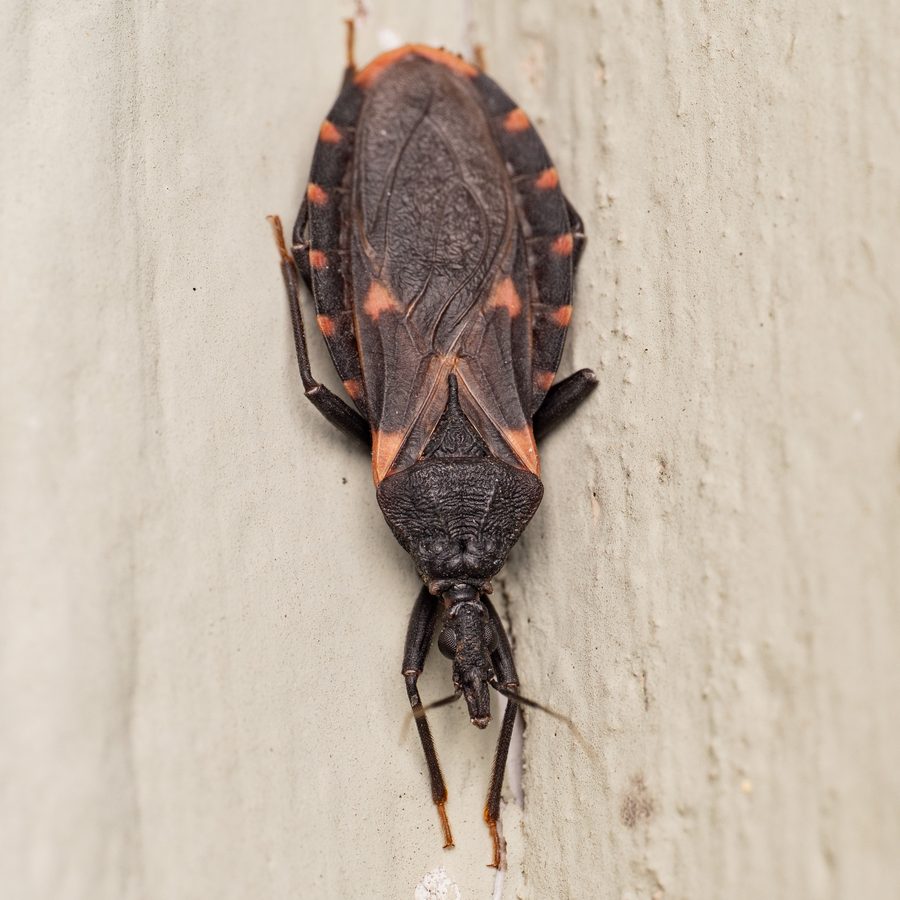
A large dark bug, up to an inch, with a striped edge to the abdomen and a cone-shaped head. Bites are painless and often near the mouth or eye, which is where the name comes from — the insect is drawn to exhaled carbon dioxide.
Where and when you meet it
Habitat: crevices in older or rural housing, chicken coops, dog kennels, woodpiles — southern states.
Across 3,545 verified US records in the GBIF biodiversity database, sightings of Triatoma sanguisuga concentrate in June to September. That is the window when bites are most likely — it is observation data rather than a guess, and it shifts with latitude.
States with the most recorded sightings
- Texas 1,523 records
- Florida 274 records
- Virginia 191 records
- Oklahoma 143 records
- Missouri 132 records
- Kentucky 125 records
- Alabama 108 records
- Louisiana 106 records
- Maryland 104 records · all bites in Maryland
- Tennessee 99 records
- Ohio 77 records
- Illinois 65 records
Record counts reflect where people report and identify specimens, not exact abundance. They are useful for ruling a species in, not for ruling it out.
Where it is recorded
| Country | Records | Peak months there |
|---|---|---|
| United States | 3,545 | June to September |
Verified records from the GBIF biodiversity database across the seven countries we cover. A country missing from this table means we have no records for it, not that the species is absent.
What it means for you
Chagas transmission in the United States is genuinely rare and requires the bug's faeces to be rubbed into the bite or the eye. The practical advice is simple and worth following: do not swat it against your skin, and keep it for identification.
Associated illnesses in the US
- Chagas disease (Trypanosoma cruzi) — rare in the United States but the reason this bite is taken seriously
Most bites transmit nothing. What matters is the follow-up: note the date, and report any fever or rash in the following weeks to a clinician along with the fact that you were bitten.
Seek medical care if
- swelling of one eyelid with a nearby bite
- fever, fatigue or swollen glands in the weeks after
- a known kissing bug in the home — keep the insect for identification
Care at home
- wash the area
- do not crush the insect against skin — the parasite is in its faeces, not its bite
- keep the bug in a sealed container if you find one; state health departments will identify it
Preventing the next one
- seal cracks around windows, doors and foundations
- move woodpiles and kennels away from the house
- outdoor lights away from doors — they attract the bugs at night
Common questions
Do kissing bugs bite humans?
A large dark bug, up to an inch, with a striped edge to the abdomen and a cone-shaped head. Bites are painless and often near the mouth or eye, which is where the name comes from — the insect is drawn to exhaled carbon dioxide.
What does a kissing bug bite look like?
Painless swollen bumps, sometimes several together, red, sometimes with marked swelling of one eyelid. Pattern: clusters, often on the face near the lips or eyes. Size: typically 5–30 mm across.
Does a kissing bug bite hurt?
Pain is barely noticeable (1 out of 5 on this site's scale) and itch is noticeable itch (3 out of 5). Onset: painless at the time; bumps noticed on waking. Worst at: day 1 to 2. Duration: about a week.
How do I know it was a kissing bug?
A large dark bug, up to an inch, with a striped edge to the abdomen and a cone-shaped head. Bites are painless and often near the mouth or eye, which is where the name comes from — the insect is drawn to exhaled carbon dioxide.
How long does a kissing bug bite last?
Duration: about a week. Worst at: day 1 to 2.
When is it a problem?
Seek care for: swelling of one eyelid with a nearby bite; fever, fatigue or swollen glands in the weeks after; a known kissing bug in the home — keep the insect for identification.
Can it transmit disease?
In the United States this species is associated with Chagas disease (Trypanosoma cruzi) — rare in the United States but the reason this bite is taken seriously. Most bites transmit nothing, but symptoms in the weeks after a bite are worth reporting to a clinician.
Get a photo assessment in the app
Everything above is free to read. The app adds what a page cannot: point your camera at the bite and get an assessment of the most likely cause, a severity read, and a day-by-day care plan — including the specific signs that mean you should be seen.
Download on the App Store — free
iPhone and iPad · Free to download · No account needed