Deer fly bite
What it looks like: A painful red weal, smaller than a horsefly bite, red. Pattern: single or a few, often on the scalp and neck. Onset: immediate sharp pain. Worst at: first hours. Duration: a few days.
| Looks like | a painful red weal, smaller than a horsefly bite |
|---|---|
| Pattern | single or a few, often on the scalp and neck |
| Size | 5–30 mm |
| Appears | immediate sharp pain |
| Worst at | first hours |
| Lasts | a few days |
| Itch | ●●●●○ 4/5 |
| Pain | ●●●●○ 4/5 |
| Usually on | scalp, neck, shoulders — they target the highest point of a moving person |
| Active | May to August, daylight hours, worst in humid weather near water |
Not sure it is deer fly? The app reads the photo and names the likeliest cause. Download free iPhone & iPad · no account
How to tell it apart
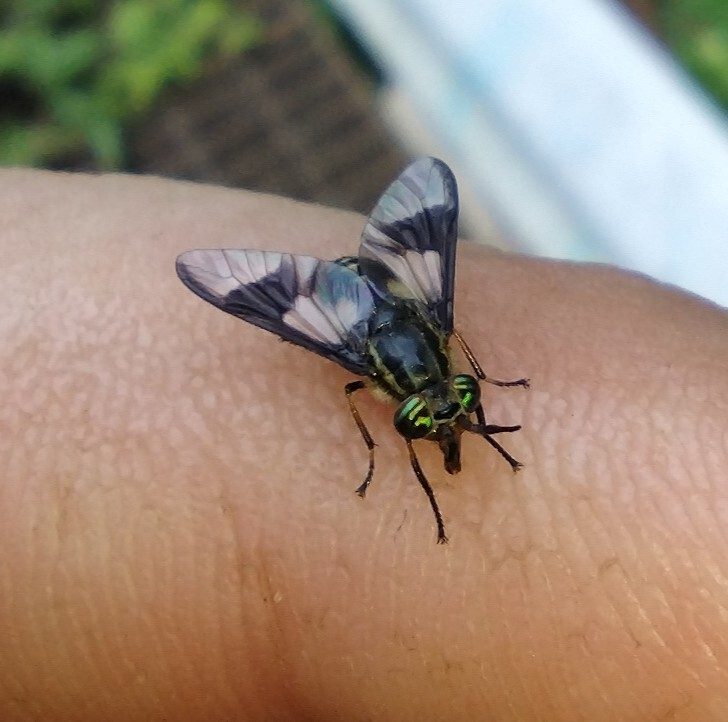
Deer flies circle the head and bite the scalp and neck, which distinguishes them from horseflies going for legs and back. The patterned wings and gold-green eyes are visible when one lands.
Where and when you meet it
Habitat: wetlands, lakesides, wooded trails.
Across 1,998 verified US records in the GBIF biodiversity database, sightings of Chrysops callidus concentrate in May to July. That is the window when bites are most likely — it is observation data rather than a guess, and it shifts with latitude.
States with the most recorded sightings
- Indiana 419 records
- Ohio 300 records
- Michigan 291 records
- Mississippi 122 records
- South Carolina 112 records · all bites in South Carolina
- Wisconsin 98 records · all bites in Wisconsin
- Maryland 94 records
- Alabama 87 records
- Illinois 59 records
- New York 50 records
- Texas 47 records · all bites in Texas
- New Hampshire 44 records
Record counts reflect where people report and identify specimens, not exact abundance. They are useful for ruling a species in, not for ruling it out.
Where it is recorded
| Country | Records | Peak months there |
|---|---|---|
| United States | 1,998 | May to July |
| Canada | 196 | June to July |
| France | 1 | — |
Verified records from the GBIF biodiversity database across the seven countries we cover. A country missing from this table means we have no records for it, not that the species is absent.
What it means for you
They are attracted to movement, carbon dioxide and dark shapes, which is why a walker gets a persistent escort down a trail. The bites themselves are self-limiting; the nuisance is the point.
Associated illnesses in the US
- tularemia (rare)
Most bites transmit nothing. What matters is the follow-up: note the date, and report any fever or rash in the following weeks to a clinician along with the fact that you were bitten.
Seek medical care if
- spreading redness and warmth
- fever with swollen glands after a bite
Care at home
- wash, cold pack, antihistamine
- keep the site clean
Preventing the next one
- hats and light-coloured clothing
- sticky patches on caps work surprisingly well on trails
- repellent has limited effect
Common questions
Do deer flies bite humans?
Deer flies circle the head and bite the scalp and neck, which distinguishes them from horseflies going for legs and back. The patterned wings and gold-green eyes are visible when one lands.
What does a deer fly bite look like?
A painful red weal, smaller than a horsefly bite, red. Pattern: single or a few, often on the scalp and neck. Size: typically 5–30 mm across.
Does a deer fly bite hurt?
Pain is severe (4 out of 5 on this site's scale) and itch is strong itch (4 out of 5). Onset: immediate sharp pain. Worst at: first hours. Duration: a few days.
How do I know it was a deer fly?
Deer flies circle the head and bite the scalp and neck, which distinguishes them from horseflies going for legs and back. The patterned wings and gold-green eyes are visible when one lands.
How long does a deer fly bite last?
Duration: a few days. Worst at: first hours.
When is it a problem?
Seek care for: spreading redness and warmth; fever with swollen glands after a bite.
Can it transmit disease?
In the United States this species is associated with tularemia (rare). Most bites transmit nothing, but symptoms in the weeks after a bite are worth reporting to a clinician.
Get a photo assessment in the app
Everything above is free to read. The app adds what a page cannot: point your camera at the bite and get an assessment of the most likely cause, a severity read, and a day-by-day care plan — including the specific signs that mean you should be seen.
Download on the App Store — free
iPhone and iPad · Free to download · No account needed