Horsefly bite
What it looks like: A large raised red weal, often with a visible cut and a spot of bleeding, red, may bruise. Pattern: single, occasionally two. Onset: immediate, sharp — you feel this one. Worst at: hours 1 to 12. Duration: several days; slower to heal than most bites.
| Looks like | a large raised red weal, often with a visible cut and a spot of bleeding |
|---|---|
| Pattern | single, occasionally two |
| Size | 10–60 mm |
| Appears | immediate, sharp — you feel this one |
| Worst at | hours 1 to 12 |
| Lasts | several days; slower to heal than most bites |
| Itch | ●●●○○ 3/5 |
| Pain | ●●●●● 5/5 |
| Usually on | legs, back, shoulders — often through thin clothing |
| Active | May to September, hot, still, sunny days; they hunt by sight |
Not sure it is horsefly? The app reads the photo and names the likeliest cause. Download free iPhone & iPad · no account
How to tell it apart
Horsefly mouthparts work like scissors, so the bite hurts immediately and often bleeds — quite unlike the painless approach of a mosquito. The resulting wound is larger, slower to heal and more prone to infection.
Where and when you meet it
Habitat: near water, livestock, and open sunny ground — lakesides and pasture in particular.
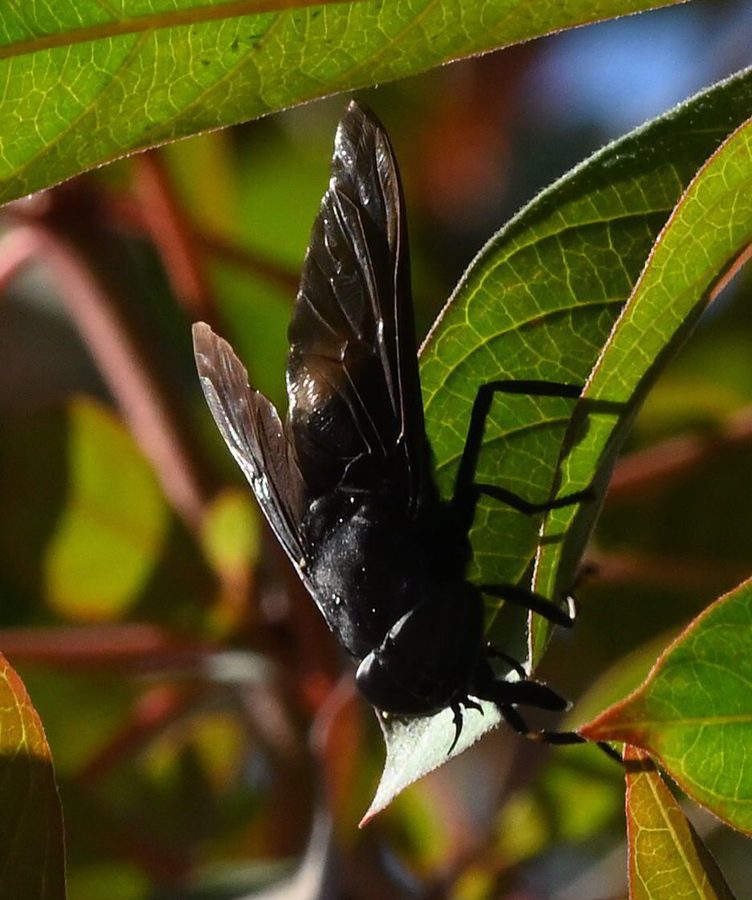
Across 7,873 verified US records in the GBIF biodiversity database, sightings of Tabanus atratus concentrate in June to September. That is the window when bites are most likely — it is observation data rather than a guess, and it shifts with latitude.
States with the most recorded sightings
- Texas 1,509 records
- Florida 876 records
- North Carolina 507 records
- Maryland 451 records
- Virginia 412 records
- Illinois 330 records
- Louisiana 263 records
- Georgia 239 records
- Pennsylvania 237 records
- Oklahoma 210 records
- Ohio 202 records
- New York 199 records
Record counts reflect where people report and identify specimens, not exact abundance. They are useful for ruling a species in, not for ruling it out.
Where it is recorded
| Country | Records | Peak months there |
|---|---|---|
| United States | 7,873 | June to September |
| Canada | 742 | June to August |
Verified records from the GBIF biodiversity database across the seven countries we cover. A country missing from this table means we have no records for it, not that the species is absent.
What it means for you
Only the females bite, and they are persistent: swatting one away usually means it returns within seconds. Because the bite is an open cut rather than a puncture, keeping it clean matters more here than with almost any other insect bite.
Seek medical care if
- spreading redness and warmth over days — these bites become infected more often than most
- fever
- dizziness or widespread rash
Care at home
- wash carefully — the mouthparts cut rather than pierce, leaving an open wound
- cold pack and antihistamine
- keep it clean and covered while it heals
Preventing the next one
- avoid strong perfumes and dark clothing near water on hot days
- repellent is only partly effective against this group
- move indoors or into shade — they hunt in sunlight
Common questions
Do horseflies bite humans?
Horsefly mouthparts work like scissors, so the bite hurts immediately and often bleeds — quite unlike the painless approach of a mosquito. The resulting wound is larger, slower to heal and more prone to infection.
What does a horsefly bite look like?
A large raised red weal, often with a visible cut and a spot of bleeding, red, may bruise. Pattern: single, occasionally two. Size: typically 10–60 mm across.
Does a horsefly bite hurt?
Pain is very severe (5 out of 5 on this site's scale) and itch is noticeable itch (3 out of 5). Onset: immediate, sharp — you feel this one. Worst at: hours 1 to 12. Duration: several days; slower to heal than most bites.
How do I know it was a horsefly?
Horsefly mouthparts work like scissors, so the bite hurts immediately and often bleeds — quite unlike the painless approach of a mosquito. The resulting wound is larger, slower to heal and more prone to infection.
How long does a horsefly bite last?
Duration: several days; slower to heal than most bites. Worst at: hours 1 to 12.
When is it a problem?
Seek care for: spreading redness and warmth over days — these bites become infected more often than most; fever; dizziness or widespread rash.
Can it transmit disease?
No human disease is known to be transmitted by this species in the United States. The practical risk is infection from scratching.
Get a photo assessment in the app
Everything above is free to read. The app adds what a page cannot: point your camera at the bite and get an assessment of the most likely cause, a severity read, and a day-by-day care plan — including the specific signs that mean you should be seen.
Download on the App Store — free
iPhone and iPad · Free to download · No account needed