Head lice bites
What it looks like: Small red bumps on the scalp and neck, with tiny pale eggs glued to hair shafts, red bumps; eggs are pale and stuck fast, unlike dandruff. Pattern: concentrated behind the ears and at the nape. Onset: itch begins 4 to 6 weeks after first infestation. Worst at: ongoing until treated. Duration: until treated.
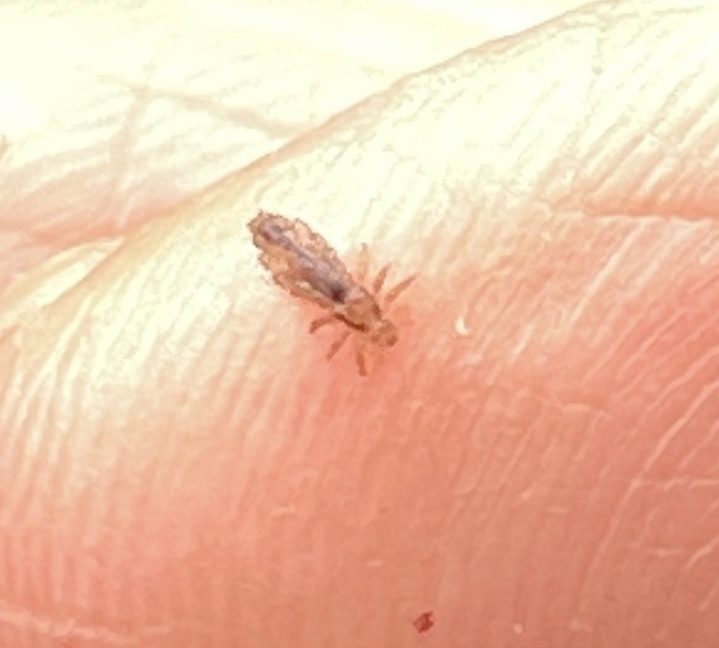
| Looks like | small red bumps on the scalp and neck, with tiny pale eggs glued to hair shafts |
|---|---|
| Pattern | concentrated behind the ears and at the nape |
| Size | 1–5 mm |
| Appears | itch begins 4 to 6 weeks after first infestation |
| Worst at | ongoing until treated |
| Lasts | until treated |
| Itch | ●●●●○ 4/5 |
| Pain | ●○○○○ 1/5 |
| Usually on | scalp, behind the ears, nape of the neck |
| Active | January to December, any |
Not sure it is head lice? The app reads the photo and names the likeliest cause. Download free iPhone & iPad · no account
How to tell it apart
The bites are secondary — what identifies lice is the eggs: pale ovals cemented to hair shafts within a centimetre of the scalp, which do not brush off the way dandruff does. Itch behind the ears and at the nape is the usual complaint.
Where and when you meet it
Habitat: head-to-head contact, most often among school-age children; lice cannot jump or fly.
Across 584 verified US records in the GBIF biodiversity database, sightings of Pediculus humanus concentrate in July. That is the window when bites are most likely — it is observation data rather than a guess, and it shifts with latitude.
States with the most recorded sightings
- Florida 218 records
- California 29 records
- Utah 24 records
- Texas 23 records
- Pennsylvania 17 records
- Alaska 15 records
- Iowa 12 records
- New York 10 records
- North Carolina 10 records
- Illinois 9 records
- Maryland 8 records
- Georgia 7 records
Record counts reflect where people report and identify specimens, not exact abundance. They are useful for ruling a species in, not for ruling it out.
Where it is recorded
| Country | Records | Peak months there |
|---|---|---|
| United States | 584 | July |
| United Kingdom | 340 | May, June, December |
| France | 134 | July |
| Brazil | 91 | September to October |
| Germany | 70 | August, September, November |
| Australia | 60 | January, April, November |
| Canada | 51 | February, July, September |
Verified records from the GBIF biodiversity database across the seven countries we cover. A country missing from this table means we have no records for it, not that the species is absent.
What it means for you
Head lice are a nuisance, not a health hazard, and carry no disease. They are also not a sign of poor hygiene. Treatment failure is usually reinfestation or a missed second dose rather than resistance.
Seek medical care if
- crusted, weeping skin at the nape (infection)
- swollen neck glands
Care at home
- over-the-counter or prescription pediculicide, repeated per instructions to catch newly hatched lice
- wet-combing with conditioner every three days for two weeks
- wash pillowcases and hats — extensive house cleaning is unnecessary
Preventing the next one
- check heads weekly during an outbreak
- avoid sharing hats, brushes and pillows
- tie long hair back at school
Common questions
Do head lice bite humans?
The bites are secondary — what identifies lice is the eggs: pale ovals cemented to hair shafts within a centimetre of the scalp, which do not brush off the way dandruff does. Itch behind the ears and at the nape is the usual complaint.
What does a head lice bite look like?
Small red bumps on the scalp and neck, with tiny pale eggs glued to hair shafts, red bumps; eggs are pale and stuck fast, unlike dandruff. Pattern: concentrated behind the ears and at the nape. Size: typically 1–5 mm across.
Does a head lice bite hurt?
Pain is barely noticeable (1 out of 5 on this site's scale) and itch is strong itch (4 out of 5). Onset: itch begins 4 to 6 weeks after first infestation. Worst at: ongoing until treated. Duration: until treated.
How do I know it was a head lices?
The bites are secondary — what identifies lice is the eggs: pale ovals cemented to hair shafts within a centimetre of the scalp, which do not brush off the way dandruff does. Itch behind the ears and at the nape is the usual complaint.
How long does a head lice bites last?
Duration: until treated. Worst at: ongoing until treated.
When is it a problem?
Seek care for: crusted, weeping skin at the nape (infection); swollen neck glands.
Can it transmit disease?
No human disease is known to be transmitted by this species in the United States. The practical risk is infection from scratching.
Get a photo assessment in the app
Everything above is free to read. The app adds what a page cannot: point your camera at the bite and get an assessment of the most likely cause, a severity read, and a day-by-day care plan — including the specific signs that mean you should be seen.
Download on the App Store — free
iPhone and iPad · Free to download · No account needed