Carpenter ant bite
What it looks like: A small red mark, sometimes with a brief burning sensation from formic acid, red. Pattern: single or a few. Onset: immediate pinch. Worst at: minutes to an hour. Duration: usually under a day.
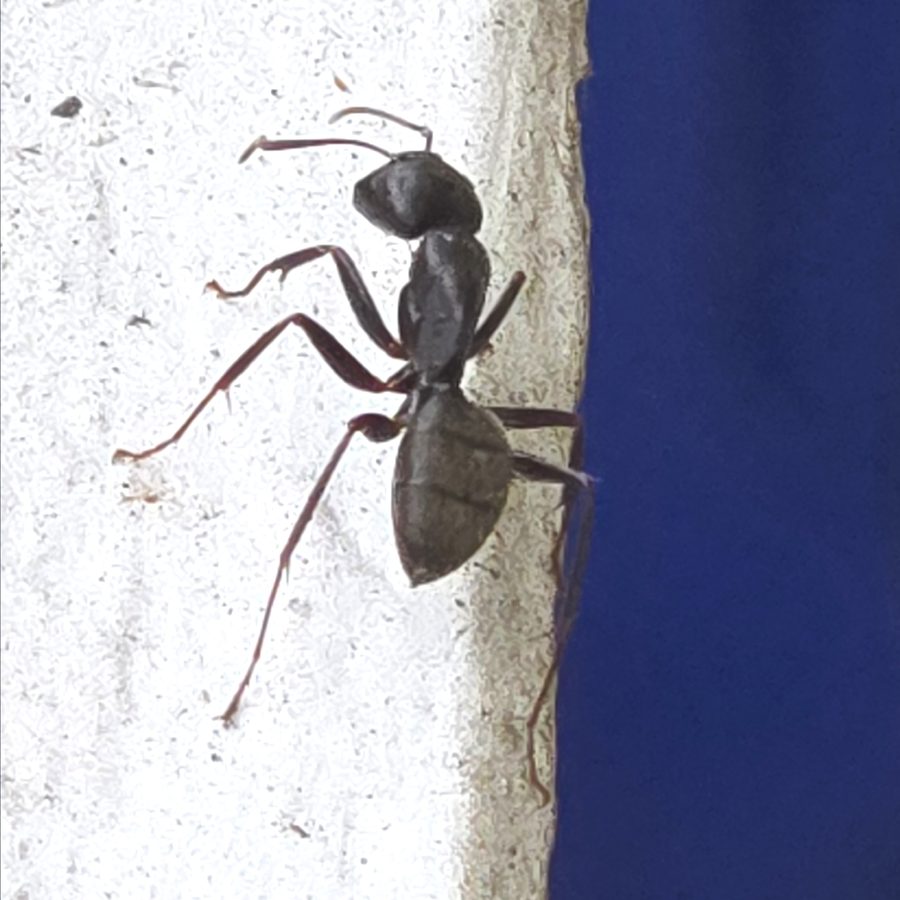
| Looks like | a small red mark, sometimes with a brief burning sensation from formic acid |
|---|---|
| Pattern | single or a few |
| Size | 1–6 mm |
| Appears | immediate pinch |
| Worst at | minutes to an hour |
| Lasts | usually under a day |
| Itch | ●●○○○ 2/5 |
| Pain | ●●○○○ 2/5 |
| Usually on | hands, arms, legs |
| Active | April to September, evening and night for foraging |
Not sure it is carpenter ant? The app reads the photo and names the likeliest cause. Download free iPhone & iPad · no account
How to tell it apart
A carpenter ant bite is a mechanical pinch from large jaws, occasionally with formic acid sprayed into the wound, which stings briefly. There is no sting apparatus and no pustule — that is what separates it from a fire ant.
Where and when you meet it
Habitat: damp or decayed wood — decking, window frames, tree stumps; they hollow wood rather than eat it.
Across 31,645 verified US records in the GBIF biodiversity database, sightings of Camponotus pennsylvanicus concentrate in April to July. That is the window when bites are most likely — it is observation data rather than a guess, and it shifts with latitude.
States with the most recorded sightings
- New York 2,806 records
- Texas 2,602 records
- Massachusetts 2,142 records
- Pennsylvania 2,065 records
- Virginia 1,921 records
- Illinois 1,798 records
- Ohio 1,774 records
- North Carolina 1,711 records · all bites in North Carolina
- Mississippi 1,530 records
- Georgia 1,063 records
- Maryland 987 records
- Wisconsin 836 records
Record counts reflect where people report and identify specimens, not exact abundance. They are useful for ruling a species in, not for ruling it out.
Where it is recorded
| Country | Records | Peak months there |
|---|---|---|
| United States | 31,645 | April to July |
| Canada | 4,815 | May to August |
| Australia | 1 | — |
Verified records from the GBIF biodiversity database across the seven countries we cover. A country missing from this table means we have no records for it, not that the species is absent.
What it means for you
Medically minor, structurally not: carpenter ants indoors usually mean damp wood somewhere in the building. The bite is worth identifying mainly so that the real problem gets attention.
Seek medical care if
Call emergency services now for difficulty breathing, swelling of the lips, tongue or throat, dizziness or fainting, or hives spreading away from the bite.
- signs of infection at the site
- allergic symptoms away from the bite
Care at home
- wash with soap and water
- cold pack if sore
Preventing the next one
- fix damp wood and leaks around the house
- keep firewood away from walls
Common questions
Do carpenter ants bite humans?
A carpenter ant bite is a mechanical pinch from large jaws, occasionally with formic acid sprayed into the wound, which stings briefly. There is no sting apparatus and no pustule — that is what separates it from a fire ant.
What does a carpenter ant bite look like?
A small red mark, sometimes with a brief burning sensation from formic acid, red. Pattern: single or a few. Size: typically 1–6 mm across.
Does a carpenter ant bite hurt?
Pain is mild (2 out of 5 on this site's scale) and itch is mild itch (2 out of 5). Onset: immediate pinch. Worst at: minutes to an hour. Duration: usually under a day.
How do I know it was a carpenter ant?
A carpenter ant bite is a mechanical pinch from large jaws, occasionally with formic acid sprayed into the wound, which stings briefly. There is no sting apparatus and no pustule — that is what separates it from a fire ant.
How long does a carpenter ant bite last?
Duration: usually under a day. Worst at: minutes to an hour.
When is it a problem?
Seek care for: signs of infection at the site; allergic symptoms away from the bite.
Can it transmit disease?
No human disease is known to be transmitted by this species in the United States. The practical risk is infection from scratching.
Get a photo assessment in the app
Everything above is free to read. The app adds what a page cannot: point your camera at the bite and get an assessment of the most likely cause, a severity read, and a day-by-day care plan — including the specific signs that mean you should be seen.
Download on the App Store — free
iPhone and iPad · Free to download · No account needed